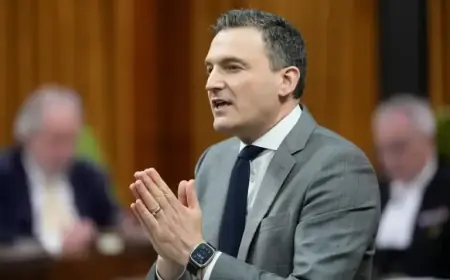
Manitoba Health Minister Considers Banning Paid Plasma After Two Deaths


Manitoba’s Health Minister, Uzoma Asagwara, is considering a ban on paid plasma donations following two fatal incidents at collection centers in Winnipeg. The tragic events have raised significant safety concerns as the health department reviews reports of adverse reactions that occurred within four months of each other. One incident was reported in October 2022, and the other on January 30, 2023.
Incidents Leading to Potential Policy Changes
The fatalities have prompted a detailed investigation by Health Canada. However, no direct link has been established between the deaths and the plasma donation process. According to Grifols, the company running the collection centers, they also do not believe the incidents are related.
- First death: Rodiyat Alabede, 22, died on October 25, 2022, after donating plasma at the Taylor Avenue location.
- Second death: Reported on January 30, 2023, at the Innovation Drive center.
Asagwara emphasized that public safety remains a top priority. “We won’t take any steps until we have the full investigation completed,” she stated. Friends of Alabede described her as a compassionate individual studying at the University of Winnipeg with aspirations to become a social worker.
Grifols and the Plasma Donation Process
Grifols, a Spain-based biotechnology company, has operated in Canada since 2022 and manages two plasma donation centers in Winnipeg. Under Health Canada regulations, all plasma collection centers must perform thorough health assessments on donors prior to the extraction of plasma.
Despite the recent tragedies, Grifols remains committed to donor safety. A spokesperson stated, “The health and safety of our donors is our ultimate priority.” All serious reactions, whether during or up to 72 hours post-donation, must be reported to Health Canada.
Regulatory Context and Public Health Debate
Across Canada, only three provinces—Ontario, British Columbia, and Quebec—have laws prohibiting paid plasma donations. Although Ontario’s partnership with Canadian Blood Services in 2022 allowed some centers to operate despite local legislation, British Columbia’s 2018 law strictly bars payment for blood or plasma donations.
Asagwara acknowledged the need for both safety and access to plasma in Manitoba, underscoring the growing demand from Canadian Blood Services to meet national needs. “Access to plasma is important for not only Manitobans, but across the country,” she added.
Moving forward, the future of paid plasma donations in Manitoba hangs in the balance as public health officials await the investigation’s conclusions.