Scientists Develop AI Chip Utilizing Light for Trillionths-Speed Computation

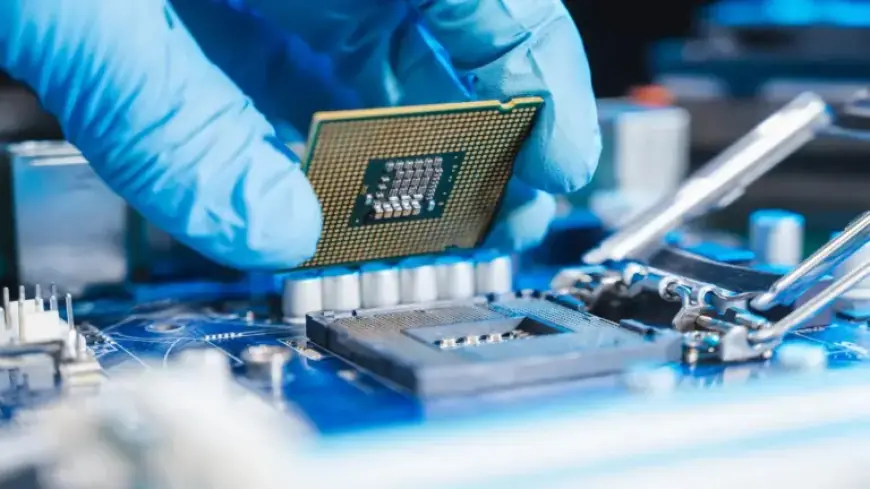
Researchers at the University of Sydney have developed a groundbreaking nanophotonic chip that performs artificial intelligence calculations utilizing light. This innovative prototype processes data at trillionths of a second, significantly enhancing computational speed and efficiency.
Advancements in Light-Powered AI Computing
Housed within the Sydney Nano Hub, the chip represents a shift in how computing hardware can meet the increasing demands of AI systems. Unlike conventional chips that rely on electric signals, this nanophotonic device processes data with photons, which travel through tiny structures embedded within the chip.
This unique approach targets a critical issue: the excessive energy consumption associated with traditional data centers. As AI systems expand, the reliance on silicon chips leads to high power requirements and significant cooling needs due to heat generated during electrical processes.
The Mechanics of the Nanophotonic Chip
The architecture of the chip is designed like a neural network, mimicking the human brain’s information processing capabilities. The nanoscale structures act as artificial neurons, enabling tasks such as pattern recognition and classification as light transitions through the device.
- Chip operates on a picosecond timescale.
- Calculations occur in trillionths of a second.
- Reduced energy consumption and heat generation.
Testing and Results
To assess its capabilities, researchers trained the chip on over 10,000 biomedical images, including MRI scans of various body parts. The photonic neural network achieved an impressive accuracy rate between 90% and 99% during simulations and laboratory experiments.
This success indicates that neural network models can be directly integrated into nanoscale photonic structures, eliminating the need for conventional software-based processing. The findings were published in the journal Nature Communications.
The Future of Photonic Computing
As technology firms and governments globally expand AI infrastructure, the introduction of photonic computing could alleviate pressure on electricity grids and reduce cooling demands. Light can traverse materials without electrical resistance, thereby minimizing heat and power consumption compared to traditional electronic chips.
Looking ahead, the research team plans to scale the design into larger photonic neural networks capable of handling more complex datasets. If successful, these chips may complement or even replace traditional processors in specific AI applications, paving the way for faster and more energy-efficient computing solutions.