Canada’s Mineral Processing Shortfall Poses National Defense Risk, Committee Reports

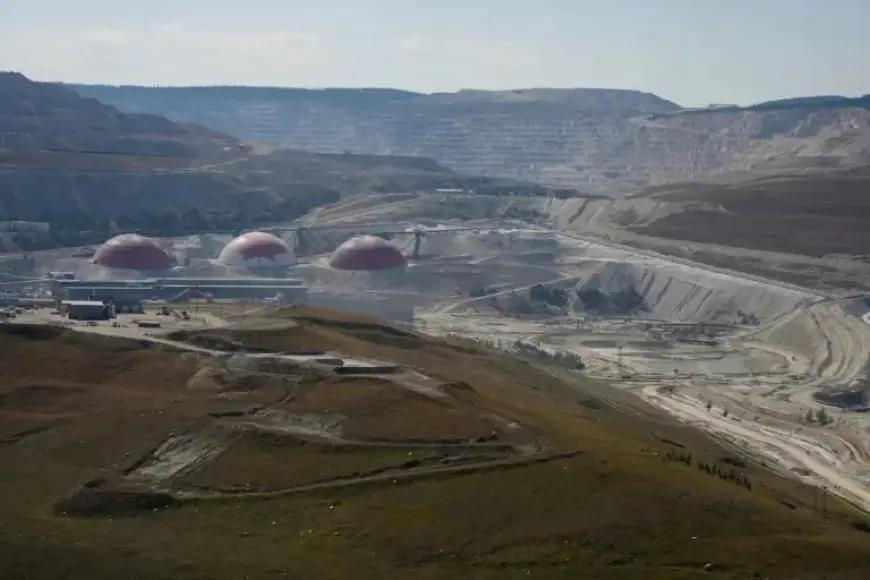
In recent parliamentary hearings, experts underscored Canada’s vulnerability in mineral processing, which poses a significant risk to national defense. The nation relies heavily on critical minerals, such as copper, nickel, and cobalt, for modern military systems. These systems include communications, aerospace technologies, and electrified military infrastructure.
Concerns Over Processing Capacity
Nadia Mykytczuk, the executive director of the Goodman School of Mines, emphasized that the key issue is not the availability of Canadian minerals but rather the country’s refining capacity. Many minerals are sent abroad for processing, rendering Canada reliant on foreign supply chains.
Impact of Foreign Dependency
- Canada’s critical minerals face supply disruptions due to geopolitical issues.
- China’s recent export restrictions on rare earths highlighted the risks involved.
- Most of British Columbia’s copper is processed in China.
These foreign dependencies expose Canada to risks related to supply disruptions and export controls. The reliance on other countries for refining critical minerals has become a pressing concern for national defense.
Historical Context
Decades ago, Canada had a robust refining industry for minerals like nickel and copper. However, this capacity has diminished, primarily due to the high competition from China. For instance, Glencore PLC recently halted plans to invest $1 billion in modernizing a Quebec copper smelter, citing economic challenges linked to environmental regulations.
The Need for Strategic Changes
Jim Balsillie, former chairman of BlackBerry Ltd., noted that Canada’s approach to mineral processing is outdated. He warned that failing to control a significant portion of the supply chain could lead Canada to become merely an extraction-focused economy, similar to those of Russia and the Democratic Republic of the Congo.
Opportunities for Growth
Mykytczuk mentioned opportunities to enhance mineral processing by focusing on mine waste. Biomining, which employs bacteria to extract minerals from tailings, represents a promising but underdeveloped avenue. There are over 10,000 historic mine waste sites across Canada, containing valuable minerals like nickel and cobalt.
Call for Investment and Training
- Investments are needed for research and development in mineral processing technologies.
- Workforce training plays a crucial role in developing skilled labor for the sector.
Ottawa has committed billions to the critical minerals sector since launching a strategic plan in 2022, aiming to boost domestic processing capabilities. This includes partnerships with companies like Mangrove Lithium in British Columbia and Cyclic Materials in Ontario.
Conclusion
As global competition intensifies, Canada must innovate and invest in its refining capabilities to secure its national defense. The country has the potential to enhance its strategic role in the global mineral supply chain, thereby reducing dependency on foreign entities.