BYD’s Blade Charges Fast, Challenges Nio’s Battery Swap Legacy

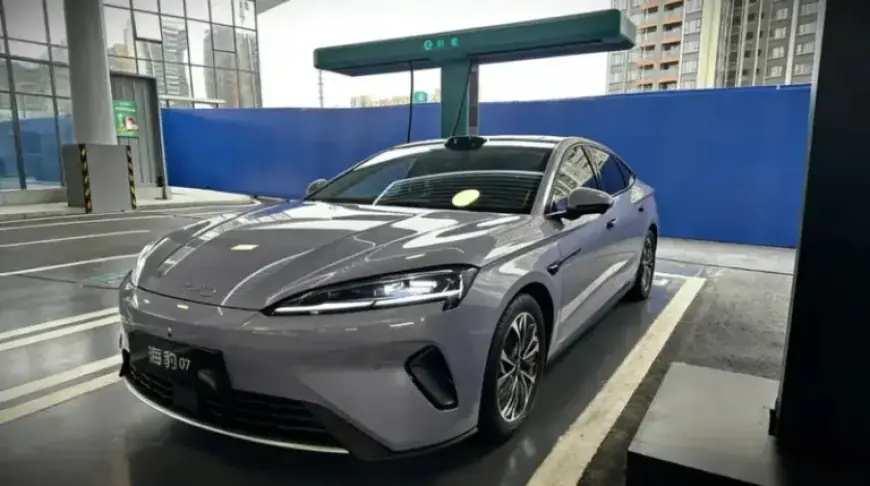
BYD has launched its second-generation Blade Battery, alongside a comprehensive strategy for fast charging infrastructure in China. This initiative, dubbed “Flash Charging China,” aims to install 20,000 megawatt-level charging stations across the country by the end of 2026. During the Shenzhen media briefing, Li Yunfei, the General Manager of Branding and Public Relations at BYD, emphasized the company’s commitment to accelerating electric vehicle adoption.
Infrastructure Strategy and Goals
The ambitious plan signifies a strategic pivot toward high-speed charging. BYD intends to deploy over 20,000 charging stations, presenting a notable challenge to its competitors, particularly Nio and its highly-regarded battery swap model. The following table outlines the current status and targets of key players in the electric vehicle charging landscape:
| Operator | Technology | Current Stations (March 2026) | End-2026 Target |
|---|---|---|---|
| BYD | 1,500 kW Flash | 4,239 | 20,000 |
| Nio | Battery Swap | 3,790 | 4,800 |
| CATL (Choco-SEB) | Battery Swap | 1,020 | 2,500 |
| Aulton New Energy | Battery Swap | 521 | 2,000 |
| CATL (Qiji) | Truck Swap | 305 | 900 |
Advantages of BYD’s Flash Charging
BYD’s Megawatt Flash Charge 2.0 offers compelling benefits over the traditional battery swap method. Key features include:
- Rapid Charge: Reaching 10% to 70% state of charge (SOC) in just 5 minutes.
- Thermal Resilience: Charging efficiency maintained even in temperatures as low as -30°C, achieving a 20% to 97% charge in 12 minutes.
- Safety: The Blade Battery 2.0 has successfully passed rigorous safety tests, ensuring zero thermal runaway after extensive use.
Economic and Market Considerations
The ongoing investment in battery swapping infrastructure poses financial challenges. Nio has spent over 18 billion yuan (approximately $2.49 billion) on its network. However, the average number of daily swaps is currently around 35, far below the approximately 60 required for profitability. By contrast, BYD’s approach mitigates the need for costly grid upgrades.
BYD employs innovative “within-a-station” modules, allowing for significant cost savings—reducing installation expenses by up to 60% compared to conventional high-voltage chargers.
Market Position and Future Plans
As Nio’s swapping stations are perceived as a premium offering, BYD is focusing on making high-speed charging accessible to the mass market. Upcoming models featuring the second-generation Blade technology are set to launch throughout 2026. New vehicles such as the Yangwang U7 and Denza Z9GT will hit the market in Q1, followed by the Song and Qin series in Q2, and the Dolphin and Seagull in H2.
With its robust charging infrastructure, BYD aims to position 90% of urban China within a 5 km radius of a 1,500 kW charging plug, effectively challenging Nio’s dominance in the battery swap sector. BYD’s strategic shift signals the evolution of electric vehicle charging solutions in China, firmly establishing its presence in the growing market.