Expanding UK Megacity Absorbs Five Market Towns and Keeps Growing

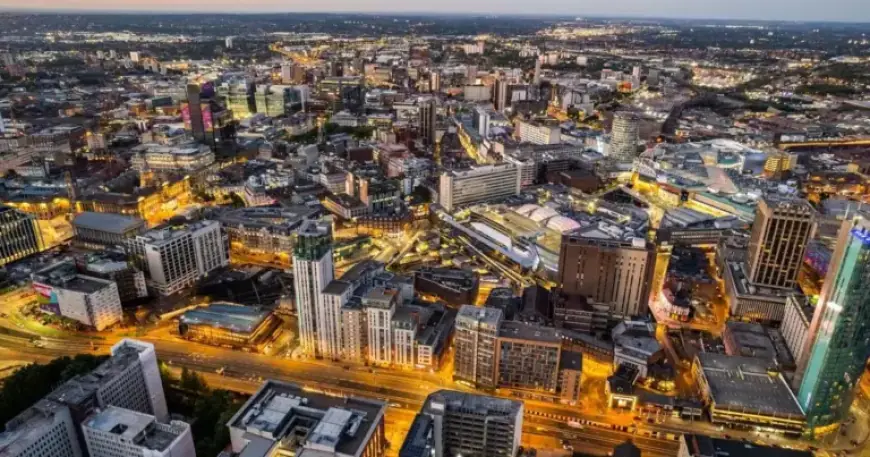
Birmingham, recognized as the second-largest city in the United Kingdom, has undergone considerable expansion over the last century. This growth has absorbed several historic market towns, transforming them into integral components of a vast urban landscape. The five towns significantly impacted by Birmingham’s expansion include Dudley, Wednesbury, Walsall, Oldbury, and Solihull.
Expansion of Birmingham Megacity
Over recent decades, Birmingham’s urban area has evolved to encompass a wider population. As of the 2021 census, the city alone had approximately 1.14 million residents. However, when surrounding towns and suburbs are accounted for, the population swells to around 2.7 million in the wider West Midlands urban area.
- Birmingham population (2021): 1.14 million
- Wider West Midlands urban area population: 2.7 million
- Greater metropolitan region population: 4.3 million
- West Midlands conurbation population: over 2.4 million
Historic Market Towns Absorbed by Birmingham
Each absorbed town maintains a distinct identity and local history within the larger Birmingham urban expanse. Here’s a closer look at the five market towns integrated into the megacity:
- Dudley: Known as the capital of the Black Country, Dudley has around 79,000 residents and attractions like Dudley Castle and Dudley Zoo.
- Wednesbury: Approximately eight miles northwest of Birmingham, Wednesbury has a population of about 20,300 and has roots in metalworking and manufacturing.
- Walsall: Just north of Birmingham, Walsall initially thrived as a market town and became world-renowned for its leather industry, celebrated at the Walsall Leather Museum.
- Oldbury: Now the administrative center of Sandwell borough, Oldbury developed during the industrial boom and is located near the M5 motorway.
- Solihull: Situated around eight miles southeast of Birmingham, Solihull has a population of approximately 126,500 and is recognized for its suburban lifestyle and affluent communities.
Future Projections for Birmingham
The city’s growth trend shows no signs of slowing down. Projections indicate that Birmingham’s population may reach 1.18 million by 2028 and potentially 1.23 million by 2038. Such forecasts suggest that as the city grows, nearby towns will become even more interconnected.
In summary, Birmingham’s transformation into a megacity has substantially impacted surrounding market towns. These communities now exist as part of a broader urban fabric, each contributing to the overall character of the expanding West Midlands region.