

























Kake kake: State Department Accused of Slow Assistance as Americans Stranded

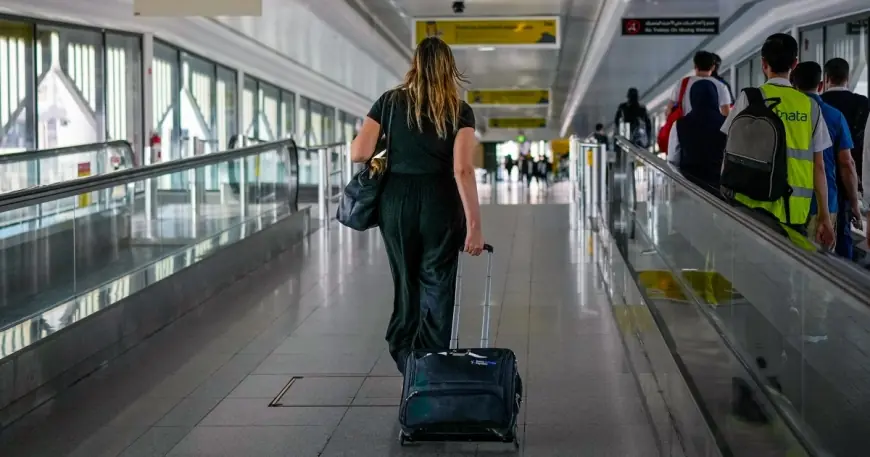
kake The State Department is facing sharp criticism after thousands of Americans were left stranded across the Middle East when Iranian retaliatory strikes and a broader air campaign disrupted travel and hit U. S. diplomatic sites, complicating evacuation efforts and prompting urgent new travel guidance.
Kake and stranded Americans
Lawmakers and current and former consular officials have faulted the administration for what they call inadequate planning as Americans found themselves unable to leave countries including Jordan, Kuwait and the United Arab Emirates. U. S. citizens in the region received conflicting advice: in some places they were instructed to evacuate even as airports were closed, and others were told to contact embassies only to encounter busy phone lines or staffers unable to provide immediate help. Dozens of Democrats in Congress sent a letter to Secretary of State Marco Rubio saying that the lack of clear preparation, planning and communication to Americans abroad was unacceptable and a violation of the State Department’s basic mission to protect U. S. citizens overseas.
kake Warnings and advisory changes
Before the air campaign, a handful of countries already had the highest-level travel advisories in place. After the strikes, the State Department expanded advisories, issuing "reconsider travel" guidance for at least seven countries in the region and urging citizens to depart more than a dozen countries. That broader advisory list included Bahrain, Egypt, Iran, Iraq, Israel, the occupied West Bank and Gaza, Jordan, Kuwait, Lebanon, Oman, Qatar, Saudi Arabia, Syria, the United Arab Emirates and Yemen. A State Department assistant secretary for consular affairs used a public message to urge Americans to "DEPART NOW" from the listed countries using available commercial transportation and asked U. S. citizens who need help to contact consular services for assistance by phone.
Evacuations, flights and next steps
U. S. the Defense Department planned to assist evacuation efforts with C-17 cargo planes, and State Department staff have been organizing charter flights to extract Americans from the war zone. one such charter had departed the Middle East and was en route to the United States. In addition to disrupted travel, several U. S. diplomatic sites were affected during the escalation: an embassy compound was evacuated in one country, a diplomatic compound in another was struck by a drone, an embassy building in a third country caught fire after being hit by drones, and a consulate parking lot in the region was set ablaze after an attack. At least six American service members have been killed since the initial strikes, while there have been no confirmed reports of American civilian deaths.
White House officials pushed back on criticism and noted that travel advisories had been issued ahead of parts of the escalation. One senior administration official said the situation unfolded rapidly, and officials are emphasizing ongoing efforts to move Americans out where commercial transportation remains available. Defense and consular arrangements already announced are being presented as the immediate measures to reduce the number of U. S. citizens in harm’s way.
What follows next will depend on the pace and scope of further attacks and on commercial-air travel resuming in affected countries. If military and charter support continues and airports reopen, evacuations may accelerate; if the security situation stays volatile, extraction will likely remain complicated and prolonged. Officials have signaled they are arranging flights and other means of departure, and lawmakers are pressing for clearer contingency planning and faster execution as the situation evolves.