






















Wichita Weather: First Alert Conditions as Two Rounds of Storms Threaten Parts of the Upper Midwest

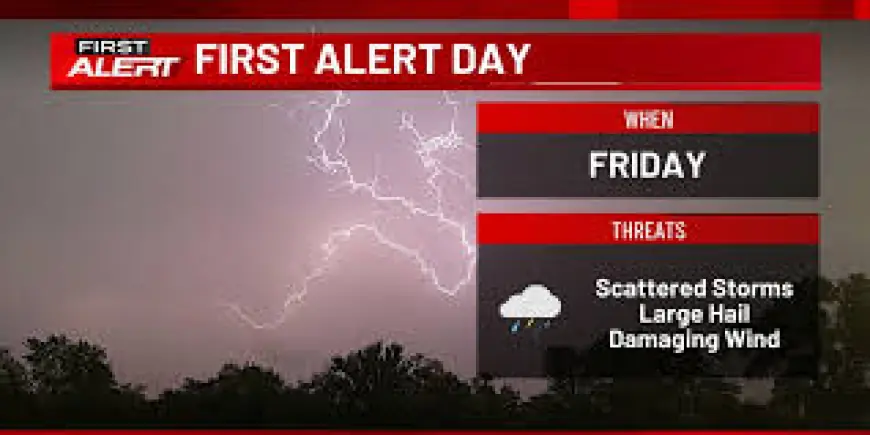
Wichita Weather audiences should note that a storm system will produce two distinct rounds of showers and thunderstorms across parts of the Upper Midwest on Friday, carrying risks of heavy rainfall and isolated severe storms. The timing — one round overnight into Friday morning and another in the evening — elevates the threat for nighttime and late-evening severe weather and localized flooding.
Storm system moving through eastern Iowa
A system pushing through eastern Iowa will be accompanied by a push of warmer, more humid and unstable air that will spark thunderstorm development near or after midnight. The first cluster of storms is expected to form late at night and move northeast, with the highest likelihood of activity occurring between about 3: 00 a. m. in the western portions to around 8: 00 a. m. in the east. Any storm in this window could produce heavy downpours and frequent lightning; there is a slim chance for hail approaching quarter-sized in isolated instances.
Later in the day the same unstable airmass will re-intensify, providing enough energy for an additional round of storm development. Forecasters note that if an organized line of storms forms ahead of the advancing cold front, damaging straight-line winds could continue into the early overnight hours, potentially until roughly 1: 00 to 3: 00 a. m. Saturday before the front clears and the atmosphere stabilizes.
Wichita Weather: what to monitor — SPC, rainfall amounts and safety tools
The Storm Prediction Center has placed portions of southeast Minnesota and northeast Iowa at a level 1 out of 5 on the severe-threat scale, reflecting a conditional but present risk for stronger storms late Friday. Across the broader area, heavy rainfall is expected to be the primary hazard for much of the day.
Rainfall totals could be significant: areas south of I-90 are forecast to receive as much as 1. 00 to 1. 75 inches, and pockets of training storms could produce pounding rain and minor flooding. Hail and damaging wind become a more prominent threat in the evening round, and while the tornado risk is described as low, it cannot be ruled out where storms become more robust.
Practical precautions mirror the expected hazards. A NOAA Weather Radio is recommended as a ready way to receive warnings; when a warning is issued, the safest options are the lowest floor of a sturdy building or interior rooms away from windows. Basements offer the best protection, and mobile-home residents should relocate to more substantial shelter. If outdoors with no shelter available, lie flat in a ditch and protect your head and neck; bridges and overpasses are unsafe havens.
Timing, corridors and near-term temperature shifts along U. S. Highway 30
The second round of storms is forecast to develop in central and western Iowa by mid-evening and spread into eastern Iowa between roughly 7: 00 and 9: 00 p. m. Current guidance hints that areas near and north of U. S. Highway 30 could be initially favored for the strongest evening storms. Wind, large hail and an isolated tornado are among the possible severe outcomes.
How the evening line evolves will determine whether damaging wind threat lingers overnight. Behind the front, blustery west to northwest winds will drive temperatures down sharply — into the upper 30s in the north and mid 40s in the south by daybreak Saturday — with skies clearing and highs only in the mid to upper 40s that Saturday. A brief warm-up follows: late springlike highs in the 60s are expected Sunday and Monday before wintry readings return by next Wednesday, with chances for light snow later in the week.
What makes this notable is the split timing: an overnight-to-morning round that risks heavy rain during vulnerable sleeping hours, followed by an evening round that could produce stronger severe elements when large parts of the region are awake but still preparing for overnight conditions. Given the conditional nature of the severe threat, staying tuned to updates from the SPC and keeping NOAA Weather Radio or other alerting tools active is a practical step for anyone in or tracking storms in the region.