

























Blood Moon Total Lunar Eclipse Today: Totality Is Over — Stunning Photos and Full Recap of the March 3 Lunar Eclipse

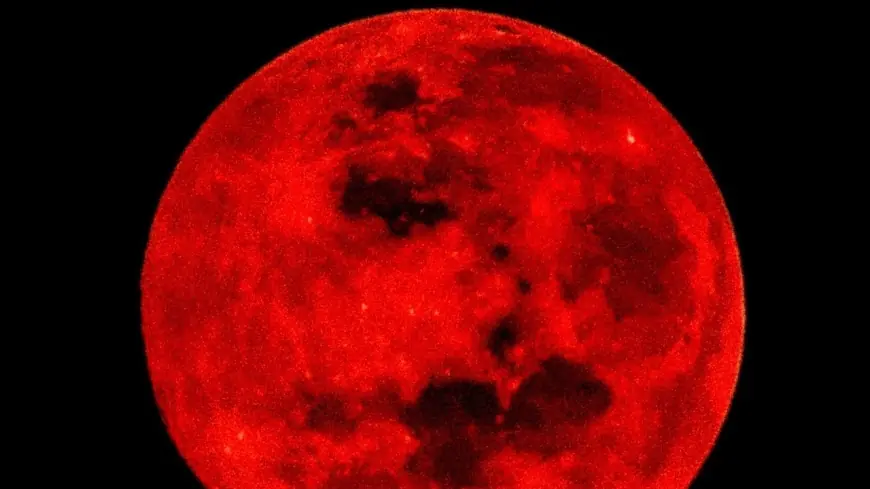
The blood moon total lunar eclipse of March 3, 2026 has ended. Totality is over. Billions of people across North America, the Pacific, Australia, and eastern Asia witnessed one of the most dramatic lunar eclipses in years — and the last total lunar eclipse until New Year's Eve 2028.
Blood Moon Totality Recap: What Happened During the Lunar Eclipse Today
The penumbral phase of the total lunar eclipse began at 08:32 UTC, followed by the partial phase at 09:27 UTC. The Moon fully entered Earth's umbra at 10:29 UTC and remained completely immersed in Earth's shadow for approximately 56 minutes, with maximum eclipse reached at 10:57 UTC. The eclipse concluded at 13:23 UTC when the Moon fully exited Earth's penumbral shadow.
Earth's shadow transformed the full moon into a dramatic blood moon, and the first mesmerizing images flooded the internet — captured by photographers across the Americas and Oceania. While totality has ended, photos and replays are now widely available online.
Red Moon Photos Are Already Pouring In Worldwide
On March 2–3, the Moon slipped into Earth's shadow and transformed into a stunning copper-red orb. Catherine Hyde in Cambria, California captured a telescope image of the total lunar eclipse. Cissy Beasley photographed the red moon from Beeville, Texas before a bank of clouds rolled in and obscured the view. Greg Skyles in Western Australia captured the eclipsed moon low in the eastern sky, incorporating eucalyptus trees for a moody composition.
Photographers from New Zealand, Texas, New Hampshire, California, and Western Australia all submitted stunning lunar eclipse images as the blood moon moved through its phases tonight.
This Was the Third Blood Moon in a Row — And the Last Until 2028
This total lunar eclipse was the final in a row of three. The first blood moon occurred in March 2025, the second in September 2025, and tonight's eclipse completed the trilogy.
The next total lunar eclipse is on December 31, 2028 — already being called the New Year's Eve Blood Moon. After that, there will be a total lunar eclipse on June 26, 2029, and another on December 20, 2029.
What Made the March 3 Lunar Eclipse So Special
The eclipse belongs to Saros series 133 and is the 27th of 71 eclipses in that cycle. The gamma value of −0.3765 indicates that the Moon's path through Earth's shadow passed slightly south of center. An umbral magnitude of 1.1526 confirmed full immersion within the umbra, allowing for a sustained total blood moon phase.
The full moon on the night of March 3, 2026 was located in the direction of the constellation Leo the Lion, with the bright star Regulus nearby throughout the eclipse.
Why the Moon Turned Red Tonight
The rusty color of a blood moon comes from sunlight refracting through Earth's atmosphere. Shorter blue wavelengths scatter away, while longer red wavelengths bend into Earth's shadow and illuminate the lunar surface with a deep red or copper glow — the phenomenon known as a blood moon or red moon.
How dark red the Moon appears during totality depends mostly on conditions in Earth's atmosphere at the moment of the eclipse — volcanic ash, dust, and cloud cover can all deepen the red moon color significantly.
Missed the Blood Moon Tonight? Watch the Live Stream Replay
For those who missed the lunar eclipse tonight due to clouds or location, Griffith Observatory in Los Angeles, TimeandDate, and The Virtual Telescope Project all hosted free live streams of the blood moon eclipse, with replays and highlight footage now available on their YouTube channels.
For those who want to relive the magic, a full story featuring the best lunar eclipse photos from around the world is available, with images still being added by the global astrophotography community.
The next full moon is the Pink Moon on April 1, 2026 — with no eclipse attached. The next blood moon eclipse is New Year's Eve 2028. Set a reminder now.