

























Tinubu approves six major road projects, Carter Bridge redesign in Lagos

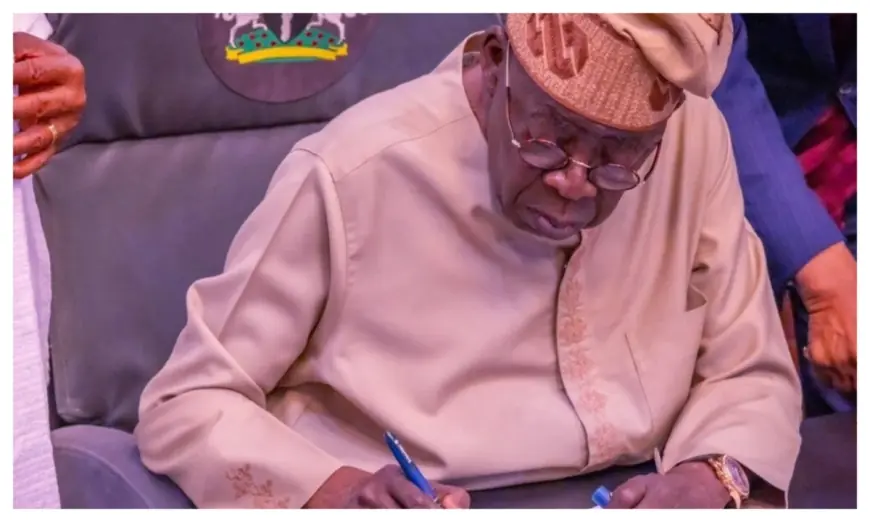
President Bola Tinubu has approved six major federal road projects and the demolition and redesign of the Carter Bridge in lagos, the Minister of Works, Dav Umahi, disclosed. The approvals include large-scale reconstructions, redesigns to concrete carriageways and multiple costed contracts; the minister also directed a nationwide shift toward concrete pavement on federal roads to extend durability.
Projects approved and costs
Umahi outlined six specific projects cleared for construction or redesign. The Suleja–Minna Road will see completion of the remaining 71 kilometres of dual carriageway, with one carriageway awarded to China Geo-Engineering Corporation at a cost of ₦91 billion and the second carriageway cleared by the procurement authority. The Kano–Kongolam Road (132 km) has been rescaled from asphalt to a three-lane concrete carriageway with solar streetlights and CCTV and an estimated cost of ₦334 billion. Reconstruction of the Abuja–Lokoja Road covers an affected 86-kilometre section to be rebuilt in reinforced concrete by five contractors at an estimated cost of ₦146 billion. The Ibadan–Ife–Ilesa dual carriageway (103 km) carries an estimated value of ₦427 billion. Phase Two of the Keffi–Nasarawa–Abaji rehabilitation spans 129. 3 kilometres at a cost of ₦203 billion. Costs are quoted in Nigerian naira (₦).
Carter Bridge plan for Lagos
The government approved the proposed demolition of the Carter Bridge in Lagos and a redesign of a replacement structure, with design and costing set at ₦5. 6 billion. Umahi said technical evaluations and stakeholder consultations concluded the existing Carter Bridge cannot be rehabilitated and must be demolished and replaced. Advanced Engineering Consultants has been engaged to carry out detailed design and cost assessment ahead of procurement for the new bridge. The Carter Bridge decision is part of the package of major works the administration has prioritized across the federation.
Concrete directive for federal roads
Separately, Umahi ordered contractors on federal roads to use concrete cement in ongoing projects to improve longevity, saying concrete sections are being built to last up to 100 years. During an inspection of the Enugu–Onitsha express reconstruction, Umahi highlighted ongoing concrete work by Reynolds Construction Company on about 23 km of the corridor, noting the first 20 km on that contractor’s work had been completed and that a subcontractor, Niger Cat, was completing its assigned sections. The minister contrasted concrete construction with asphalt, noting asphalt is not guaranteed beyond about 15 years in current practice.
Commissioning timeline and outlook
Umahi also disclosed that the federal government plans to commission at least four major road projects in each of the six geopolitical zones by May 15. The minister described the switch to concrete and the redesigns as measures to deliver durable corridors and improved security features, such as lighting and CCTV on upgraded routes. Planned timelines for specific project completions vary by contract and contractor performance; some project completion months were noted for ongoing works, while other schedules remain under procurement or design stages and are not publicly confirmed.
Key takeaways: the administration has approved six major federal road projects across multiple states, authorized demolition and redesign of a Lagos bridge, assigned multi‑billion‑naira price tags to several corridors, and directed a nationwide shift toward concrete construction to increase road life.