
























US Destroys Iranian Ship: Why Old Tech Remains a Defensive Challenge

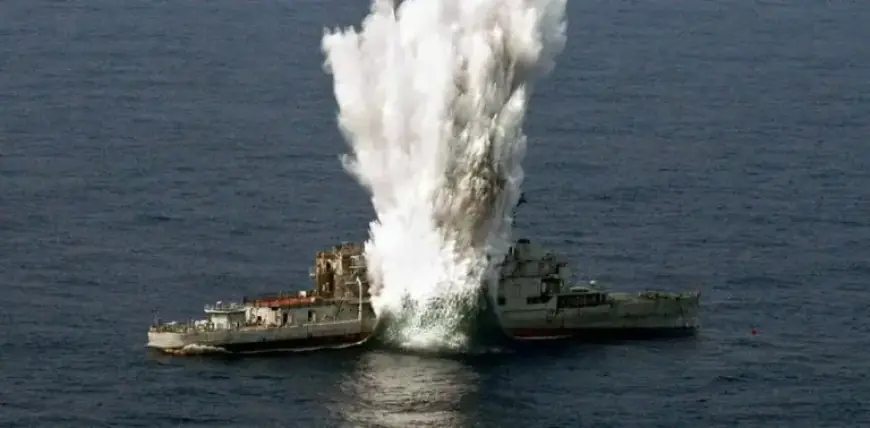
The recent sinking of the Iranian frigate IRIS Dena by a US submarine has raised questions about the effectiveness of older weaponry in modern naval warfare. This incident, which occurred off the southern coast of Sri Lanka, resulted in the loss of 87 lives.
US Submarine Sinks Iranian Ship: A Historic Event
On a Wednesday, a US submarine launched a torpedo against the IRIS Dena, marking a significant moment in military history—the first instance of a US submarine engaging in combat with such weaponry since World War II. US Defense Secretary Pete Hegseth described the attack as a “quiet death” for the frigate.
Understanding Torpedoes: Why Old Technology Persists
Torpedoes, fundamental to submarine warfare, have seen minimal changes in their basic design since their inception. Essentially, a torpedo functions as an unmanned submersible that targets both submarines and surface vessels. Despite technological advancements, the core operational principles remain similar.
- Types of Torpedoes: Today’s torpedoes are generally classified as dual-purpose, capable of striking both ships and submarines. Single-purpose torpedoes, while less common, can be particularly lethal.
- Launch Mechanisms: Torpedoes are initially connected to the launching submarine via wires or fiber-optic cables. As they approach their targets, these connections are severed, and the torpedoes activate their own sonar systems.
Range and Propulsion
The exact firing range of torpedoes is classified, but estimates suggest they can be launched from tens of kilometers away. Their propulsion can be electric, which favors speed, or fuel-powered, often providing longer ranges but reduced acceleration.
Why Torpedoes Remain the Primary Armament of Attack Submarines
Despite their age, torpedoes are key to the functionality of attack submarines. Attack submarines are built to stealthily hunt both enemy submarines and surface ships. They can fire torpedoes while submerged, maintaining their covert status and reducing risks of detection.
Detection and Defense Against Torpedoes
Warships face significant challenges in detecting and defending against torpedo attacks due to limited visibility underwater. The primary detection tools are sonar systems, which come in two varieties: passive and active.
- Passive Sonar: This system listens for engine noises and other sounds without revealing its position.
- Active Sonar: While effective in locating threats, it exposes the user’s location, making it a last resort.
Countermeasures for Torpedo Attacks
When alerted to an incoming torpedo, vessels have several defensive strategies. They may attempt to evade by changing speed and direction quickly. This can disrupt the torpedo’s guidance and sonar tracking.
Additionally, ships and submarines are equipped with decoy mechanisms. These create noise and bubbles, drawing the torpedo away from the target. In extreme cases, compartmentalization allows ships to survive severe damage by sealing off affected areas.
Challenges Ahead
Given their stealth capabilities, submarines are challenging to detect, and often, torpedoes strike their targets without warning. While torpedoes remain rooted in older technology, effective defenses against them are limited. Unlike air defenses that can intercept incoming missiles, few countermeasures exist for torpedoes.
As maritime warfare evolves, torpedoes are likely to maintain their status as a crucial weapon for submarines and anti-submarine operations in the foreseeable future.