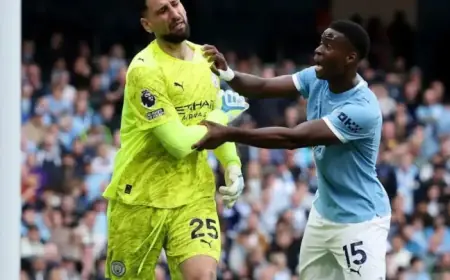























Man City vs Nottm Forest Ends 2-2, Leaving The Title Race Suddenly Tighter

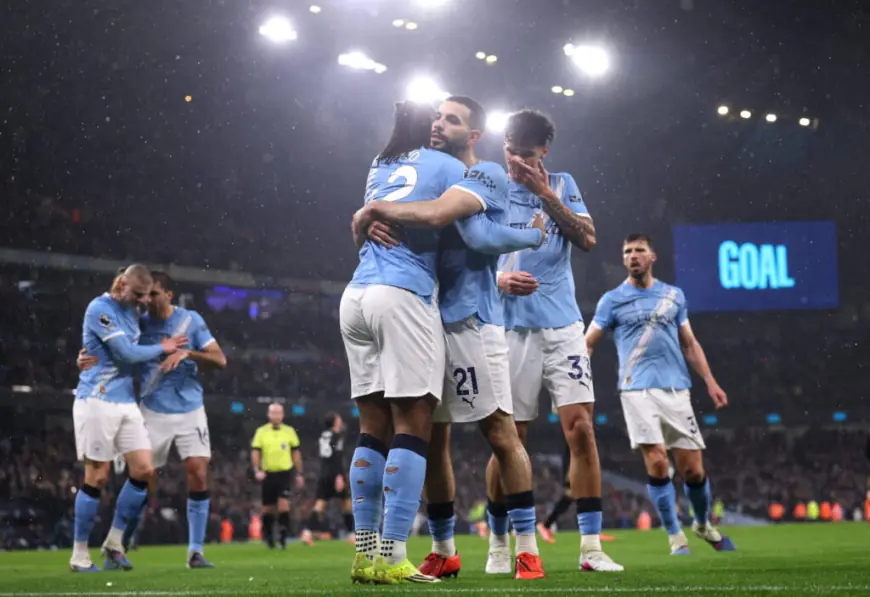
Manchester City’s chase in the English Premier League hit a jolt on Wednesday, March 4, when Nottingham Forest twice came from behind to earn a 2-2 draw at the Etihad Stadium. The result trimmed City’s room for error in the run-in and handed Forest a point that could matter disproportionately in a relegation scrap where confidence is often as valuable as the table.
City looked positioned to turn the screw. They led 1-0, then 2-1, and spent long stretches camped around Forest’s box, stacking pressure and chances. Yet Forest’s equalizers told the larger story: City can still dominate territory and rhythm, but opponents are finding ways to make their best moments count—especially when City’s control wobbles in transition or from second balls around the edge of the area.
Manchester City - Nottingham Forest: How The Game Turned
The scoring pattern captured City’s frustration. City struck first in the 31st minute through Antoine Semenyo, a reward for a spell of sustained attacking control and quick combinations in the final third. Forest’s response arrived after the interval, leveling in the 56th minute through Morgan Gibbs-White and forcing City to restart emotionally as well as tactically.
Rodri’s 62nd-minute goal restored City’s lead and seemed to reassert order. But Forest refused to fold, and the match flipped again in the 76th minute when Elliott Anderson found an equalizer from distance, puncturing the home side’s momentum and turning the final stages into a mix of siege and survival.
From there, the game became less about structure and more about nerve. City pushed bodies forward, chasing a third goal that would have felt inevitable in some past seasons. Forest mixed deep defending with sudden breaks, flirting with a late winner while largely living in survival mode. City’s late pressure produced frantic goalmouth moments and near-misses—exactly the kind of sequences that become defining snapshots when points are counted in May rather than March.
English Premier League Stakes: Title Math Meets Survival Math
A draw can look harmless in isolation; in context, it hardens the arithmetic. For City, dropping home points against a side fighting at the bottom compresses the margin for the remainder of the season. The “game in hand” only matters if it becomes three points, and nights like this force a narrower corridor: fewer acceptable off-days, more must-win fixtures, and less tolerance for defensive lapses that allow opponents to stay alive.
For Nottingham Forest, the point lands differently. A draw away at a contender is the kind of result that can change a dressing room’s mood in a week. It doesn’t solve survival on its own, but it can change how a team approaches the next match—less fearful, more convinced that plans can hold under pressure.
This is where incentives diverge. City’s incentive is to speed the game up, suffocate opponents, and turn volume into goals. Forest’s is to slow the game down, reduce clean looks, and wait for one or two decisive moments. On Wednesday, Forest got precisely that: two moments, two equalizers, and a point built on composure when the ball finally arrived in the right zones.
Antoine Semenyo’s Man City Impact Arrives Fast
Semenyo’s name will linger over this match because his opener was the early proof City’s attacking plan was working—and because his presence has been framed as part of the solution to a familiar problem: adding another direct, high-output attacker to prevent games from turning into chance-spurned stalemates.
In the narrowest sense, he did his job: he scored. But City’s bigger issue wasn’t whether they could break Forest once; it was whether they could control what happened after breaking them. When a team chasing the title concedes twice at home after leading twice, scrutiny shifts from the forward line to the collective management of risk—who stops counters before they start, who wins second balls, who closes the edge of the box, and who makes the decisive intervention when the game threatens to loosen.
That’s also why Rodri’s night felt symbolic. He delivered a goal, but City still couldn’t lock the door. Forest’s second equalizer will be replayed as a finishing moment, yet it begins earlier—with City failing to compress space quickly enough and allowing a strike to be taken under conditions a title-chasing side typically tries to eliminate.
Nottingham Forest’s Blueprint, And What Comes Next
Forest’s performance will tempt others into copying the blueprint: defend deep, accept long spells without the ball, and be ruthless when the window opens. The hard part is the ingredient that doesn’t show up in a simple tactical diagram—execution under stress, in the moments when City’s pressure is at its most claustrophobic and decisions get made a half-second late.
City’s response now matters as much as the draw itself. A win streak immediately reframes this as a frustrating blip. Another home slip turns it into a pattern rivals can feel. For Forest, the next test is translating this surge into points elsewhere—especially against direct relegation competitors—because “big draws” don’t accumulate safety on their own.
Three forward scenarios are already taking shape. If City tighten their defensive rest positions and control the transitions after attacks break down, their performances can once again become predictably suffocating—and the dropped points will fade into the noise. If they keep conceding from moments when structure dissolves, every opponent will believe the door is still ajar, no matter how dominant City look for 70 minutes. And if Forest can pair this defensive discipline with slightly more sustained attacking threat—more time in the final third, more shots, more set-piece danger—the point at the Etihad won’t just be a highlight; it will be a turning marker in a survival campaign that needs tangible momentum.
On a day that began like routine home business, man city vs nottingham forest instead delivered a reminder of how this English Premier League season is being decided: on details—one tracked runner, one loose second ball, one long-range strike that refuses to follow the script.