























How Tonight’s Sky Will Be Remembered: Blood Moon Total Lunar Eclipse Tonight and the Long Wait Until 2028

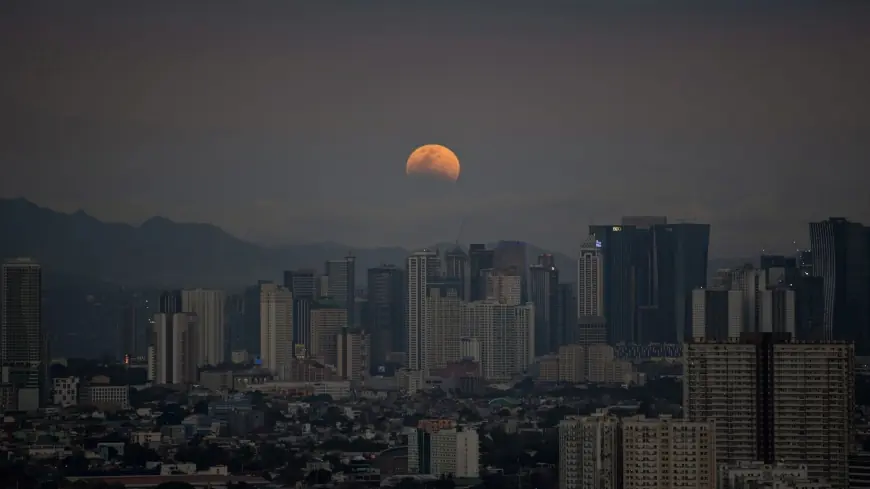
Skywatchers on this continent felt tonight’s shift most sharply: the blood moon total lunar eclipse tonight marked the last visible total lunar eclipse over North America until New Year's Eve 2028, and photographers in multiple regions raced to capture both the partial and crimson phases. Images from America and Oceania began arriving quickly after totality ended, giving viewers a handful of striking perspectives to study and savor.
Who saw the show and what they took away — Blood Moon Total Lunar Eclipse Tonight
Here’s the part that matters: the immediate effect is cultural and visual. Amateur and pro photographers in different time zones delivered contrasting takes — city skylines, low-horizon rises and isolated observatory shots — that emphasize how the same phenomenon reads differently from each latitude. The announcement that this is the last one visible locally for several years reframes tonight as a rare opportunity rather than a routine celestial event.
What’s easy to miss is that the coverage is already functioning as a shared archive: multiple photographers captured the partial phases leading into totality, and a few long exposures recorded the crimson hue when sunlight filtered through Earth's atmosphere. That record will now serve as a reference point during the long gap until the next regional chance.
Images, phases and the on-the-ground sequence
Totality has come to an end, but the eclipse continued through later partial phases. Photographers across America and Oceania produced the first widely circulated images: a still lifted from a livestream showed the lunar disk shortly after Earth's curved inner shadow began crossing it; a photographer on a Pacific island shot the fully reddened moon during totality; another captured a partially eclipsed moon rising above an urban skyline; a mobile observatory in Yucca Valley, California delivered a close view where the outlines of the lunar seas darkened the red orb; and a northern island location returned a deep, saturated totality frame.
- Partial-phase views highlighted the dark basaltic plains on the lunar face, where features such as Mare Crisium and Mare Fecunditatis became visible contrasts against the sunlit crescents.
- The March full moon observed tonight carries its seasonal name, the Worm Moon, tied to the time of year when ground conditions change and certain wildlife reappear.
- Photographic subjects ranged from the low-rise city horizon to high-resolution observatory framing, offering both contextual and detailed scientific-looking views.
If you’re wondering why this keeps coming up: images poured in from different hemispheres because the eclipse was observable across a broad geographic swath, and that variety is what gives the set of photographs their storytelling power.
- Skywatchers in North America should note that this is the last comparable sightline locally until New Year's Eve 2028.
- Photographers who captured the event offered both partial-phase compositions and totality frames, giving a useful visual sequence for study.
- The Worm Moon label provides a seasonal cue that links the sighting to a recurring lunar naming convention.
Key takeaways:
- Tonight’s event produced early, shareable photos from multiple regions, offering a range of visual perspectives rather than a single iconic shot.
- Totality ended, but the eclipse continued through later partial phases captured by field photographers and observatory instruments.
- For North American observers, there will be a multi-year interval before a similar opportunity returns locally.
- The sequence of images emphasizes both the atmospheric coloring that creates the crimson hue and the changing visibility of lunar surface features during the event.
Micro timeline (what happened, in broad strokes):
- Partial phases were photographed as Earth’s shadow began to creep across the lunar disk.
- Totality transformed the full moon into a blood-red orb and was photographed from several southern and northern vantage points.
- Totality ended and photographers continued to record the lingering partial phases.
- Observers on this continent will not see another comparable total lunar eclipse locally until New Year's Eve 2028.
The real question now is how tonight’s images will shape public interest over the coming years as observers anticipate the next local chance. Recent uploads already reveal patterns: urban compositions favor skyline contrast, while island and observatory frames prioritize color and surface detail. These differences matter for how the event is remembered visually and scientifically.
The bigger signal here is the combination of rarity and documentation: when a celestial event becomes the last local occurrence for years, the first photographs take on extra weight as reference points for both amateurs and specialists.
Image note: The first wave of photos includes livestream stills, observatory captures and ground-level city shots; image perspectives and composition varied with location and equipment. Schedule and visibility details are based on the sequence of observations made during tonight’s event; specifics may be updated as more images and precise timings are compiled.