
























Trey Hendrickson Set to Become Unrestricted Free Agent as Texans’ David Montgomery Trade Shifts Market

The Bengals will not place the franchise tag on trey hendrickson, clearing the way for him to become an unrestricted free agent when the new league year opens. That development arrives as the Houston Texans completed a trade for veteran running back David Montgomery, a move that immediately reshapes opportunities for several veteran backs around the league.
Trey Hendrickson and Bengals' decision
The Bengals opted not to use their one franchise tag on Trey Hendrickson before the league's Tuesday deadline of March 3 at 4 p. m. ET, which means he will be free to sign with any team when the new league year begins. The franchise tag guarantees a fully guaranteed, one-year contract for a player who receives it, and teams had until 4 p. m. ET on that date to make the designation; the window to negotiate long-term deals with a tagged player would have extended through July 15 at 4 p. m. ET if a tag had been applied.
Because the Bengals declined to place the tag, trey hendrickson will enter the market alongside other notable impending free agents. That status immediately alters his leverage: as an unrestricted free agent he is free to engage with any team, and his market will be set by competing offers rather than the fixed compensation of a franchise tag.
Houston Texans' acquisition of David Montgomery and domino effects on Joe Mixon and Nick Chubb
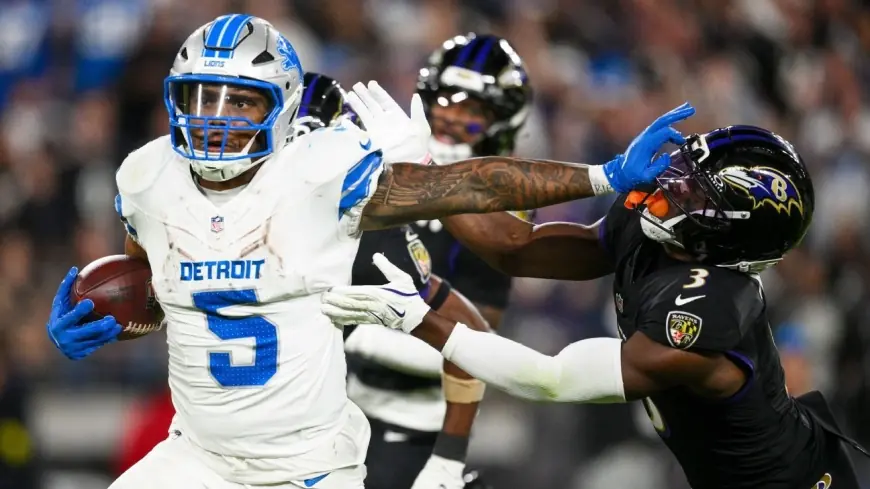
On the same week, the Houston Texans traded for David Montgomery, sending offensive lineman Juice Scruggs plus a 2026 fourth-round draft pick and a 2027 seventh-round pick to Detroit. Montgomery — who amassed 2, 506 rushing yards and 33 rushing touchdowns in three seasons with the Lions — will enter the 2026 season as Houston’s projected No. 1 running back.
The Texans made the move after ranking 22nd in rushing yards per game in 2025 and after rookie fourth-rounder Woody Marks led the team with 703 rushing yards. That combination — an older established back joining a young up-and-comer — has immediate roster consequences. The arrival of Montgomery narrows the Texans’ backfield, and team decisions followed: Nick Chubb remains a free agent, and Joe Mixon is expected to be released as Houston clears room for Montgomery and Marks to lead the backfield.
Montgomery’s playing profile shifted in Detroit last season; he recorded his fewest rushes and touches of his career despite appearing in all 17 games. His snap share also declined, playing 41% of offensive snaps overall and dropping to 33% from Weeks 11–18, and he did not exceed 10 carries in any of the Lions’ final eight games. Still, his three-year totals with Detroit and career production since being drafted in 2019 — one of five players to reach at least 6, 000 rushing yards and 50 rushing touchdowns since that draft class — made him a coveted veteran option.
Financially, Montgomery is under contract for the near term: he is slated to earn $5. 49 million this season, the first year of a two-year, $18. 25 million extension signed in October 2024. Houston also moved other offensive-line pieces that same day, trading starting right tackle Tytus Howard and earlier sending another lineman in a separate deal, reflecting a broader roster reset tied to the Montgomery acquisition.
As a direct effect, the Texans’ decision to acquire Montgomery removes available roster space that would otherwise have been open to veteran backs. Joe Mixon, who missed the 2025 season with a foot injury and was acquired by Houston in 2024, is now likely to be released. Nick Chubb, a free agent, is not expected to return to Houston under the current configuration. The Texans’ pivot to an older proven starter plus a developing rookie makes a crowded veteran backfield untenable.
What makes this notable is the timing: the Montgomery trade came in the first business days after the Scouting Combine and immediately before key franchise-tag and free-agency deadlines. That compressed calendar heightens the impact of roster moves, as teams and players must reassess plans in a narrow window that includes the legal tampering period beginning March 9 at 12 p. m. ET and the official start of free agency on March 12.
Between the Bengals’ choice not to tag a top pass rusher and Houston’s willingness to spend draft capital and roster spots on a veteran runner, the coming days are likely to produce a rapid series of signings and releases. Teams managing the league-wide salary cap of $301. 2 million per club are actively reshaping rosters, and these two decisions — one defensive, one offensive — will ripple through the market as free agents and franchises respond.