
























Nuggets Vs Jazz: Back-to-Back Fatigue Meets a Tanking Jazz — Who Really Feels the Impact?

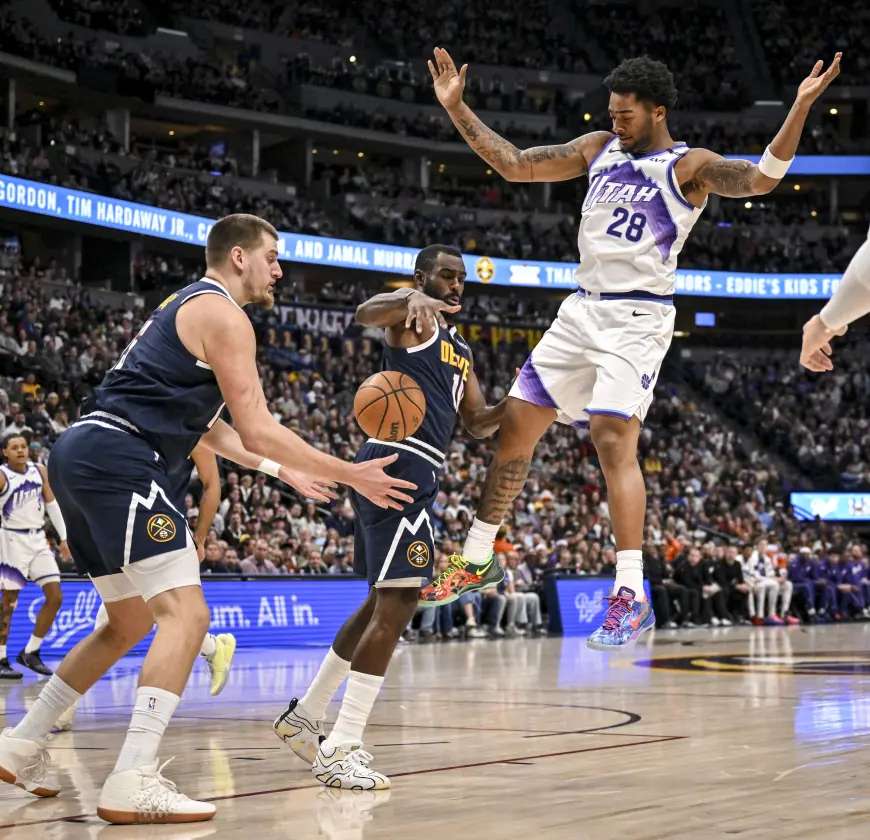
Nuggets Vs Jazz on March 2 is less about rivalry than consequence: Denver's push for better playoff positioning arrives on the second night of a back-to-back, while Utah's deliberate slide increases the value of every loss for its draft outlook. The matchup will be felt first by role players and minutes allocations — and by a Jazz roster already thin with multiple out listings, which magnifies short-term roster decisions.
Nuggets Vs Jazz — immediate impact and who moves first
Here’s the part that matters: Denver is wedged in a congested stretch of the Western Conference, so one extra loss or an exhausted rotation could tilt seeding. Utah’s tanking campaign means the Jazz outcome affects draft probabilities more than local standings. Expect coaches on both sides to make choices that prioritize either rest or development rather than conventional matchup chess.
What's easy to miss is how the timing — Denver arriving on the second night of a back-to-back — creates a small but meaningful advantage for Utah even when the Jazz are short-handed.
Game context and constrained lineups
Basic context for the matchup: the Jazz enter the game having lost three straight home games and are listed with one of the league's worse records; the Nuggets hold a markedly better record and sit near the middle of the West pecking order. Denver recently dropped a crucial game to Minnesota and plays this contest on the second night of a back-to-back, a factor that typically compresses rotation depth and minutes for heavy-usage players.
Utah's publicly listed injury status shows several key players unavailable: Lauri Markkanen (OUT — right hip impingement), Aaron Gordon (OUT — right hamstring strain), Cam Johnson (OUT — right ankle inflammation), Peyton Watson (OUT — right hamstring strain), and Spencer Jones (OUT — right shoulder strain). A separate watch guide listing also includes longer-term outs noted for other players. Those absences contribute directly to Utah's continued slide and their improved lottery odds.
- Team records noted in the watch guide: Utah 18-42, Denver 37-24 (watch guide framing).
- Denver sits around the middle of the Western Conference standings; only a few games separate several seeds in the 3–7 range, creating volatility.
- Utah has taken back-to-back home losses to a lower-ranked opponent, strengthening its draft positioning; the Jazz are near-certain to retain this year's first-round pick (a near-lock percentage was cited).
Coaching decisions that normally aim for competitive balance can tilt toward preservation or auditioning younger players in this setting. Expect shorter benches, altered minutes for regular rotation players, and increased usage for those healthy on the Jazz roster.
- Playing on the second night of a back-to-back typically reduces available energy for star players and limits full-rotation lineups.
- Multiple Jazz outs will force reliance on depth and give fringe players more court time.
Key takeaways:
- The immediate winners of this game will be decision-makers: coaches who use the contest to protect key minutes or to audition depth.
- Role players and younger Jazz roster members will see increased opportunity and responsibility in short-term minutes.
- Denver's seeding race is tight; fatigue from a back-to-back could nudge a narrow margin in a crowded standings window.
- A decisive pattern across these matchups would be teams treating certain games as strategic rather than purely competitive — that pattern would confirm shifting priorities before playoff thresholds.
The real question now is whether Denver’s rotation can absorb the second-night effect without surrendering control, and whether Utah uses the moment to lean further into development. Recent notes indicate the matchup is as consequential for roster management and draft math as it is for the final score; details may evolve as game-time status and coaching plans firm up.
The real test will be how both teams manage minutes and matchups in a game that serves different strategic purposes for each side.