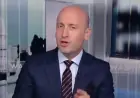

























Nick Fuentes Revolt Forces Trump-Aligned Followers to Recalculate: 'Vote Democrat' Call Shifts the Conversation


Why this matters now: nick fuentes' public call for his audience to abandon President Trump and even back Democrats alters the tactical map for a segment of the far-right that has been influential in recent years. The appeal comes after a U. S. military strike tied to Israel that has already resulted in U. S. casualties; it shifts energy away from party loyalty toward protest and disruption ahead of midterm and presidential cycles.
Nick Fuentes and the immediate effect on his followers
For a cohort that has moved between street activism and online mobilization, the message is clear and blunt: do not treat the current Republican administration as an automatic home. Fuentes has urged followers to skip supporting Republicans in upcoming midterms and, in some cases, to cast ballots for Democrats — a provocative tactical pivot for a livestreamer whose audience numbers are substantial. His episodes draw large viewership, and his recommendations aim to force a reckoning inside the movement over strategy, loyalty and leadership.
Here’s the part that matters: this is less a conventional endorsement than a threat to withdraw organizational attention and votes. That withdrawal could complicate messaging for Trump-aligned operatives who have relied on energized grassroots online followings. The real question now is how many followers follow through and whether that will change candidate behavior in the short term.
What happened and how Fuentes framed it
In recent livestream commentary, nick fuentes sharply criticized the president’s decision to authorize a coordinated strike tied to Israel. He framed the administration as having abandoned prior promises and urged his audience to respond by refusing Republican support in midterm contests and considering Democratic tickets when they vote.
- The strike Fuentes criticized is linked in public discussion to U. S. casualties; it has been reported to have claimed U. S. service members.
- Fuentes described the current Republican leadership as influenced by consultants and donors he views as betraying earlier movement promises; he framed 2026 as a moment to “shut down” the administration and 2028 as the next opportunity for a takeover within the party.
- He urged disruptive tactics — urging metaphorical destruction of the political “house” he sees as failed — and said he might change party affiliation if movement leadership does not shift.
What’s easy to miss is how tactical this messaging is: it’s aimed at squeezing the party by weaponizing non-support rather than building an alternative electoral coalition overnight. That makes it a pressure tactic with potential ripple effects rather than a straightforward realignment.
Embedded time layer:
- 2016 referenced as the movement’s formative moment noted by Fuentes.
- November 2022 cited as a prior point of public interaction between Fuentes and major political figures.
- Fuentes framed 2026 midterms and the 2028 presidential cycle as key inflection points for his strategy.
Key takeaways:
- Fuentes is calling for active withdrawal of Republican support in the near term, which changes how his audience might approach midterm voting decisions.
- His commentary ties a foreign-policy event to internal movement disputes, using the strike as the catalyst for his revolt.
- With a sizeable viewership per episode, Fuentes’ rhetoric aims to steer activist energy toward punishment of the current administration rather than incremental influence within it.
- Signals to watch for that could confirm a larger shift: measurable turnout changes among his followers and public alignment from other influential figures in the same circles.
The real test will be whether these calls translate into changed voting patterns or instead become another sharp moment of intra-movement dispute. If followers largely follow his directive, the practical effect could be a short-term weakening of Republican margins in closely contested races; if not, it will read as a high-profile but contained rebellion.
Writer’s aside: The bigger signal here is how tactical grievances over policy and personnel can quickly morph into electoral prescriptions when amplified by high-reach online personalities.