

























Will the Red Moon Be Visible During the Total Lunar Eclipse?

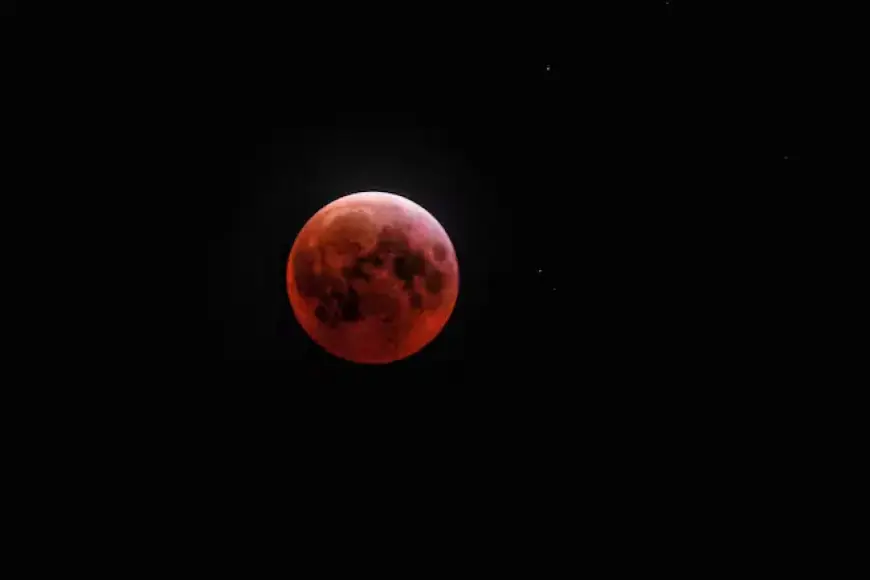
The lunar eclipse is a fascinating celestial event that occurs when the Earth passes between the Sun and the Moon. This alignment casts a shadow on the Moon, resulting in a total lunar eclipse when the Moon is fully engulfed in Earth’s shadow. During this phenomenon, observers may witness the Moon take on a reddish hue, commonly referred to as a “blood moon.”
Understanding the Lunar Eclipse
According to Sébastien Giguère, an educator at Mont-Mégantic National Park and a scientific coordinator at ASTROLab, not every full moon results in a total lunar eclipse. The necessary alignment occurs only a few times each year.
What Causes the Red Color?
The distinctive reddish color of the Moon during a total eclipse is caused by light refraction through the Earth’s atmosphere. Even though the Earth blocks direct sunlight, the atmosphere acts like a lens, allowing some red wavelengths to filter through and reach the Moon.
- The red hue is due to the longer wavelengths of light.
- This effect is also responsible for the color of the Moon during its rising and setting phases.
- The term “blood moon” has gained popularity over time, causing some confusion regarding its definition.
Viewing the Total Lunar Eclipse
To observe the lunar eclipse effectively, it is advisable to find a high vantage point with a clear horizon. Giguère notes that the visual experience can vary depending on the atmospheric conditions and the timing of the eclipse.
Upcoming Eclipse Details
On Tuesday, the total lunar eclipse will begin at 5 AM, with the totality phase occurring at 6:05 AM. However, the low position of the Moon on the western horizon at that time may make viewing challenging.
Partial Lunar Eclipses
During partial lunar eclipses, the reddish effect is generally less pronounced. The bright section of the Moon can overshadow the red color, making it harder to observe.
Future Eclipses
Eclipses occur approximately every six months, providing regular opportunities for observation. Giguère emphasizes that while lunar eclipses may seem more accessible, they do not occur more frequently than solar eclipses.
- Upcoming eclipses include a partial solar eclipse on August 12, 2026.
- A partial lunar eclipse is predicted for August 28, 2026, which may also display a red hue.
In conclusion, the celestial beauty of a total lunar eclipse offers a captivating spectacle. Observing the Moon’s transformation and understanding the science behind it can enhance your appreciation of these astronomical events. For more information on upcoming astronomical phenomena, visit Filmogaz.com.