























Oil Prices Today Spike 9% as Strait of Hormuz Closes, Dow Futures Plunge 600 Points on Iran War Shock


Oil prices today are surging at their highest level in eight months. The Strait of Hormuz — the world's single most critical oil chokepoint — has effectively closed for commercial shipping after Iran's IRGC launched attacks on tankers and threatened the entire Gulf corridor. Stock futures opened Monday, March 2, 2026, in deep red before staging a partial recovery as Wall Street bought the dip.
Oil Price Today: WTI at $72, Brent Crude at $79 and Rising
U.S. oil traded 7.6% higher at $72.12 per barrel Monday, while international benchmark Brent crude was up 8.6% at $79.11 per barrel.
Oil prices jumped with Brent crude futures surging as much as 13% to top $82 a barrel in early trading before moderating gains to around 10% by midmorning ET. The move marks global crude oil prices at their strongest level since last summer.
Brent crude had closed Friday at $72.48, while WTI ended the session at $67.02 — meaning Monday's opening surge represents the single largest single-day percentage gain for crude oil prices in years.
Strait of Hormuz Closed: What It Means for Crude Oil Futures and Shipping
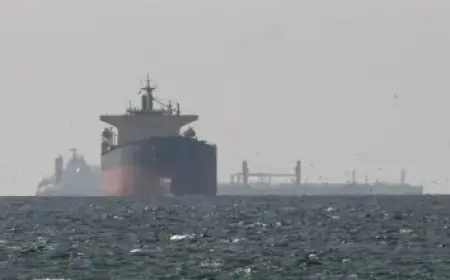
The Strait of Hormuz is effectively closed for commercial shipping despite technically remaining open. Insurance withdrawal is doing the work that a physical blockade has not — the outcome for cargo flow is largely the same.
Tanker traffic dropped sharply as satellite navigation systems were disrupted. The UK Maritime Trade Operations Center reported attacks on several vessels in the area on either side of the strait and warned of elevated electronic interference to navigation systems. A bomb-carrying drone struck a Marshall Islands-flagged oil tanker in the Gulf of Oman, killing one mariner.
About 20 to 30 percent of global oil and gas supplies are shipped through the Strait of Hormuz daily. The EIA estimates that in 2024, 84 percent of crude oil and condensate shipments transiting the strait headed to Asian markets.
Saudi Arabia intercepted Iranian drones that attacked the Ras Tanura oil refinery near Dammam, and the refinery was shut down as a precaution, Saudi state television reported — a major escalation demonstrating that key Gulf energy infrastructure is within Iran's reach.
Dow Futures, Nasdaq Futures, and S&P 500 Futures: Monday's Market Open in Detail
As of midday Monday, the Dow Jones Industrial Average plunged approximately 503 points, a decline of roughly 1.1%, hovering near the 48,570 mark. The S&P 500 was down nearly 1.2%, trading around 6,798, while the Nasdaq Composite slid over 1.1% to 22,529.
The S&P 500 later turned positive, rebounding from sharp declines earlier in the day as investors bought the dip following the US and Israel strikes on Iran. The Nasdaq Composite turned higher by 0.5% after declining 1.6% at the low. The Dow hovered near the flatline after being down nearly 600 points.
Investors bought heavily into tech leaders like Nvidia and Microsoft, treating cash-rich companies as relatively resilient to war-related economic disruption. Wall Street is widely betting on a tumultuous yet relatively short conflict, with history suggesting equities tend to shrug off geopolitical concerns or rebound shortly after tensions ease.
Stock Market Winners and Losers: Defense Up, Airlines and Cruise Ships Down
Defense stocks saw outsized moves. Shares of Northrop Grumman, RTX Corporation, and Lockheed Martin rose 3.75%, 4.4%, and 2%, respectively. Shares of airline stocks fell as investors grappled with uncertainty across the Middle East. American Airlines, Delta Air Lines, and United Airlines sank 3.6%, 2.3%, and 2.9%, respectively. Air France dropped 9.4% and Lufthansa fell 5.2%.
Norwegian Cruise Line stock fell 7% before the bell. Royal Caribbean shares fell 5% in premarket hours. Gold futures traded above $5,400 per ounce as the ongoing conflict drove investors into safe-haven assets.
Gas Prices, Inflation, and What Comes Next for Oil Futures
Higher oil prices raise the prospect of costlier gasoline for U.S. drivers as well as increased prices for other goods at a time when people in many countries have already been stung by inflation.
European natural gas futures jumped more than 40% after Qatar, a major LNG supplier, halted production due to the conflict. The jump came after QatarEnergy said Monday it would stop its production of liquefied natural gas while the war rages.
Analysts have warned oil prices could top $100 a barrel if the Strait of Hormuz stoppage is prolonged. One analyst forecast prices would return to $65 to $70 a barrel after a near-term spike — but stressed that the key question is whether the Strait remains effectively closed for more than a few weeks. If so, it would hurt global growth and raise global inflation noticeably.