























Raf Fairford: Starmer stands by decision not to join strikes

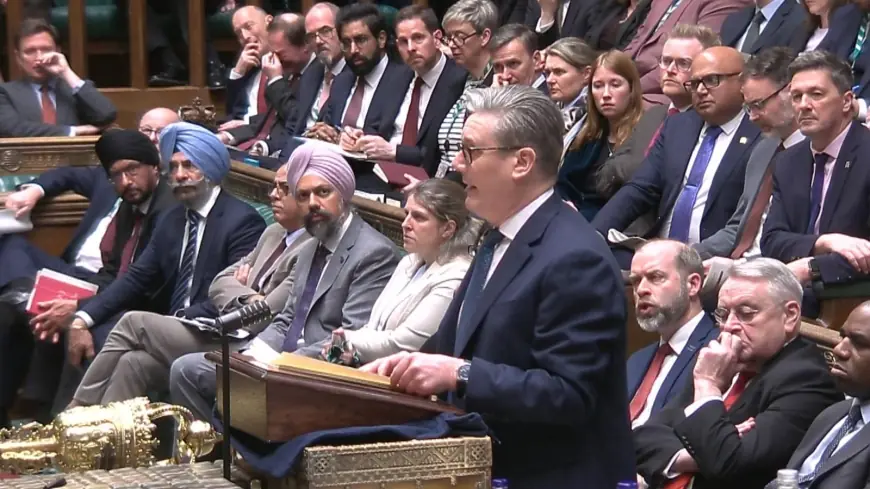
The role of raf fairford is unclear in the provided context. Prime Minister Sir Keir Starmer said he stood by his weekend decisions: not to join the initial US and Israel strikes, then to permit US use of UK bases for defensive actions.
Starmer's two weekend decisions
Sir Keir said he took two decisions over the weekend: one not to join in with the initial strikes on Saturday, and then one to allow US planes to conduct defensive actions from UK bases. He told MPs and the public that it was his "duty to judge what is in Britain's national interest" and added, "That is what I've done, and I stand by it. "
Lawful basis and thought-through plan
He repeatedly said the need to establish a "lawful basis" and a "viable thought-through plan" before committing British service people to action, arguing that "the lessons of history have taught us that it is important, when we make decisions like this, that we establish there is a lawful basis for what the United Kingdom is doing. And that there is a viable thought-through plan with an objective that can be achieved or has a viable prospect of being achieved. " He added that "That is the principles that I apply to the decisions that I made over the weekend, the principles I applied to the decision not to get involved in the offensive strikes of the US and Israel. "
Raf Fairford and RAF Akrotiri
The specific involvement of raf fairford in any of these choices is unclear in the provided context. What the prime minister did make explicit was that, while the UK would still not join "offensive action" against Iran, it would permit the US to use joint UK-US bases to strike Iran because of the "scorched earth strategy" with which Iran had responded to the US and Israel. Hours after Sir Keir announced on Sunday he had allowed US use of UK bases, a drone hit RAF Akrotiri in Cyprus.
Scope and stated purpose of strikes
The government says the specific and limited purpose for which those strikes can be used is to "degrade Iran's capacity to launch missile and drone attacks across the region, including in Gulf countries where there are many British citizens. " Ministers stress this is different from an earlier US request, which Sir Keir resisted, to use British bases for broader strikes on Iran, and say the aim is to target missile sites rather than pursue regime change.
Parliament and political reactions
Sir Keir's distinction—that the UK would not join offensive action but would permit limited use of bases—was flagged as likely to come under strain in the House of Commons. From one side, MPs will criticise allowing the US to use British bases at all and fear that having allowed some strikes, the UK will become further enmeshed in the war. Some will question whether the permitted strikes can truly be narrowly defined as "defensive" given the wider context of American actions described as designed to precipitate regime change. On the other side, there will be those asking why the government is not doing more to support strikes that could topple a regime described in the context as menacing the region and threatening British citizens here in the UK too.
Trump's criticism and the Chagos dispute
US President Donald Trump criticised Sir Keir for his initial reluctance to allow US use of UK airbases, saying the UK "took far too long" to permit US forces to use its airbases to attack Iran and that he was "very disappointed" in Sir Keir over a deal to hand the Chagos Islands to Mauritius as a means to preserve the status of the UK-US airbase on Diego Garcia. Trump described the Chagos deal as a "very woke thing" and said the UK should have allowed Diego Garcia to be used immediately, asserting he was disappointed and that the delay "took far too much time. Far too much time. " The context states that the UK government bill to formalise the deal with Mauritius is paused at its final stage in parliament after Trump changed his mind, and that Sir Keir has said the plan will not go ahead without US agreement.
Casualties, timing and goals cited by Trump
The context records Trump's graphic claim that there were "people without arms and legs and faces that have been blown up" and his assertion that "Iran is 95% of those, " a claim he did not elaborate. Trump also said the operation was "well ahead of schedule, " saying, "We always anticipated four weeks. We also anticipated two to three weeks to take out some of the leadership, but we've taken out all of it in one day. " The context notes that Trump has been vague about the strikes' goals, telling different audiences that the aim is for the Iranian people to rise up while also talking about the possibility of holding talks with successors to Ayatollah Ali Khamenei, who was named in the context as killed in the initial wave of US-Israel attacks.
Historical echoes and release of the speech
In his statement, Sir Keir echoed his own earlier words from March 2003, when he wrote that "Engaging in armed conflict in breach of international law is a precarious business. " The context notes he campaigned against British involvement in Iraq and that, at the time of that 2003 remark, he was Keir Starmer QC and years away from becoming an MP. Almost a quarter of a century on, Sir Keir Starmer KC faces his own dilemma about how to approach American military action in the Middle East. His speech was recorded and released by Downing Street on Sunday night, and he closed by invoking Britain three times in one sentence: "This is the British government, protecting British interests and British lives. "
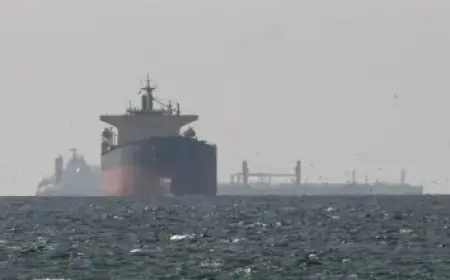
Other items in the context note that allies of the US in the Gulf have borne the brunt of Iran attacks and that oil prices jumped after an attack on Iran threatened the Strait of Hormuz.
The sequence of events in the provided context runs: initial US-Israel strikes on Saturday, UK refusal to join those offensive strikes, Sir Keir's weekend decisions announced on Sunday (speech released Sunday night), his allowance of US use of UK bases for defensive strikes, a retaliatory wave from Iran including missile and drone attacks across the region that hit a UK airbase in Cyprus, and public and parliamentary debate and criticism including comments from the US president.
Unclear in the provided context: the specific role, if any, of raf fairford in these decisions or operations.