

























Xom Stock surge and Chevron gains: why xom stock and other energy names climbed after the Iran weekend

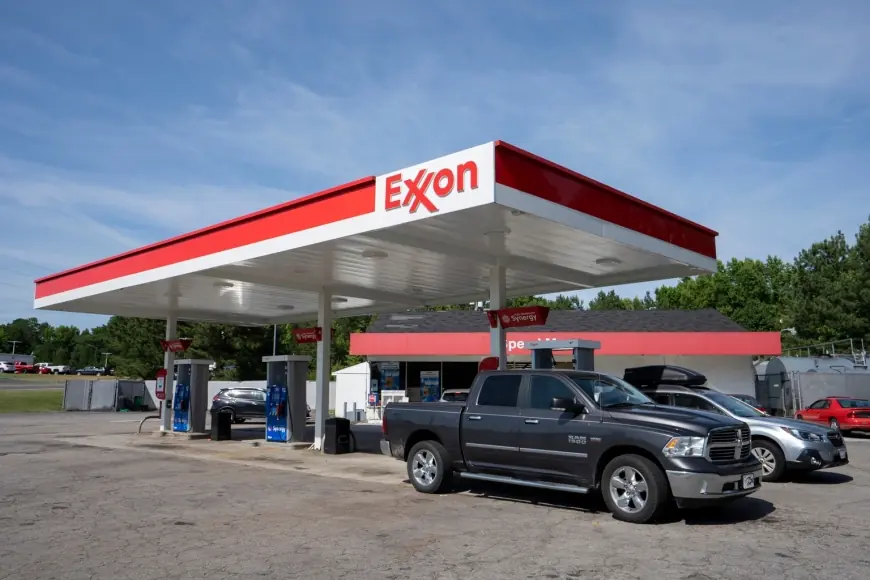
Oil prices rose as fears grew that the Iran conflict could disrupt flows through the Strait of Hormuz, a major global oil shipping route, lifting energy stocks. The move pushed shares of Exxon Mobil and Chevron higher and renewed comparisons between the two giants as investors weigh returns and income now.
Weekend events in Iran and the Strait of Hormuz lifted crude and energy shares
Weekend events in Iran prompted concern that flows through the Strait of Hormuz could be disrupted, and that dynamic helped drive a spike in crude that lifted energy names. An analyst noted the importance of understanding how those developments could affect the broader oil and gas industry and potentially help one of the largest companies in the sector.
Early trading reaction: XOM and CVX up about 5% on Monday
Shares of Exxon Mobil (XOM) and Chevron (CVX) were up about 5% in early trading on Monday as investors reacted to the crude spike and broader market volatility. A stock comparison tool placed XOM and CVX head-to-head to evaluate which is the better Wall Street pick, highlighting divergent return outlooks despite similar near-term gains.
Xom Stock performance, market cap and recent earnings details
Exxon Mobil stock has risen 41% over the past year and 28% year-to-date, gains attributed in the context to the company’s streamlining measures and its acquisition of Pioneer Natural Resources. The company has a market cap of $635. 4 billion and operates across the full energy chain, from oil production to refining and chemicals, which the analysis said allows it to capture more profit when energy prices rise.
On the earnings front, Exxon Mobil reported full-year 2025 earnings of $28. 8 billion, down from $33. 7 billion in 2024 as energy prices cooled from the prior year’s highs. In the fourth quarter, adjusted earnings came in at $1. 71 per share, slightly ahead of Wall Street estimates of $1. 68; nonetheless, the stock slipped after the release as investors focused on weaker commodity prices and softer chemical margins. Analysts hold a Moderate Buy consensus on XOM stock based on 12 Buys, six Holds and one Sell assigned in the past three months, with an average XOM stock price target of $144. 63 indicating 5. 16% downside. At a quarterly dividend of $1. 03 per share, XOM stock offers a yield of 3. 35%.
Chevron’s gains, Venezuela exposure and recent results
Chevron stock has risen 22% over the past year and 24% year-to-date. The company has drawn attention this year as the only major U. S. oil company still operating in Venezuela, a position that could be advantageous if the country’s oil exports increase after recent political developments. Chevron recently reported fourth-quarter 2025 earnings of about $2. 8 billion, or roughly $1. 39 per share; adjusted earnings came in near $1. 52 per share, and the company generated about $46. 9 billion in quarterly revenue.
Analysts hold a Moderate Buy consensus on CVX stock based on 15 Buys and six Holds. The average CVX stock price target of $187. 26 indicates 0. 27% upside potential, and at a quarterly dividend of $1. 71 per share, CVX offers a yield of 4. 5%.
Different risk‑reward profiles: valuation, upside and income
Both oil majors benefit from higher crude prices, but the comparison underscores a different risk‑reward profile for each. Exxon Mobil is already trading above its average analyst price target, a positioning that suggests limited near-term upside after its strong rally. In contrast, Chevron still shows modest upside potential alongside a higher dividend yield, making it the slightly more attractive pick for investors focused on income and continued exposure to elevated oil prices. Both stocks carry a Moderate Buy rating from analysts, but their return outlooks look very different at present.
Analyst disclosure and cautionary notes about coverage
The author of one recent market piece disclosed a beneficial long position in XOM through stock, options or other derivatives and stated that the article expresses the author’s own opinions. The author said they were not receiving compensation beyond that tied to the publication and that they have no business relationship with any company whose stock is mentioned. The coverage also included standard cautions: past performance is no guarantee of future results; no recommendation or advice was being given as to whether any investment is suitable for a particular investor; views expressed may not reflect those of the publication as a whole; the publication is not a licensed securities dealer, broker or US investment adviser or investment bank; and its analysts include third‑party authors who may not be licensed or certified.