






















Senegal PM warns Pastef could quit government if President diverges from party vision

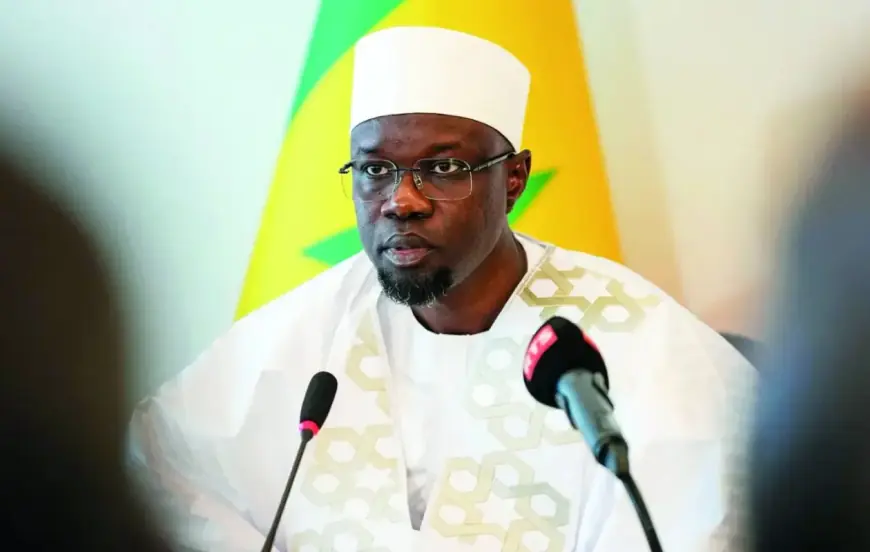
Prime Minister Ousmane Sonko said he is prepared to withdraw his Pastef party from the governing coalition and return to opposition if President Bassirou Diomaye Faye breaks with the party’s vision, a move that would reverberate across Senegal’s stalled IMF negotiations and domestic politics. The declaration comes amid high tensions marked by university violence, protracted talks with the International Monetary Fund and internal disputes blamed on recent political “newcomers. ”
Ousmane Sonko's ultimatum
On March 2, Sonko told supporters during a live broadcast that the question of governing together would be settled by whether the president remains aligned with Pastef. He framed the arrangement as a “soft power-sharing” if alignment is absent: the parties would manage differences and seek common ground, but a clearer break would force either a more difficult cohabitation or a reversion of Pastef to opposition. Sonko emphasized that Pastef, which holds a parliamentary majority, has no qualms with either outcome.
President Bassirou Diomaye Faye and the cohabitation risk
The tension stems from the unusual political compact that placed Sonko and Faye as leading figures of the same movement after the 2024 election. Sonko was barred from running in that vote because of a legal conviction and tapped a little-known aide, Bassirou Diomaye Faye—also a Pastef member—as his replacement candidate; Faye then appointed Sonko prime minister. Signs of dissension have since emerged, including conflicting statements between the two camps in November over the leadership of the ruling coalition.
Senegal's IMF programme freeze and misreported debts
Financial strain has sharpened political fault lines. The International Monetary Fund froze a $1. 8 billion programme in 2024 after Sonko’s government uncovered misreported debts from the previous administration estimated at more than $11 billion. Long-drawn negotiations to secure a new lending programme have coincided with violence at universities and efforts to raise cash. Sonko’s public rejection of an IMF-proposed debt restructuring at one point sent Senegal’s international bonds sharply lower, and any suggestion of discord now raises the prospect of further delays in talks with the Fund.
PASTEF, coalitions and the "newcomers" complaint
Sonko has pushed back against portrayals of Pastef as unwilling to form alliances, insisting the party is open to coalitions but will not accept outsiders trying to lead Pastef when the party “already holds all the power. ” He accused recent entrants to the political scene of stoking divisions rather than unity, asserting that “95% of the noise comes from them. ” Sonko said actions by these newcomers have aimed to divide and play games to separate and better rule—behavior Pastef will not accept.
Parliamentary majority, 2024 election and political partnerships
PASTEF underscores that alliances must respect the political weight and legitimacy it achieved at the ballot box in the 2024 election. The party also notes its history of mergers since 2015 and long-standing collaborations, pointing to partnerships with figures such as Cheikh Tidiane Dièye and Aïda Mbodj as constructive examples. Pastef has granted parliamentary and ministerial positions to allies as part of those collaborations, and the party rejects an image of being inward-looking or hegemonic. Sonko argued the current tensions and media controversies are driven more by the agitation of newcomers than by any historical or internal rift within the presidential movement.
What makes this notable is the convergence of political, fiscal and social pressures: a frozen $1. 8 billion IMF programme after the revelation of over $11 billion in misreported debt, street-level unrest at universities, and an intra-movement dispute that could reshape Senegal’s governing majority. The timing matters because a split would complicate ongoing IMF negotiations and could alter the composition of the executive and parliamentary alignments at a moment when external financing and domestic stability are in flux.
For now, Sonko has left the door open for both managed cohabitation and an outright return to opposition, while blaming newcomers for much of the public friction. The administration’s next steps—whether moves to re-align the president with Pastef’s agenda or a formal rupture—will determine whether the government withstands the current strains or enters a new phase of political contestation that could further delay efforts to secure international financial support.