
























Mansoureh Khojaste Bagherzadeh and the one-minute Israeli–US operation that killed Ali Khamenei

The killing of Iran’s supreme leader, Ayatollah Ali Khamenei, in a concentrated operation that lasted roughly 60 seconds has reshaped a volatile region; mansoureh khojaste bagherzadeh is unclear in the provided context. The strikes followed years of intelligence work and months of closely coordinated technological support, and they have already prompted debate about strategic consequences.
How the operation unfolded
What unfolded was described as the culmination of decades of painstaking intelligence gathering by Israeli secret services, augmented by crucial technological resources and manpower provided over the last six months by the CIA and other US intelligence services. The operation culminated in a single concentrated burst of lethal violence intended to decapitate the Iranian regime. Military officials in Israel said the strikes were near‑simultaneous and completed within 60 seconds.
Casualties and the scale of the attack
The strikes killed Ayatollah Ali Khamenei, who was 86, along with seven members of the top Iranian security leadership who had gathered at several locations in Tehran, and about a dozen members of his family and close entourage. Military officials in Israel said the strikes were near‑simultaneous. Forty other senior Iranian leaders also died in the attack. The killing opened an air offensive launched this weekend by Israel and the US in an effort to overthrow the radical clerical regime in Tehran, plunging the Middle East into renewed chaos and violence.
Intelligence build‑up and tracking
Israeli intelligence services had built a minutely detailed file on Khamenei over many years, tracking his daily routine and those of family members, associates, allies and those charged with keeping him safe. The timing of the assassination was determined by information the CIA gleaned about a meeting of top Iranian officials at a leadership compound in the heart of Tehran scheduled for Saturday morning. The CIA was able to tell Israeli counterparts that Khamenei would be at the site and the timing of the meeting.
A former CIA veteran described the long process of assembling discrete pieces of information into a coherent picture, likening it to putting together a giant jigsaw puzzle and noting that investigators follow mundane traces—how food is delivered, what happens to trash—to close gaps in intelligence.
Reuel Gerecht said the US would have been able to bring significant technological assets into play, though it was Israel that had built the networks of agents on the ground capable of supplying human intelligence and carrying unclear in the provided context.
Strategic debate among intelligence veterans
Experts and veteran spies in Israel and the US described the operation as a major, high‑stakes action but warned it could be a strategic error. Some argued the strikes risk alienating potential supporters and could open the way for more radical opponents. One analyst argued that reliance on assassinations has limits: leaders of armed groups have been killed in the past, but organizations have endured because leaders are replaced. The operation was noted as unprecedented in that Israel has a long history of overseas assassinations but had never before killed a head of state.
Amos Yadlin characterized the strike as a tactical and operational surprise, noting that the general expectation had been for an attack under cover of darkness, mirroring a surprise strike that opened a 12‑day war in June.
Reactions in the UK
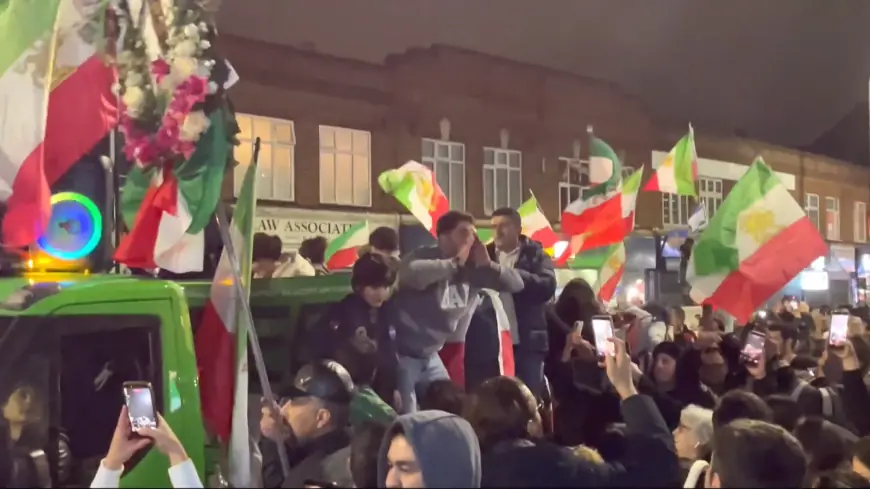
The Defence Secretary, John Healey, said protecting British troops and civilians in the Middle East is his main concern but refused to be drawn on whether he thought the US and Israel’s attacks on Iran are justified. Iranians living in the UK have welcomed the blow to the regime; many of those who welcomed it had fled Iran as dissidents.
Mansoureh Khojaste Bagherzadeh: presence in the coverage
Mansoureh Khojaste Bagherzadeh: the presence, role or reaction of this individual is unclear in the provided context. The name appears as a required reference for this report, but no factual detail about mansoureh khojaste bagherzadeh is present in the material supplied for this article.
Details remain in flux and further reporting may expand or revise this picture. Recent updates indicate a large‑scale air offensive has been launched following the strike and that the strategic ramifications are being actively debated by intelligence veterans and political officials.