

























Blood Moon Returns Tuesday: Total Lunar Eclipse on March 3 Is the Last Until 2028

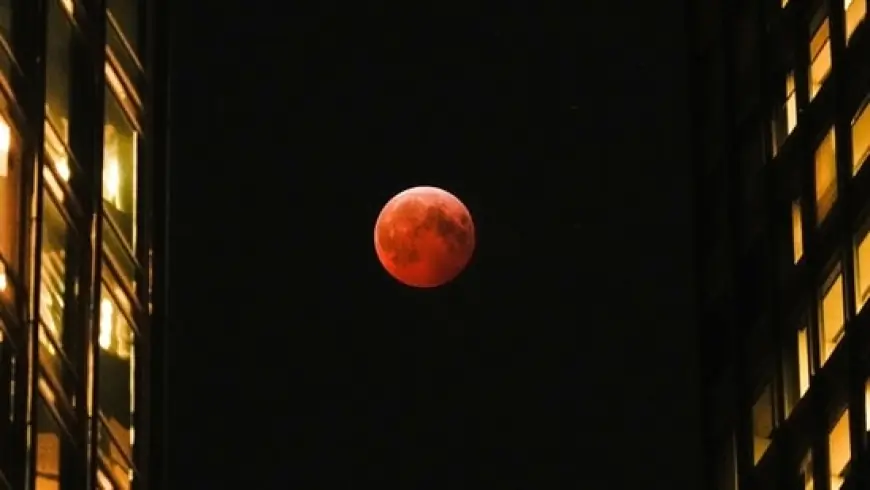
The Blood Moon is almost here. On Tuesday, March 3, 2026, a total lunar eclipse will turn the full Moon a deep, rusty red across North America, the Pacific, Australia, and East Asia. If you miss this one, the next Blood Moon visible in the Americas will not arrive until New Year's Eve 2028.
What Is a Blood Moon and Why Does It Turn Red
A Blood Moon occurs during a total lunar eclipse when Earth passes between the Sun and the full Moon, casting a shadow that covers the Moon completely. The lunar surface takes on a red color because stray bits of sunlight filter through Earth's atmosphere.
Shorter blue wavelengths scatter easily in the atmosphere, while red and orange wavelengths pass through more directly — the same effect that makes sunsets appear red. The result is a dark, rusty red or orange Moon during totality.
No special glasses or equipment are needed. Unlike a solar eclipse, watching a Blood Moon is completely safe with the naked eye.
Blood Moon Timing and Key ET Milestones for March 3
Earth's shadow begins creeping across the Moon at 4:50 a.m. ET on March 3. Totality — when the Moon begins turning blood red — starts at 6:04 a.m. ET. Peak Blood Moon intensity arrives at 6:33 a.m. ET, and Earth's shadow begins leaving the lunar surface at 7:02 a.m. ET.
Lunar totality will last 58 minutes and 18 seconds as the Moon sits fully inside Earth's umbra. That gives skywatchers nearly a full hour to observe the deep red hue before the Moon gradually returns to its normal appearance.
Where to Watch the Blood Moon Total Lunar Eclipse
The Blood Moon lunar eclipse is best seen in the western regions of North America, as well as eastern parts of Asia and Australia. It will not be visible in Europe or Africa.
In states like California, the entire lunar eclipse will be visible beginning shortly after midnight on March 3. In the eastern parts of the world, the further east you are the better, with eastern Australia able to see the lunar eclipse after sunset on March 3.
For observers on the East Coast, the event will deliver a rare bonus: a selenelion, when both the Sun and the eclipsed Moon are simultaneously visible on opposite horizons.
This Blood Moon Is the Third in Two Years
The Blood Moon on March 14, 2025 turned the lunar surface red for more than an hour over North and South America. A second one on September 7, 2025 lasted 82 minutes and was visible over Europe, Asia, Africa, and Australia.
This year's event is the third Blood Moon within a two-year span, sandwiched between remarkable solar events including a ring of fire eclipse on February 17, 2026, and the eclipse of the century slated for August 12, 2026.
After This Blood Moon, a Nearly 3-Year Wait Begins
This is the only total lunar eclipse of 2026. If skywatchers miss it, they will have to wait until New Year's Eve 2028 to see another one. There will be partial lunar eclipses visible in 2027, but no total lunar eclipse visible anywhere on Earth again until December 31, 2028.
The show unfolds over several hours, and no special equipment is required to observe it — just a clear, cloudless view of the sky. Venture outside a few times to see Earth's shadow darken the Moon, eventually revealing the reddish-orange orb.
Set your alarm, find an open horizon, and look west early Tuesday morning for one of the most striking skywatching events of the decade.