
























Total Lunar Eclipse Blood Moon Hits March 3, 2026 as Full Moon Peaks Hours Later

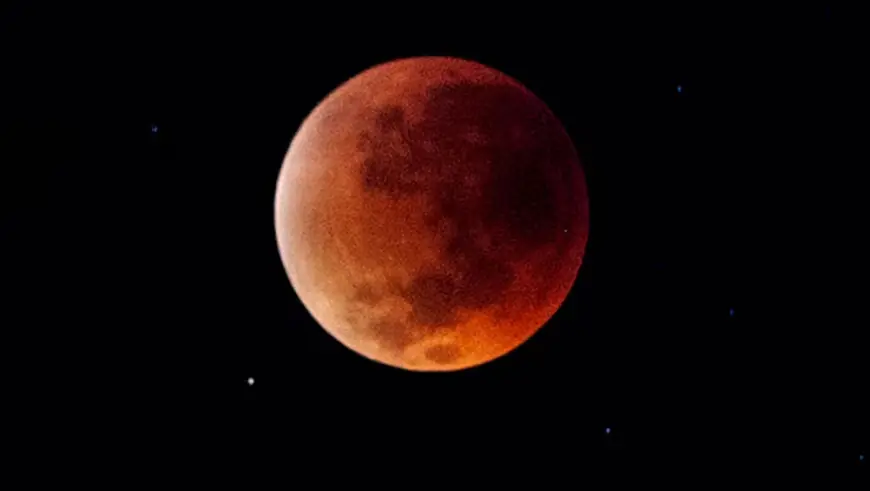
A total lunar eclipse—the classic Blood Moon—unfolds overnight Monday into Tuesday, March 2–3, 2026 (ET), turning the Moon copper-red for nearly an hour at maximum. The eclipse’s deepest phase, totality, runs from 6:04 a.m. to 7:03 a.m. ET on Tuesday, March 3, with the midpoint around 6:33 a.m. ET. This eclipse lines up with the March 2026 full moon, which reaches exact “full” shortly after: 6:37 a.m. ET on March 3.
That pairing—eclipse totality brushing right up against the exact full-moon moment—is why searches for “blood moon March 3,” “lunar eclipse March 3,” and “is it a full moon tonight” are all colliding at once.
Is it a full moon tonight?
If you mean Monday night, March 2, 2026 (ET): it’s not yet at the exact full-moon moment when the evening begins, but it will look essentially full—and it’s the night the eclipse begins for much of North America. The formal “full moon” timestamp is Tuesday morning, March 3 at 6:37 a.m. ET, so the Moon is astronomically “full” just after sunrise on the East Coast, while the eclipse itself peaks before dawn.
If you’re in Cairo on Monday night, March 2: the Moon is still waxing gibbous through the night, and the exact full-moon moment occurs Tuesday, March 3 at 1:37 p.m. Cairo time. The catch is visibility: the March 3 total lunar eclipse is not a good show from Cairo, because the Moon is setting or already below the horizon during the key phases there.
In other words: the full moon is March 3, but whether it’s “tonight” depends on where you are and what clock you’re using.
Blood Moon March 3: the key eclipse times
Here’s the clean timeline in Eastern Time (ET), since that’s when most “tonight” questions are being asked across the Americas:
-
Penumbral eclipse begins: 3:44 a.m. ET (March 3)
-
Partial eclipse begins: 4:50 a.m. ET
-
Total eclipse begins (Moon turns fully red): 6:04 a.m. ET
-
Greatest eclipse (deepest red): 6:33 a.m. ET
-
Total eclipse ends: 7:03 a.m. ET
-
Partial eclipse ends: 8:17 a.m. ET
-
Penumbral eclipse ends: 9:23 a.m. ET
The headline feature is totality—about 58 minutes—but the visual drama starts earlier. Once the partial phase bites into the Moon, you can watch the shadow curve across it in real time. Totality is when the Moon stops looking “eclipsed” and starts looking transformed—brick, rust, or dark cherry, depending on atmospheric conditions.
This is also why the “blood moon total lunar eclipse” phrase sticks: it’s not a nickname invented for hype. The red is physics.
March full moon 2026: why it turns red
A total lunar eclipse happens when Earth sits directly between the Sun and the Moon, pushing the Moon into Earth’s darkest shadow. The Moon doesn’t vanish because sunlight is still being bent through Earth’s atmosphere—filtered, scattered, and “reddened” like the colors at sunrise and sunset. That red-tinted light reaches the Moon and paints it.
The exact shade is the part nobody can promise in advance. Dust, clouds, pollution, even recent volcanic activity can deepen the red or dull it toward brownish-gray. That uncertainty is part of the draw: the eclipse is scheduled to the second, but the color is a live performance by the atmosphere.
Lunar eclipse 2026: where the best viewing really is
The most reliable views favor places where the Moon is high in the sky during totality—less haze near the horizon, less dawn light washing out the color. In practical terms, that means large parts of the Americas, plus broad swaths of the Pacific region and Oceania, get the strongest setup. Parts of East Asia also catch meaningful phases.
For Cairo and much of Egypt, the geometry is unforgiving. The eclipse timing lands around local daytime and moonset, so even though the event is “happening,” it’s happening when the Moon isn’t well-placed above your horizon. That’s the quiet truth behind a lot of viral “visible everywhere” posts: lunar eclipses are widely visible, but not universally well-timed.
Next full moon 2026 and what comes after
Because you’re asking “next full moon” and “next full moon 2026” alongside “blood moon,” here’s the immediate practical answer: after the March 3 full moon, the next full moon is April 2, 2026 (ET).
As for eclipse 2026 planning: after this March total lunar eclipse, the next lunar eclipse later in 2026 is partial, not total. The next time you get another true “Blood Moon” total lunar eclipse won’t be for a while, which is why this one has been treated as a must-watch in many regions.
The bigger point: eclipses are the rare celestial event that rewards zero equipment. If you’re in a location with a clear view and the Moon above the horizon, the best strategy is simply timing—know when totality starts, step outside, and give your eyes a minute to adapt. The rest is just weather and luck.
If you tell me your city (or even just your country), I can translate the March 2–3 eclipse phases into your exact local clock and tell you whether you’ll see totality or only partial phases.