
























Bahrain and UAE on High Alert as Iran-Linked Strikes Test Gulf Security Architecture

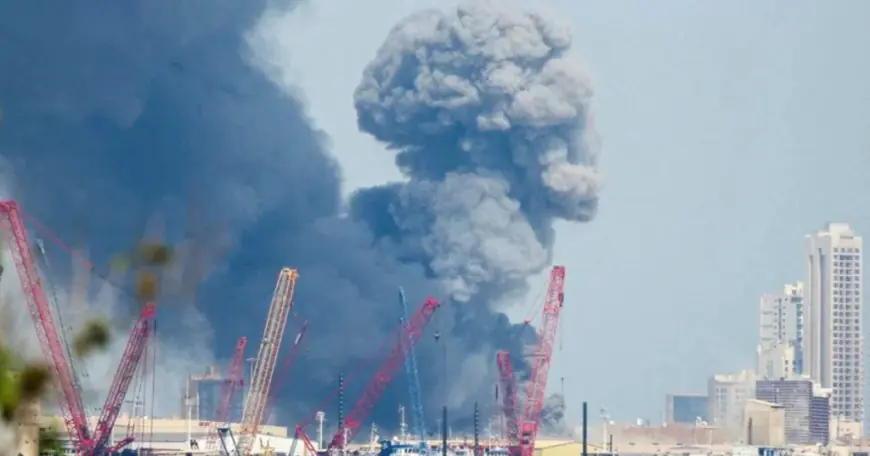
Bahrain and the United Arab Emirates moved into emergency footing through Monday, March 2, 2026 (ET), after a widening wave of missile and drone attacks across the Gulf disrupted air travel, rattled coastal cities, and pulled U.S.-aligned military infrastructure into the center of the escalation. The immediate, practical answer to what people are asking—whether the region is under attack—is yes: both Bahrain and the UAE have faced impacts and interceptions, and both have tightened security around airports, ports, and dense urban districts where debris can be as dangerous as a direct hit.
The deeper story is what these strikes reveal about the Gulf’s modern bargain: open skies, predictable commerce, and high-end tourism depend on deterrence holding. When salvos fly, the stress shows up first in the systems that make Gulf economies run—airspace, insurance, logistics, and public confidence—long before it shows up in battlefield maps.
Bahrain country at the frontline
Bahrain is a small island country off Saudi Arabia’s eastern coast, but strategically it sits at the hinge point of Gulf maritime security. That’s why it hosts major U.S. naval infrastructure tied to the U.S. Navy 5th Fleet, and why “Bahrain navy base” and “US naval base Bahrain” have surged in public attention whenever tensions spike.
Over the past several days, Bahrain has reported attacks and attempted attacks that appear designed to signal reach as much as to cause damage: drones aimed at built-up areas, projectiles linked to military targets, and threats that pushed residents and visitors toward shelter guidance. When people search “nsa bahrain,” they’re often trying to understand why internal security sites and government facilities can become part of the target set. The logic is coercive: shaking confidence in state control pressures leadership to recalibrate alliances, even if the state’s immediate defenses hold.
For Bahrain’s leadership, the dilemma is acute. The kingdom can’t move its geography, and it can’t make its military footprint invisible. It can only harden defenses, control escalation pathways, and manage public order while keeping critical services functioning.
UAE news and the pressure on Dubai
The UAE’s challenge looks different but cuts just as deep. Dubai is not only a city; it is an operating system for global travel and trade. When “Dubai airport” and “Dubai international airport” become crisis terms, the shock travels far beyond the UAE’s borders.
In the past days, Dubai’s coastal development zones—where tourism, luxury real estate, and high-density living meet—have also become magnets for rumor and fear. Names like Palm Jumeirah, the Palm Dubai, and landmark properties such as the Burj Al Arab are irresistible in a social-media crisis because they’re instantly recognizable. But recognizability is not confirmation. A blaze sparked by falling debris, a localized explosion from an interception, or an evacuation at a hotel can be clipped into “Dubai hotel bombed” content within minutes, even if the underlying incident is smaller or different than the caption claims.
Still, even limited damage can have outsized consequences in a hub economy. A single disruption at Dubai International Airport can strand tens of thousands, snarl supply chains, and force airlines to take longer routes that burn more fuel and push up costs. When the UAE tightens airspace controls, the ripple reaches Doha and other Gulf nodes that depend on seamless transfers. The pressure isn’t only physical; it’s reputational.
US Navy 5th Fleet and Gulf nations’ deterrence test
The strikes have also exposed the tension inside Gulf defense planning: air defenses can intercept a lot, but they can’t eliminate risk in dense cities where falling fragments land among homes, hotels, and highways. That reality helps explain why Gulf nations respond with layered measures—sirens, shelter advisories, flight suspensions, and heightened perimeter security—rather than treating the event as a purely military problem.
The U.S. Navy presence in Bahrain is central here because it underwrites maritime security for energy flows and commercial shipping. Threats to that presence—real or implied—raise the stakes for every capital on the Gulf. Even the possibility that Iran could sustain intermittent salvos creates a grinding pressure campaign: insurers reprice risk, airlines re-route, tourists hesitate, and investors weigh whether stability is being structurally redefined.
Regional capitals are also watching one another. If Bahrain is hit, it becomes a proxy measure for whether the U.S. footprint can be pressured. If Dubai is disrupted, it becomes a proxy measure for whether Gulf “normal life” can be interrupted on demand. Neither is a comfortable signal.
Where is Dubai, and why geography suddenly matters
For people trying to orient themselves—“where is Dubai,” “Dubai map,” “Bahrain country”—the distances involved are not abstract. Dubai sits on the southeastern coast of the Persian Gulf, facing Iran across the water. Bahrain sits farther northwest in the Gulf, near Saudi Arabia’s coast, with U.S. naval facilities concentrated around Manama and nearby districts. Doha lies to the west across the Gulf in Qatar. In an age of missiles and drones, these are no longer far-apart dots; they are points on an operating range.
What happens next hinges on triggers that can swing the region toward a pause—or toward a longer disruption cycle.
If there are no further salvos and airspace restrictions begin easing, Bahrain and the UAE may restore a version of normal quickly, though security postures will remain tightened for weeks. If intermittent attacks continue, expect a “stop-start” rhythm: periodic airport suspensions, rolling hotel and event cancellations, and sharper advisories that affect tourism corridors from Dubai’s waterfront to Bahrain’s business districts. A third path—direct, confirmed heavy damage at a major U.S.-linked site in Bahrain or a mass-casualty incident in a civilian zone—would increase the likelihood of a broader military response and could keep Gulf airspace constrained longer than markets can comfortably tolerate.
For Bahrain and the UAE, the immediate mission is continuity: keep airports, ports, and public order functioning while deterrence is stress-tested in full view of the world. The longer the crisis drags on, the more the battle shifts from intercepting projectiles to preserving confidence—because in the Gulf, confidence is not a byproduct of stability. It is the product.