
























Stock Futures Slide as Oil Surges After U.S. and Israeli Strikes on Iran

Stock futures fell sharply as oil prices jumped following U. S. and Israeli attacks on Iran and retaliatory strikes against Israeli and U. S. military installations, a shock that disrupted the global energy supply chain and raised the prospect of higher prices at the pump.
Stock Futures and global market reaction
Stock futures that indicate where major U. S. indexes would open showed notable declines: futures that indicate where the S&P 500 would trade fell more than 1%, Nasdaq 100 futures slid 1. 4%, and Dow futures dropped by more than 500 points. Futures tied to smaller companies also moved lower, with Russell 2000 futures declining more than 1. 3%.
Markets outside the U. S. moved in step: the pan-European Stoxx 600 tumbled 1. 4%, Germany's DAX plunged 1. 9%, and benchmark indexes in France and Italy dropped 1. 6%. In Asia, Japan's Nikkei was reported down 1. 3% on Monday in one snapshot and down 1. 4% overnight in another snapshot, while blue-chip stocks in China were off about 0. 1%. The MSCI index of Asia-Pacific shares outside Japan fell 1. 2% in one measure. The U. S. Dollar Index rose 0. 7%, and gold jumped about 3% or more than $150 as investors sought safe-haven assets.
Oil benchmarks spike
Crude benchmarks surged: West Texas Intermediate, the light, sweet crude produced in the U. S., was selling at $72. 79 a barrel early on Monday, up 8. 6% from its trading price of about $67 on Friday. A barrel of Brent, the international standard, was trading at $79. 41 per barrel early on Monday, up 9% from $72. 87 on Friday, at the time a seven-month high.
Earlier trading showed even larger moves: U. S. crude initially soared more than 10% and Brent surged as much as 13% when trading opened on Sunday. At 6: 40 a. m. ET in one update, both benchmarks were higher by more than 7. 5%. For U. S. crude, the weekend move pushed prices higher by nearly $5 per barrel. Even before the weekend escalation, oil prices had risen 17% this year amid heightened rhetoric from President Donald Trump and a build-up of sanctions against Iran.
Supply disruptions, the Strait of Hormuz and shipping
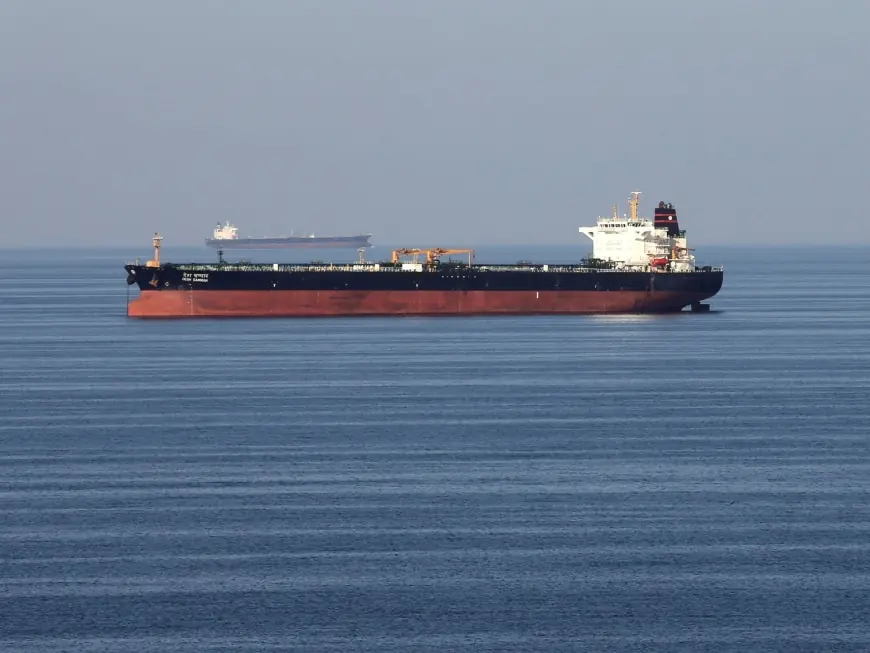
Military strikes by the U. S. and Israel on Iran showed no sign of lessening while Iran responded with missile barrages across the region, creating fears of wider conflict. The Strait of Hormuz—through which about a fifth of the world’s seaborne oil trade flows and which accounts for more than 20% of the world's daily oil demand—became a focal point. Two vessels travelling through the Strait were attacked on Sunday, and shipping firms reacted: at least six leading cargo shipping companies halted or diverted ships that had been set to sail through the waterway.
Tankers were seen piling up on either side of the strait, wary of attack or unable to obtain insurance for voyages. Iran previously temporarily shut down parts of the strait in mid-February for what it described as a military drill, a move that led to a jump in oil prices of about 6% in the days that followed.
Production moves and export figures
Eight countries that are part of the OPEC+ oil grouping announced plans to boost production. In one presentation of the decision those eight countries said they would increase production by 206, 000 barrels per day in April; in related commentary the increase was described as more than 200, 000 barrels per day starting next month. The countries named in the production-boost announcement were Saudi Arabia, Russia, Iraq, the United Arab Emirates, Kuwait, Kazakhstan, Algeria and Oman.
Iran exports were noted at roughly 1. 6 million barrels of oil a day, with most of that volume going to China. One update also stated that China has ample strategic oil reserves and c unclear in the provided context.
Consumer impact and price transmission
Higher global energy prices will likely push up retail fuel costs. Retail gas prices move roughly 2. 5 cents for every $1 move in the price of crude oil, so a near $5-per-barrel move from recent trading was translated into the possibility of roughly a 13-cent-per-gallon increase at the pump. Gas retail price monitoring commentary suggested price hikes at the pump could begin as soon as Monday; GasBuddy analyst Patrick De Haan said he expected that by Monday night it would be credible to say gas prices were being impacted and warned that it would not be a sudden spike but that stations would likely start passing along price hikes this week.
Analyst warnings and what to watch next
Analysts framed the outlook in terms of disruption and duration. One geopolitical analyst, Jorge León, warned that the most immediate tangible development affecting oil markets was the effective halt of traffic through the Strait of Hormuz, preventing 15 million barrels per day of crude oil from reaching markets, and cautioned that, unless de-escalation signals emerge swiftly, markets could see significant upward repricing of oil. The same analyst described the scale of Iran’s retaliation as a big surprise.
Industry analysts also noted that for prices to fall, tensions would most likely need to ease. One industry analyst said a closure or restriction of the strait would be among the worst-case scenarios for the oil market. Bank analysts outlined four variables that will determine the trajectory of oil prices: how much supply is disrupted, how long a disruption lasts, whether supply from other sources can be mobilized quickly, and what comes next.
Recent updates indicate markets are pricing heightened risk into energy and equity markets; details may continue to evolve.