
























Stock Market slides as U.S.-Israeli strikes on Iran send oil and futures sharply higher


U. S. investors pushed the stock market toward a risk-off stance Sunday evening after the U. S. -Israeli bombardment of Iran over the weekend, a move that pushed oil sharply higher and froze tanker traffic through the Strait of Hormuz. The market reaction reflects immediate supply fears and public comments from political and security figures that heighten uncertainty.
Stock Market futures tumble: Dow futures down 353 points as futures fall across the board
Futures tied to the Dow Jones industrial average fell 353 points, or 0. 72%, while S&P 500 futures were down 0. 68% and Nasdaq futures lost 0. 79% as investors moved away from risk assets. The selloff followed public warnings from President Donald Trump that more casualties are likely from Operation Epic Fury, joining the first ones reported, and came as the FBI is investigating a mass shooting last night in Texas as potential terrorism.
Oil spike: U. S. and Brent futures jump amid worries over exports
U. S. oil futures shot up 5. 6% to $70. 77 a barrel, and Brent crude gained 5. 9% to $77. 15 after earlier spiking more than 8%. In over-the-counter trading earlier on Sunday, Brent prices jumped 10% to about $80 a barrel, oil traders said. Those moves came as analysts flagged the potential for oil supplies to be disrupted by military action.
Strait of Hormuz disruptions: tankers anchored and shipments suspended
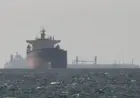
The Islamic Revolutionary Guards Corps has reportedly warned ships that passage is not allowed in the strait and said Sunday that it struck three oil tankers with missiles. Fear of such attacks froze ship traffic: hundreds of tankers carrying oil and liquid natural gas had dropped anchor or were stationary near the Strait of Hormuz, shipping data showed. Tanker owners, oil majors and trading houses suspended shipments the strait on Saturday as a precautionary move.
Shipping advisories and company moves restrict crossings
Greece’s shipping ministry advised vessels to avoid the Persian Gulf, the Gulf of Oman and the Strait of Hormuz, and shipping giant Maersk said it is suspending all vessel crossings through the strait until further notice. Those operational decisions compounded the market impact as physical flows stalled.
Policy signals and leadership questions escalate geopolitical risk
President Trump suggested the conflict with Iran could last a while as he pursues regime change, posting on social media Saturday that the bombing will continue "as long as necessary to achieve our objective of PEACE THROUGHOUT THE MIDDLE EAST AND, INDEED, THE WORLD!" He also said on Sunday evening that he is open to lifting sanctions on Iran if the new leadership that replaces Supreme Leader Ali Khamenei, who was killed in an airstrike, can serve as a pragmatic partner. Those statements framed the strategic stakes for markets.
Supply math and market outlook: OPEC+ moves and expert cautions
Iran pumped 4. 7 million barrels per day last year, accounting for 4. 4% of global oil supplies, and a fifth of all the world’s oil passes through the Strait of Hormuz on the way to export markets. Analysts have estimated that any Iranian moves to close the strait could send prices to $100 per barrel. Alan Gelder, senior vice president of refining, chemicals and oil markets at Wood Mackenzie, estimated it could take a few weeks for export flows to resume even in the most optimistic scenario where Tehran cooperates with the U. S., and he said the outlook on prices has a heavy upside risk, drawing a comparison with the immediate aftermath of Russia’s invasion of Ukraine in 2022 when oil hit $125 a barrel.
OPEC+ agreed to boost oil production, planning to increase output by 206, 000 barrels a day in April from its 137, 000-barrel monthly increments, and additional supply could lessen the blow. "There is, however, a risk that the OPEC+ decision is moot if flows do not resume through the Strait of Hormuz, " Gelder said.
Regional impact and market spillovers: Asia exposure, gold and metals
Closure of the strait would hit Asia the hardest, Idanna Appio, a portfolio manager and senior analyst covering sovereign debt and foreign exchanges, said, because most economies in the region are major oil importers whose supply routes depend on those lanes being open. Precious metals moved alongside oil: gold rose 2. 3% to $5, 367 per ounce, and the extent of silver's move is unclear in the provided context.