
























Fcdo Travel Advice as UK mounts operation to support thousands of Britons in Middle East

The UK has launched a large-scale operation to support British nationals in the Gulf as regional strikes disrupt travel and raise the prospect of evacuations; the government is urging people to monitor fcdo travel advice and register so they can be contacted. The move follows sustained attacks across the region that have closed airports, cancelled flights and left tens of thousands of travellers stranded.
Keir Starmer sets out the scale: about 200, 000 Britons in the region and 94, 000 registered
Prime Minister Sir Keir Starmer said at least 200, 000 British citizens are in the region, a population that includes residents, families on holiday and people in transit. More than 94, 000 Britons have registered their location and contact details to receive direct Foreign Office updates, with the majority listed as holidaymakers in the United Arab Emirates or people in transit at major hub airports.
Starmer warned that Iran had launched sustained attacks across the region and had "hit airports and hotels where British citizens are staying, " and he urged everyone in the region to register their presence and follow the Foreign Office's advice. He added: "I know this is a deeply worrying time. And we will continue to do all we can to support you. "
Foreign Office and Ministry of Defence draw up evacuation plans and routes
Government officials are formulating potential plans to evacuate UK nationals should regional airspace remain closed, and the Ministry of Defence is working with the Foreign Office on options. Officials are planning for the evacuation of tens of thousands if war escalates, and have considered a variety of routes, including evacuations by road to neighbouring countries where airspace remains open.
This consular operation is unprecedented for covering more than one country at once, and officials say it has never previously handled so many people; they expect the number registered to continue to rise in the coming hours.
Travel chaos: more than 3, 400 flights cancelled, Dubai and Doha airports shut
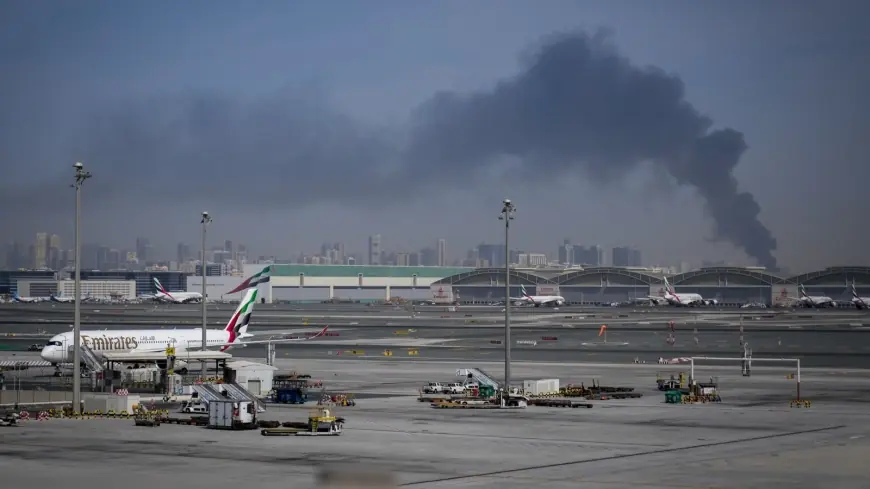
More than 3, 400 flights have been cancelled, and major airports including Dubai and Doha have been closed, forcing diversions and cancellations that affected journeys to and from Tel Aviv, Dubai, Doha and other international hubs. Dubai’s main airport, described as the world's busiest by passenger traffic, has been damaged, and residents there have mainly stayed indoors after the city was hit by missiles and drones.
With Dubai's airspace closed, large numbers of tourists are left without a plan for getting home. Officials say the majority of those who registered their presence have been moved to hotels as part of one of the biggest consular cases the Foreign Office has handled in recent years.
Fcdo Travel Advice urged as government asks Britons across Bahrain, Israel, Kuwait and UAE to register
The government has asked British nationals in Bahrain, Israel, Kuwait, the Palestinian territories, Qatar and the United Arab Emirates to register their presence to receive updates. British nationals transiting through Dubai and Doha are being advised to remain indoors in a secure location and avoid travelling outside if possible.
Travel guidance extended beyond those countries: the Foreign Office advises against all travel to Iran, Israel and Palestine and against all but essential travel to the UAE, Qatar, Kuwait and Bahrain. There are further instructions to avoid travel to some parts of Pakistan. British nationals in Saudi Arabia have been told to remain indoors in a secure location, while those in Jordan, Oman, Syria, Lebanon, Yemen, Iraq and Turkey have been instructed to remain vigilant and take shelter when advised.
Regional escalation and political response after the death of Ayatollah Ali Khamenei
The Israeli military said it had continued to hit sites in central Tehran following the death of Supreme Leader Ayatollah Ali Khamenei in an airstrike on Saturday morning. Iran has vowed to retaliate with "devastating blows" and has fired missiles at many of its neighbouring countries as well as at US military targets.
Senior UK ministers and allies have been engaged in diplomatic and security discussions. The prime minister issued a joint statement with the French president, Emmanuel Macron, and the German chancellor, Friedrich Merz, saying the three countries were ready to take steps to defend their interests in the region and were prepared to work with the US and allies on defensive action to destroy Iran's capability to fire missiles and drones at their source. The defence secretary, John Healey, said few will mourn Khamenei's death, described the Iranian regime as "evil", and said it had sponsored at least 20 terrorist plots to attack the UK and been involved in proxy wars; he said it was for the US to set out and explain the legality of its actions and he also refused to be drawn on the UK having the declined use of unclear in the provided context.
Immediate guidance and the situation on the ground
British nationals are currently advised to stay where they are, follow the instructions of local authorities and monitor fcdo travel advice, which officials expect to change rapidly. At present it is understood that no British nationals have been killed or injured so far in the conflict.