























Ali Khamenei killed as US and Israeli air strikes trigger mourning, jubilant scenes and a fragile succession

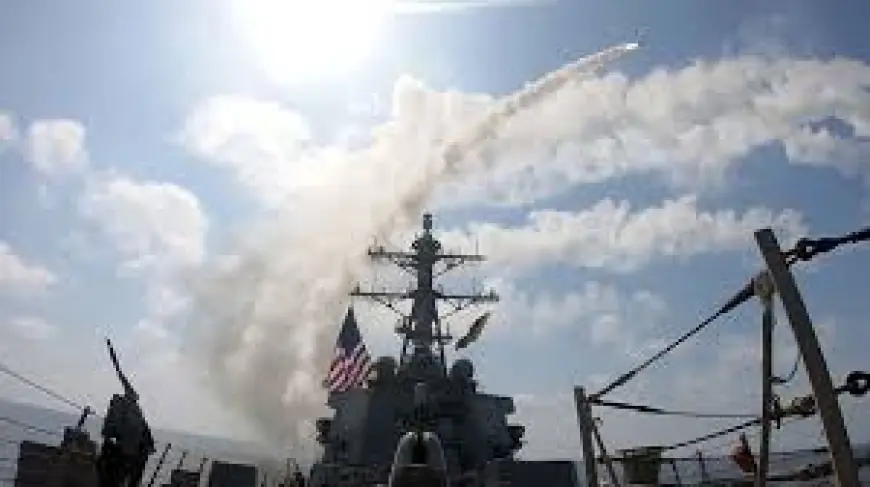
Ali Khamenei has been killed on the first day of massive US and Israeli air strikes on Iran, a sequence of events that has produced both a state-declared period of mourning and scenes of public celebration. The death of the 86-year-old, later confirmed on Iranian state television, marks the sudden end of a three-decade rule and raises immediate questions about who will fill the vacuum at the top of Iran’s complex political order.
Air strikes, presidential announcement and televised confirmation
The operation began with a first wave of strikes that targeted the supreme leader’s residence on a Saturday morning; satellite images showed significant damage to his compound. US President Donald Trump announced the death on his social media platform on the same day, and several hours later an Iranian state TV presenter, in tears, announced the passing of what the presenter called "the steadfast mountain of the Islamic guardianship" who "drank the sweet pure draught of martyrdom. " The government declared a period of forty days of mourning as the country moved into the second day of war and pro-government events emerged to grieve the loss.
Ali Khamenei’s role: head of state, commander-in-chief and the image at home
Ali Khamenei, who had led for roughly three decades, presided over an all-powerful office as head of state and commander-in-chief of the armed forces, including the elite Revolutionary Guards. He was able to veto public policy and hand-pick candidates for office, and young Iranians had never known life without his rule. State television covered his every move; his image was plastered on billboards and his photograph was ubiquitous in shops, while successive presidents often took the public spotlight abroad.
Immediate aftermath: denials, mixed public reactions and overseas scenes
Initial Iranian messaging said Ali Khamenei had been taken to a safe place and teased a planned state-television address that did not materialize. Israeli Prime Minister Benjamin Netanyahu said in a televised address that "there are many signs" the supreme leader "is no longer, " and Israeli and US media, citing unnamed officials, spoke of convincing evidence that he was dead even as Iranian officials continued to deny the reports until state TV’s later announcement. Overnight videos showed celebrations in some Iranian cities and in Iranian communities abroad alongside official mourning events at home.
Past clashes and the 12-day war that shaped preparations
Security planners in Iran had been on alert after a 12-day war last June that concentrated senior minds in Tehran. On the first night of that previous conflict, in its opening wave, Israel was able to assassinate nine nuclear scientists and a number of security chiefs; in the days that followed more senior scientists and at least 30 leading commanders were killed. Those events made clear that senior clerics, including the Ayatollah, could be targeted and prompted internal contingency planning.
Special bunker, succession lists and the risk of a power vacuum
During last June’s fighting, Ali Khamenei spent time in what has been described as a special bunker and drew up lists of security officials who could immediately step into place to avoid a vacuum in the top echelons. That prior planning is now central to the immediate security response: the strikes that killed the supreme leader have produced both an official mourning timetable and public uncertainty about who will exercise the sweeping authorities he once held. The timing matters because those pre-existing lists and the role of the Revolutionary Guards will shape how quickly a successor can assert control.
Roots and rise: Mashhad, clerical training and revolutionary credentials
Ali Khamenei was born in Mashhad in 1939 as the second of eight children to a mid-ranking Shia cleric. He later romanticized a "poor but pious" childhood, saying he often ate only "bread and raisins. " His education was dominated by study of the Quran and he qualified as a cleric by the age of 11. Politically active, he joined critics of the Shah, lived underground or in jail, and was arrested six times by the Shah's secret police, suffering torture and internal exile. After the 1979 Islamic Revolution, whose leader was Ayatollah Ruhollah Khomeini, he was appointed Friday prayer leader of Tehran and his weekly sermons helped establish him in the new leadership. In the revolution’s first months, militant university students loyal to Khomeini occupied the US embassy and dozens of diplomats and embassy staff were taken hostage.
What makes this notable is how quickly decades of domestic visibility—images on billboards, weekly televised sermons and control over state institutions—have been overtaken by a violent rupture that combines foreign military action, televised death, and both orchestrated mourning and spontaneous celebration. The broader implication is an uncertain transition in Tehran that will test the contingency plans laid down during last year’s 12-day war and the influence of the Revolutionary Guards over any succession process.