

























Blood Moon 2026 Total Lunar Eclipse Set for March 3; Hawaii Hosts Community Watch Party

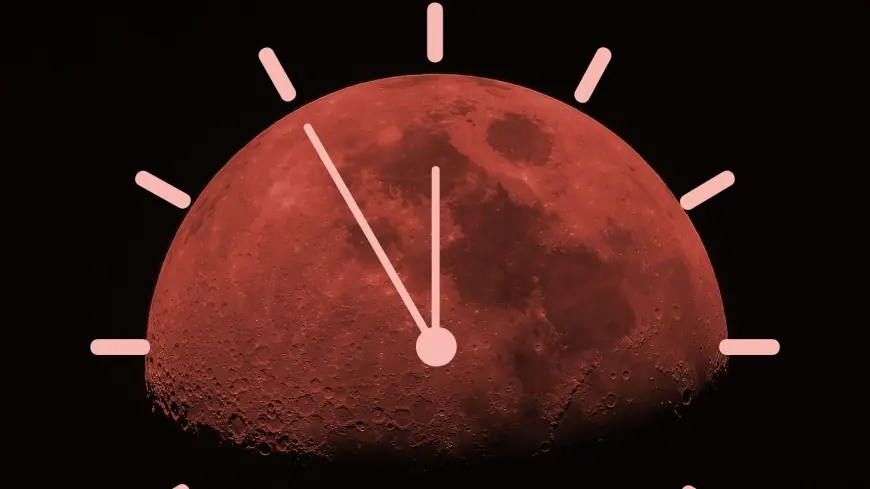
The Blood Moon 2026 total lunar eclipse will sweep across large swaths of Earth on March 3, offering a 58-minute period of totality that will be visible to billions. The timing and broad visibility make this a rare shared astronomical event, with public watch parties planned in Hawaii and livestream options for those who cannot attend in person.
Blood Moon 2026 Timing and Totality
The eclipse sequence begins when the moon enters Earth's penumbral shadow at 3: 44 a. m. Eastern Time (0844 GMT), with the partial phase starting at 4: 50 a. m. Eastern Time (1: 50 a. m. Pacific Time). Totality, when the moon is fully immersed in Earth's umbral shadow and takes on a red hue, will begin at 6: 04 a. m. Eastern Time (1104 GMT) and peak at about 6: 33 a. m. Eastern Time (1133 GMT). Totality will last approximately 58 minutes, and the overall duration of the lunar eclipse will be 5 hours and 39 minutes.
Visibility Across the Americas, Alaska and Hawaii
The eclipse will be visible across the entire Lower 48, Alaska and Hawaii; for Alaska, Hawaii and the western two-thirds of the Lower 48, observers can see the entire duration of totality. On the U. S. East Coast, the moon will be setting while totality is ongoing and the sun will be rising, producing a selenelion—an occurrence in which both the eclipsed moon and the sun are visible at the same time. For most major East Coast cities, the context gives sunrise Tuesday morning as around 6: 2—unclear in the provided context.
More than 40% of the world's population—over three billion people, as calculated by Time and Date—will be able to see at least some portion of the total phase.
Hawaii Watch Party at UH Institute for Astronomy and Bishop Museum
Hawaii will be among the best-placed locations for the eclipse. On Monday, March 2, the UH Institute for Astronomy and the Bishop Museum are hosting a community watch party from 11: 00 p. m. to 2: 30 a. m. local time, with the moment of maximum eclipse expected around 1: 30 a. m. early Tuesday local time. Attendees will be able to use telescopes and binoculars; the Bishop Museum will run planetarium shows and University of Hawai'i staff will be on hand to answer questions. Organizers emphasize outreach for keiki and families and aim to make astronomy approachable and to inspire the next generation of local science and technology leaders.
The Science Behind the Moon's Red Hue
The eclipse occurs when Earth moves between the sun and the full moon, blocking most direct sunlight from reaching the lunar surface. During totality, a small amount of sunlight is refracted through Earth's atmosphere; that light is preferentially red because shorter wavelengths are scattered out. That refracted, reddened light bathes the moon and produces the so-called blood-red appearance. U. H. associate astronomer Roy Gal explained that a total lunar eclipse is when Earth's shadow falls on the moon and turns it a red, coppery, brownish color.
Observers and scientists use the Danjon Scale, which runs from 0 to 4, to categorize eclipse shading: a value of 0 indicates an eclipse that is barely visible, such as the Dec. 9, 1992 event that followed the 1991 eruption of Mount Pinatubo, while a level 4 denotes a bright red eclipse.
Eclipse Rarity, Calendar and Broader Context
Though lunar eclipses are more widely visible than solar eclipses—most locales experience one roughly every 2. 5 years—some related phenomena remain rare. Total solar eclipses are much less frequent at any given spot on Earth, with an average recurrence of about once every 375 years for a given location; the most recent total solar eclipse in the United States occurred on April 8, 2024. What makes this notable is the combination of widespread visibility and the East Coast selenelion, offering different communities distinct viewing experiences during the same event.
If Hawaiians miss this eclipse, they will have to wait until Dec. 31, 2028 for the next total lunar eclipse, though Hawaii will not be as well positioned for that event. The last time Hawaii was in the path of a lunar eclipse was about six years ago.
For observers who cannot attend public gatherings, the eclipse will be available through online livestreams and live coverage options so viewers worldwide can follow the event in real time.