























Uss Abraham Lincoln Faces Conflicting Claims and Unclear Risks — What Remains Unknown After Recent Headlines

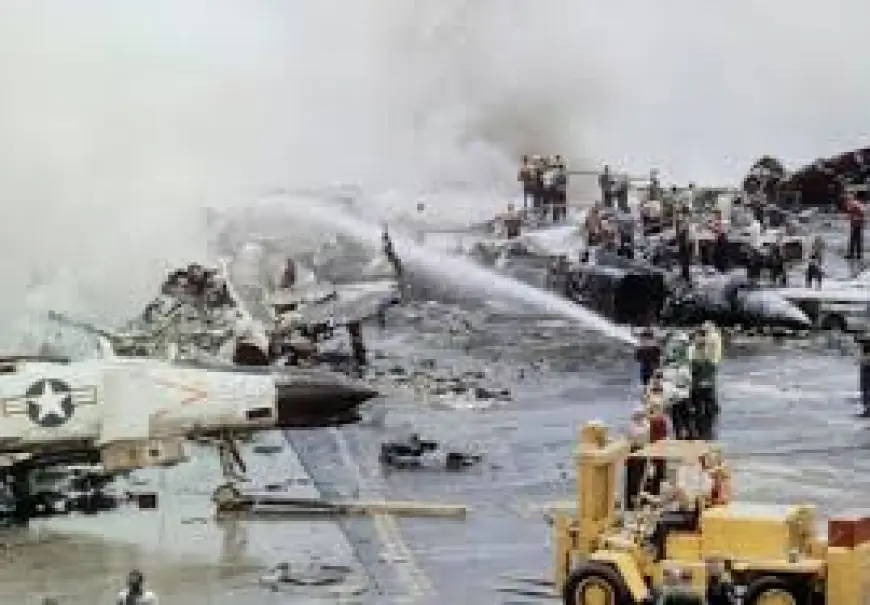
The immediate risk picture around the uss abraham lincoln is muddled: recent headlines advance conflicting claims about an attack and its effects, but core details remain unresolved. That uncertainty changes how commanders, regional planners and public audiences interpret danger and cadence of response — and it raises practical questions about verification, escalation risk and message control.
Risk and uncertainty: what is unclear and why it matters
What’s unclear is central to how this episode unfolds: whether the carrier was struck, how credible the claims are, and what kinetic or signaling responses might follow. Even if a supercarrier is unlikely to be sunk, attempts or claims of attacks can escalate tensions and trigger defensive or diplomatic moves. Here’s the part that matters: ambiguity itself is a strategic tool and a danger multiplier in fast-moving confrontations.
Uss Abraham Lincoln: timeline of recent headlines and claims
- Headline: "Iran Likely Can’t Sink A U. S. Navy Supercarrier — But Even An Attempt Carries Risks. " Published: 2 days ago.
- Headline: "USS Abraham Lincoln attack: Iran targets massive US warship after Ayatollah Khamenei killing. " Published: 11 hours ago.
- Headline: "Iran Claims Carrier Abraham Lincoln \"Struck\" By Missiles. Not Hit, Says US. " Published: 12 hours ago.
These three distinct headlines together supply the fact pattern available: one assesses survivability and risk, another frames an attack tied to a political killing, and a third places a claim of strike alongside a denial of a hit.
Event details embedded in the coverage pattern
Across the recent headlines, the recurring elements are a claim of targeting or striking the carrier, an explicit denial that the carrier was hit, and analysis that emphasizes both the physical survivability of a carrier and the broader risks of attempts or claims. The available titles mention a political motive in one item and lethal imagery in another; neither provides verified operational details in the headline itself, and timelines in the headlines are limited to relative publication times.
Immediate implications for audiences and operators
- Operational planners: ambiguity complicates threat assessment and force posture decisions.
- Regional observers: claims tied to a political killing signal a volatile attribution environment.
- Public and media consumers: mixed messages about a strike versus a denial will shape public perception and pressure for clarification.
It’s easy to overlook, but how officials handle verification and messaging now will influence whether this episode cools or escalates.
Short checklist of signals that could clarify the picture
- Independent confirmation or imagery that corroborates a strike or damage (unclear in the provided context).
- Official operational statements that go beyond headline denials (unclear in the provided context).
- Follow-on actions in the region indicating escalation or restraint (unclear in the provided context).
Writer's aside: the trio of headlines itself is the signal—claims, a denial, and a sober assessment of survivability—and that pattern often precedes a period of contested narratives before concrete facts emerge.
Mini timeline (compact value-add)
- 2 days ago — Headline assessing that Iran likely can’t sink a U. S. Navy supercarrier but warning that attempts carry risks.
- 12 hours ago — Headline noting a claim that the carrier was "struck" while also stating that the carrier was not hit.
- 11 hours ago — Headline linking an alleged attack on the carrier to a political killing.
The real question now is how clarifying evidence will emerge and whether competing narratives harden into broader actions. For readers tracking this, the immediate hinge is verification: if new, verifiable details appear, the risk calculus shifts; if ambiguity persists, the episode remains a reputational and strategic flashpoint.