
























Ahmadinejad Killed in Strike on Tehran Residence, Iranian Agency Says

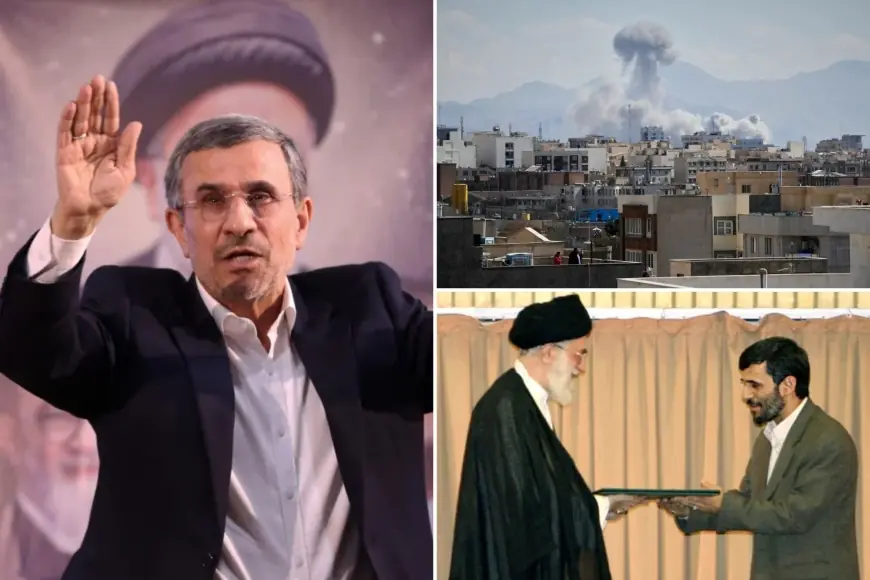
Former president ahmadinejad was killed when an airstrike struck his residence in Narnak, northeast Tehran, a statement from an Iranian state-aligned outlet said on Sunday. The development matters because it was tied to broader, coordinated strikes that other accounts say also hit Tehran’s leadership complex and altered the immediate security landscape.
Narnak residence hit and casualties
The strike struck Ahmadinejad's home in Narnak, northeast Tehran, and killed him along with several bodyguards, the Iranian Labor News Agency said. International media said the strike in Narnak likely occurred late on Saturday. One account from Israeli media described the action as a targeted strike on his residence.
Ma'ariv account and house arrest claim
Ma'ariv stated that Ahmadinejad was under house arrest at the time and that the strike was targeted at his residence. There was no immediate confirmation from Iranian authorities about the circumstances of his detention status or the strike itself.
Ahmadinejad's political record and appointments
Mahmoud Ahmadinejad served as Iran’s sixth president from 2005 until 2013. Before winning the presidency he held posts as Ardabil Province governor and as mayor of Tehran, and he defeated Akbar Hashemi Rafsanjani in a surprise runoff in 2005. After two presidential terms he was appointed by then–supreme leader Ayatollah Ali Khamenei to the Expediency Discernment Council, a 48-member advisory council to the Office of the Supreme Leader.
Domestic controversies and policy legacy
Ahmadinejad’s 2009 reelection was widely disputed and triggered the mass Green Movement protests, which were violently suppressed by security forces. Critics blamed his economic management for fueling inflation and pointed to the Mehr housing initiative and subsidy reforms as policies that worsened economic conditions. His political base was closely aligned with the Islamic Revolutionary Guard Corps and the Basij militia, forces that played prominent roles in consolidating his power and suppressing dissent.
International rhetoric, sanctions and disputed remarks
During his presidency the United Nations Security Council imposed multiple rounds of sanctions over Iran’s nuclear program, intensifying Tehran’s international isolation. Ahmadinejad became notorious in Western capitals for rhetoric toward Israel and for remarks tied to Holocaust denial controversies: in 2006 his government hosted a conference in Tehran that was widely condemned as a platform for Holocaust denial. At a 2005 conference titled “A World Without Zionism, ” he quoted Ruhollah Khomeini using language that included the phrase that Israel “must be wiped off the map, ” a remark defenders later said had disputed translations while critics argued the intent was hostile.
Personal profile: public statements and alliances
Observers noted several high-profile moments that shaped perceptions of his leadership: a 2007 appearance at Columbia University where he declared there were no homosexuals in Iran; a pronounced emphasis on Shiite messianic belief in the return of the Hidden Imam during his presidency; and an international partnership with Venezuelan President Hugo Chávez framed as opposition to U. S. influence. In later years he publicly clashed with Supreme Leader Ali Khamenei and was repeatedly barred from seeking the presidency again.
Claims about Khamenei and the Leadership House
Separately, another account said Khamenei was killed in Saturday morning’s opening wave of coordinated U. S. -Israeli strikes on Tehran that obliterated the Leadership House compound. That account added that confirmation later emerged in Iranian state-aligned announcements and major-wire reporting. The different timelines—claims of a morning strike that hit the Leadership House and a likely late Saturday strike on Narnak—underline competing narratives about the sequence and scope of the operations.
What makes this notable is the combination of detailed domestic history and immediate claims of targeted action: the reported deaths touch both a former head of state who remained politically active and the highest levels of Iran’s leadership framework, with multiple named institutions and events invoked in accounts of motive and aftermath. The immediate verification picture remains unclear in the provided context.