
























Iranian Leader Killed: How 'Epic Fury' Set Off a Chain Reaction That Changed US, Gulf and Israeli Calculations

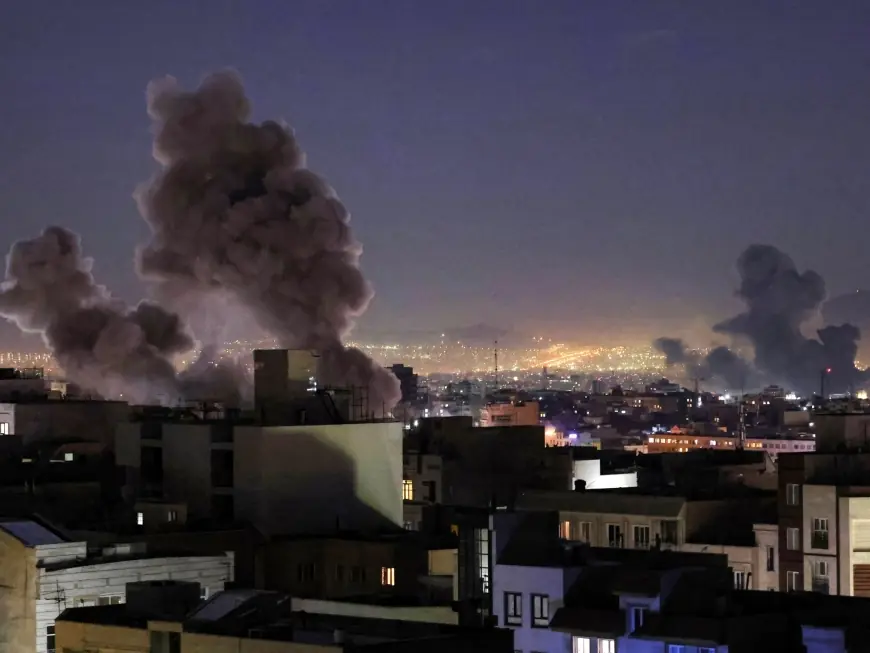
With the iranian leader killed in strikes that U. S. and Israeli forces carried out, the immediate consequence has been an escalation that already reaches U. S. troops, Gulf capitals and Israeli towns. What changes because of it is clear: operations that began as a targeted campaign have widened into missile barrages, naval claims and a regional security response that is actively altering deployments and diplomatic posture.
Consequences sweeping beyond the strike zone — troops, ships and regional posture
Here’s the part that matters: the campaign named "Epic Fury" has moved from a headline event into a broader military and political crisis. The U. S. announced its first combat casualties a day after the campaign began, and commanders say major combat operations continue. That sequence drives three immediate consequences — higher force protection demands for U. S. personnel, renewed naval and base readiness in the Gulf, and intensified coordination among Gulf states on collective defense measures.
Iranian Leader Killed — what unfolded and the immediate military moves
The U. S. and Israeli strikes that killed Supreme Leader Ayatollah Ali Khamenei and senior Iranian military figures were followed by rapid Iranian counterattacks. Tehran launched missiles at Israel and at U. S. military facilities across the Middle East. Iran said it struck the USS Abraham Lincoln aircraft carrier with four ballistic missiles; U. S. Central Command said the ship was not hit and that the missiles didn’t even come close. The U. S. President warned there could be U. S. casualties, and later said the U. S. military had destroyed nine ships in the Iranian navy and was "going after the rest. " The operation called "Epic Fury" has, in turn, been linked to at least 200 deaths inside Iran, a figure put by the Red Crescent.
U. S. casualties, operational secrecy and gaps in detail
The U. S. Central Command confirmed three U. S. service members were killed and several others injured as part of the strikes; several sustained minor shrapnel injuries and concussions and are being returned to duty. Military officials did not provide details on how and when the troops were killed or injured. Commanders said they will withhold additional information, including the identities of the fallen, until 24 hours after next of kin have been notified. Other coverage referenced the three U. S. service members reportedly killed in Kuwait; the provided context is unclear on the exact location of the fatalities.
- Nine people were killed and 28 wounded in an Iranian strike on Beit Shemesh, bringing Israel’s death toll there to 11; more are missing.
- The United Arab Emirates reported three dead from Iranian attacks, while Kuwait reported one dead.
- Iran declared 40 days of mourning following the supreme leader’s killing; Israel struck what was described as the "heart" of Tehran in follow-up operations.
Gulf states, threats from the Revolutionary Guard, and political fallout
Gulf leaders moved quickly: the Gulf Cooperation Council convened video-link to formulate a unified response, and the foreign ministers of the six GCC states — the UAE, Bahrain, Saudi Arabia, Oman, Qatar and Kuwait — reviewed extensive damage and discussed restoring stability. The Gulf states pledged to defend their security and stability, including the option of responding to aggression, and called for an immediate cessation of attacks while stressing that Gulf stability underpins global economic stability.
The Islamic Revolutionary Guard Corps threatened what it called its "most intense offensive operation" ever against Israeli and U. S. military installations. Political reverberations have been loud and varied: a U. S. senator publicly applauded the strikes that killed the supreme leader, using an extended metaphor that labeled the leader and his inner circle as the center of malign influence. The strikes have produced mixed global reactions, including angry protests, celebrations and calls from some world leaders for a return to negotiations and peace.
Short takeaways and signals to follow
- Military: U. S. forces are operating under elevated combat conditions with announced casualties and withheld identity details until family notification.
- Maritime: claims of naval strikes and counterclaims about ship safety raise the risk profile for carriers and nearby traffic.
- Regional politics: GCC unity and pledges to defend territory suggest a more coordinated Gulf posture than before.
- Escalation signals: the Revolutionary Guard’s vow of an intense offensive and ongoing missile launches are immediate escalation markers.
The real question now is how long nations will maintain kinetic operations while attempting to manage diplomatic spillovers. It’s easy to overlook, but the withholding of casualty details and the overlapping, sometimes conflicting reports on locations and targets make the next 48–72 hours especially consequential for commanders and diplomats alike.
What’s easy to miss is how quickly a targeted campaign has produced cross-border civilian casualties and a Gulf-wide security response — a pattern that typically hardens positions and narrows room for de-escalation.