























Pokémon Winds and Pokémon Waves revealed for Nintendo Switch 2, introducing Gen 10 starters Browt, Pombon, and Gecqua

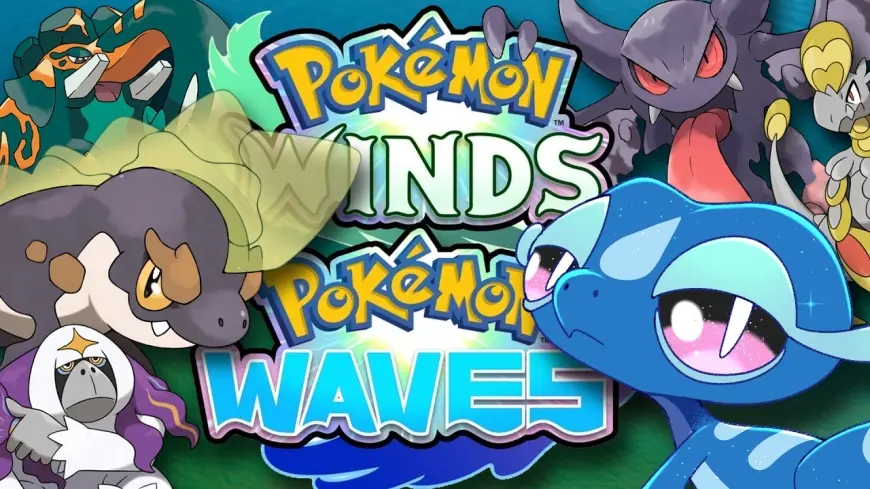
Pokémon’s next mainline era is officially on the calendar. Pokémon Winds and Pokémon Waves—the franchise’s Gen 10 paired releases—were unveiled in late February 2026, with the games targeting 2027 and positioned as a Nintendo Switch 2 exclusive. The reveal also confirmed the new Pokémon starters players will choose from at the opening of the adventure: Browt, Pombon, and Gecqua, the familiar Grass–Fire–Water trio that sets the tone for every generation.
For fans who have been searching variations of “pokemon winds and waves,” “pokemon wind and waves starters,” or “gen 10 starters,” the headline is straightforward: Gen 10 is Winds and Waves, it’s coming in 2027, and the starter lineup is Browt, Pombon, and Gecqua. Everything else—the region, the mechanics, the online features, and the competitive ecosystem—now becomes a long runway of official teases, data-mined details, and expectation management.
Nintendo Switch 2 exclusivity signals a technical reset after recent performance criticism
Making Pokémon Winds and Waves a Nintendo Switch 2 project is more than a marketing bullet. It’s a tacit admission that the series has been straining against hardware limits and production realities, and that the next step needs a cleaner technical foundation if the franchise wants to keep pushing open environments and dense cities without repeating the stutters and pop-in that became a recurring complaint in recent releases.
The early footage leans into that promise: broader draw distance over water, richer lighting in jungle-like areas, and more vertically layered spaces that look designed for traversal rather than simple routes between gyms. If the Switch 2 pitch holds, the games are effectively being sold as a do-over on ambition—open exploration without the visible seams.
That decision also reshapes the business timeline. A Switch 2 exclusive means the release is expected to play double duty: it isn’t only “the new Pokémon game,” it’s also a hardware driver. Nintendo has historically relied on Pokémon launches to move systems, and gen 10 Pokémon arriving after a new console’s debut gives the platform time to build an install base while still using the franchise as a marquee moment.
Pokémon Winds and Waves starters: Browt, Pombon, and Gecqua aim for instant mascot energy
The Pokémon Winds and Waves starters were clearly designed to read at a glance, even in a thumbnail: cute silhouettes, strong color blocking, and a personality-first approach that fits the way starter discourse now functions online. People don’t just pick “Grass, Fire, Water” anymore—they pick a vibe.
Browt leans into the bird lineage that reliably resonates with players who like agile, expressive starters. Its design suggests a small creature with a lot of attitude—more “peck first, ask questions later” than gentle woodland mascot. Whether it evolves into a sleek aerial specialist or something bulkier will matter, because Grass starters often live or die by the final form’s battle identity.
Pombon is the obvious crowd magnet on reveal day: a Fire-type with “pet energy” that’s likely to flood fan art, plush wish lists, and starter polls. The key challenge for any Fire starter like this is evolution. Players love adorable first stages, but they remember the final stage forever. If Pombon grows into something that keeps its charm while earning real battle credibility, it could become the generation’s breakout.
Gecqua is positioned as the calmer choice, a Water-type that looks built for the setting implied by “Winds” and “Waves.” Water starters often end up feeling thematically linked to the region’s mechanics—surf equivalents, ocean traversal, underwater areas—so expectations will be high that Gecqua’s evolution line ties into how the world is navigated, not just how battles are fought.
This is also where name recognition matters. Fans are already searching “pombon pokemon,” “browt pokemon,” and “gecqua pokemon,” because the first week of a new generation is when identities solidify. If the designs stick, these names become the shorthand for Gen 10 the way earlier starter trios became permanent cultural references.
Open-world Pokémon Wind and Waves: a region built around water, weather, and movement
Early indications point toward an open-world structure again, but the setting appears tuned differently from the land-heavy sprawl of some past regions. The branding—winds and waves—isn’t subtle, and the environments shown so far emphasize coastlines, islands, dense wetlands, and wide ocean stretches. That matters because it forces a design choice Pokémon has wrestled with for decades: how to make water feel like a real biome instead of a slow, empty barrier between points of interest.
If Game Freak gets it right, water becomes the point. Expect traversal tools that reduce friction and make movement fun—something closer to gliding, boarding, or fast water-crossing options rather than the old pattern of “press forward and wait.” That’s the difference between a world that feels alive and one that feels like a big map with a few hotspots.
It also changes how the early game plays. In a land-focused region, the first hours are predictable: small town, nearby route, first rival fight, first gym. In a water-anchored world, early objectives can be scattered across islands and coastlines, and the game can pace discovery by controlling weather, tide-like access, or traversal upgrades. Even without full details, the framing suggests the designers want exploration to be the identity—not just the backdrop.
Gen 10 starters speculation begins: evolutions, typing twists, and what “Winds” vs “Waves” could mean
Now the inevitable phase begins: the gap between reveal and release, where every frame is dissected and every hint is treated like a roadmap. In practical terms, there are only a few “next-step” scenarios that will actually move the story.
One is a second trailer that clarifies the core loop—whether gyms return in a classic order, whether the story is more mission-based, or whether progression becomes even more free-form. A second is a reveal of the box legendaries, which will signal the tone: mythic guardians of weather and sea, or something more technological and modern.
Then there’s the starter question that never goes away: final typings. People will speculate about Grass/Flying for Browt, Fire/Fairy or Fire/Dark for Pombon, Water/Dragon or Water/Poison for Gecqua—because predicting evolutions is half the fun and half the anxiety. The series has also trained players to expect at least one twist, either in secondary typing or in a signature mechanic that makes the trio feel distinct beyond the type chart.
Finally, there’s the broader concern hanging over any “mass-hype new Pokémon” moment: will the Switch 2 hardware actually translate into smoother performance, or will ambition outpace polish again? That’s the reputational hinge for Pokémon Winds and Pokémon Waves. If the games run cleanly, Gen 10 could feel like a true reset. If they don’t, the debate won’t be about starters at all—it will be about trust.
For now, though, the franchise has done what it needed to do: name the era, anchor it to Nintendo Switch 2, and put three faces—Browt, Pombon, and Gecqua—at the center of the next two years of anticipation.