

























Blood Moon 2026: Total lunar eclipse turns the Moon red on March 3, with best views in the Americas

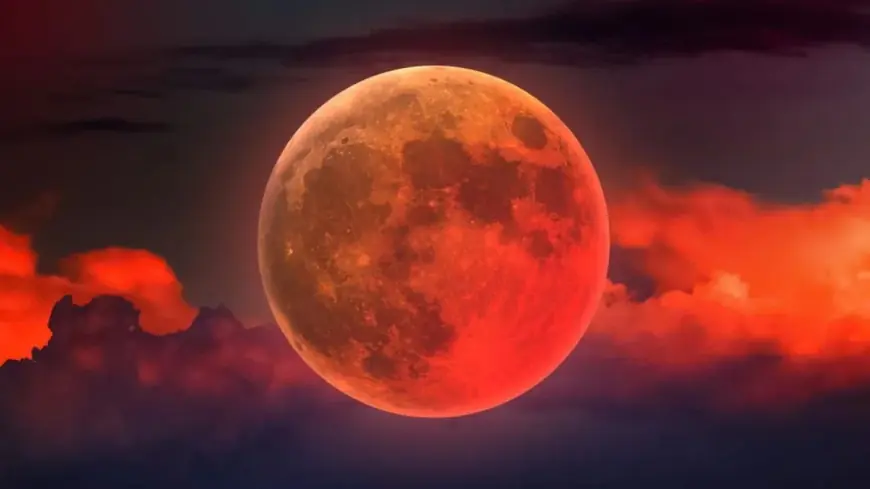
The Blood Moon 2026 arrives in the early hours of Tuesday, March 3, 2026, when a total lunar eclipse will wash the Moon in a copper-red glow for about 58 minutes at peak. In U.S. Eastern Time, the partial eclipse begins around 4:50 a.m. ET, totality runs roughly 6:04 a.m. to 7:02 a.m. ET, and the show continues as the Moon slowly exits Earth’s shadow afterward.
Visibility is the make-or-break detail: the eclipse is visible across much of North and Central America and parts of South America, with strongest viewing odds in the western half of North America and the Pacific because the Moon is higher in the sky there during totality. On the U.S. East Coast, the Moon is near or at moonset during totality, so some viewers may only catch the beginning of the red phase—or need a clear western horizon and elevation to hold it a few extra minutes.
Oscars-night energy, but at dawn: what “Blood Moon” actually means in 2026
“Blood Moon” isn’t a scientific category—it’s the pop-culture nickname for what happens during a total lunar eclipse. As the Moon passes into Earth’s umbra (the darkest part of the shadow), it doesn’t go black. Instead it turns reddish because Earth’s atmosphere bends and filters sunlight, letting more red and orange wavelengths reach the lunar surface—like every sunset and sunrise around the planet projected onto the Moon at once.
This March event is the kind that can look dramatically different depending on where you stand. If you’re farther west, the Moon is typically higher, the red phase is easier to watch from start to finish, and the color can deepen into a burnt copper. Farther east, the same eclipse can feel like a race against the horizon—especially if buildings, trees, or haze eat the last few degrees of sky.
Blood Moon 2026 time: key moments in Eastern Time and how to plan around moonset
For most people, the best strategy is to treat this like a pre-dawn appointment and plan backward from totality:
-
Partial eclipse begins: about 4:50 a.m. ET (the “bite” starts)
-
Totality begins: about 6:04 a.m. ET (the full red phase starts)
-
Totality ends: about 7:02 a.m. ET (red phase fades back to partial)
-
Totality duration: about 58 minutes
If you’re in the Eastern U.S., the practical reality is that moonset can cut off totality. That’s why the “where” matters as much as the “when.” A flat view toward the western horizon—a beach, a hill, a parking deck, anywhere with less obstruction—can be the difference between “I saw it turn red” and “I missed the best part by five minutes.”
Weather is the other spoiler. Thin cloud can still allow a visible, eerie red disk; thicker decks erase the whole event. If you’re clouded out, don’t assume the eclipse “didn’t happen”—it may have been spectacular two counties away. The most reliable move is to check sky cover before you commit to a drive, not after you’ve set an alarm.
Where the Blood Moon is visible: Americas best, Africa and Europe out
This eclipse’s geography is unusually lopsided. Totality is set up for eastern Asia and Australia in the evening, the Pacific overnight, and the Americas in the early morning. Meanwhile, Africa and Europe miss out entirely—the eclipse isn’t visible there.
That distribution drives two real-world consequences.
First, social media will make it look like “everyone” is seeing it—because densely populated regions on the night side of Earth will post photos at the same time. Second, it also means many people will be disappointed for reasons that have nothing to do with enthusiasm or effort. If you’re in a non-visibility zone, the Moon is simply below the horizon during the key phases. No amount of hoping fixes geometry.
What comes next: why this eclipse matters, and when the next “Blood Moon” arrives
Part of the hype around Blood Moon 2026 is timing: after this March eclipse, the next total lunar eclipse visible in widely watched regions isn’t right around the corner. Listings of upcoming eclipses show a gap before the next widely promoted total event, with late 2028 into early 2029 often cited as the next major “blood moon” moment for many observers.
That gap shapes behavior in predictable ways:
-
More first-timers show up. When an eclipse feels “rare,” people who usually ignore the sky set alarms.
-
Photos spike—and disappointments too. Phone cameras tend to over-brighten the Moon, washing out the red. A steadier shot, lower exposure, or a simple tripod makes a huge difference.
-
Local travel surges. Not cross-country, but across a metro area—people chasing clearer skies and a lower horizon.
If you want the most from this one, the best plan is also the simplest: pick a safe spot with a clear western view, show up a little early so you’re not fumbling with settings at peak color, and watch the Moon’s brightness collapse as it slides into shadow. The red phase is the headline, but the slow transformation leading into it is the part that feels most unreal in real time.