






















Austin mass shooting on 6th Street: Buford’s bar attack leaves 2 victims dead, 14 wounded; suspect killed

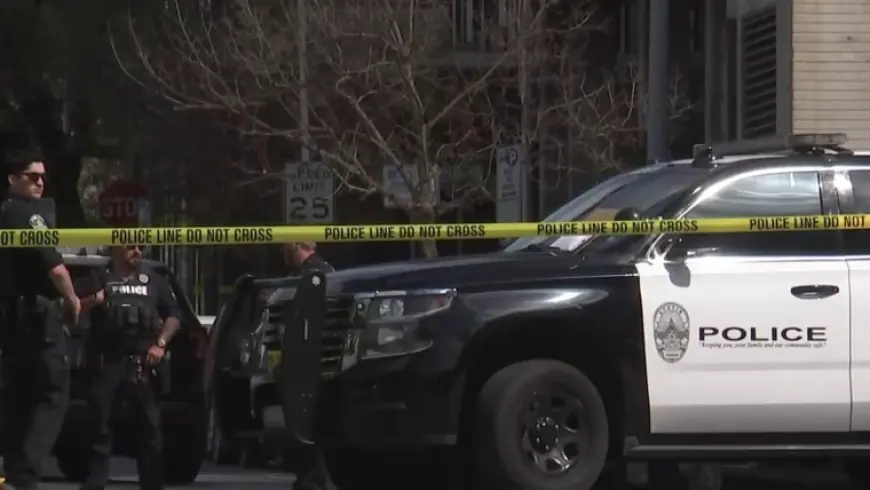
A shooting in Austin, Texas, turned a packed nightlife block into a crime scene early Sunday, March 1, 2026, when a gunman opened fire outside Buford’s Backyard Beer Garden on West 6th Street, killing two people and injuring 14 others before police fatally shot him. Investigators identified the suspect as Ndiaga Diagne, 53, and said federal agents are assessing whether the attack has a nexus to terrorism after officers recovered items and imagery pointing to an ideological motive, including clothing featuring an Iran flag and religious slogans.
The first emergency calls came in just before 3 a.m. ET, according to officials briefed on the timeline, and officers already staged in the entertainment district moved within moments. Three of the wounded remained in critical condition by Sunday afternoon, authorities said, as hospitals in the region activated mass-casualty protocols and the city began the familiar, grim work of notifying families and sorting verified facts from the flood of online claims.
What happened in Austin, Texas: the Buford’s Backyard Beer Garden shooting in downtown Austin
People on West 6th Street described the sound as a burst of rapid, overlapping shots—too fast and too sustained to be mistaken for fireworks. Investigators say the gunman initially fired from inside an SUV, then got out and continued shooting on foot, using more than one weapon. The attack unfolded outside Buford’s Backyard Beer Garden, a sprawling bar that draws heavy weekend crowds, especially around last call.
Austin police confronted the shooter almost immediately, according to officials, and the exchange ended with the suspect killed at the scene. That quick response likely prevented a higher toll in an area where lines form at doorways and pedestrians spill into the street. Even so, the casualty count—two dead, 14 wounded—ranks among the worst episodes of gun violence in Austin in recent years and reinforces how vulnerable high-density entertainment zones are when one person arrives ready to fire into a crowd.
For residents waking up to the news, the details were disorienting in the way these episodes often are: a familiar block, a familiar bar, and then a brief window where ordinary city life collapses into sirens, bleeding victims, and frantic calls to friends who were “just there.” The UT Austin community was among those affected, officials said, because West 6th is a common weekend stop for students and visitors.
Austin shooter identified: Ndiaga Diagne, “Iran flag” clothing, and the FBI terrorism assessment
Authorities named Ndiaga Diagne as the Austin shooting suspect Sunday evening, saying he was born in Senegal and later became a naturalized U.S. citizen. Investigators have not alleged that he acted on behalf of a foreign government or an organized group, and officials emphasized that the motive remains under investigation. Still, the case moved quickly into federal hands alongside local detectives because of what police say they found on Diagne and in his vehicle.
Investigators described clothing that included an Iranian flag emblem and a phrase along the lines of “Property of Allah,” along with other materials that suggested the shooter wanted his attack interpreted through a geopolitical or religious lens. Those finds, officials said, are part of why a joint terrorism team is evaluating whether the violence qualifies as a terrorist act under federal definitions, or whether it reflects a lone actor using international conflict as a personal rationale.
That distinction matters in concrete ways. A terrorism framing can bring additional investigative tools and interagency resources—digital forensics, financial tracing, and broader intelligence checks—while also shaping how officials communicate publicly to avoid amplifying propaganda. It also raises the stakes for community impact. If authorities conclude the shooter intended to spark fear tied to religion or foreign conflict, they will face pressure to show both urgency and restraint: urgency in closing investigative gaps, restraint in describing evidence so they don’t accidentally provide a template for copycats.
Officials have also signaled they are reviewing Diagne’s background for prior contacts with law enforcement and any history of mental-health crises. That line of inquiry does not replace the terrorism assessment; in many modern cases, investigators find an overlap between personal instability and ideological signaling, with attackers pulling symbols from world events to rationalize violence that also has deeply personal drivers.
Texas bar shooting reverberations: 6th Street security, gun policy, and the pressure on Austin officials
The mass shooting in Austin immediately reignited a political argument Texas knows well: how much responsibility should fall on individual security measures in private venues, and how much should be addressed through statewide firearm rules. State leaders praised police and first responders for rapid action, while critics pointed to how easily a shooter could arrive armed in a dense nightlife district.
For the city, the practical questions are immediate and unglamorous. Can West 6th Street add more screening without turning the district into a bottleneck that pushes crowds into side streets? Should the city expand camera coverage or tighten traffic access at peak hours? Do venues share real-time security communications, or does each bar operate as an island until shots ring out? Austin has invested in entertainment-district policing before, but this incident will intensify demands for measures that can deter an attacker before the first shot—without simply moving the risk elsewhere.
For business owners around Buford’s, the stakes are existential. A single weekend event can reshape perceptions for months, especially in a tourism-and-nightlife corridor. Some patrons will avoid the area. Others will insist they won’t be scared away. Both reactions are predictable; neither changes the reality that bars and staff become frontline stakeholders when violence targets social spaces.
And for victims’ families, the “why” becomes a second wound. The dead and wounded are not just numbers attached to headlines like “Austin Texas shooting” or “mass shooting today.” They are people whose ordinary Saturday night—friends, music, drinks, a birthday, a visit—ended in trauma. The coming days will include fundraising, hospital updates, and hard conversations about lasting injuries that don’t fit neatly into breaking-news counts.
What comes next in the Austin Texas mass shooting investigation: terrorism questions, evidence, and the timeline
The next authoritative update is likely to hinge on forensic clarity rather than speculation about intent. Investigators will work to confirm the precise sequence of shots, the types of weapons used, and how the shooter moved through the scene. They will also map victims’ locations to understand whether the gunman targeted a specific person, a specific venue, or simply the largest available crowd.
If the FBI assessment finds no operational links—no co-conspirators, no directing organization—the case may still be treated as ideologically motivated violence based on the symbols and statements tied to the suspect. If investigators do find communications that suggest planning with others, or contacts that indicate radicalization networks, the investigation will widen quickly to include associates, travel patterns, and financing.
A separate—and urgent—track will focus on whether there were missed warning signs. Did Diagne telegraph intent to anyone? Did he make threats online? Did he attempt to acquire weapons recently, or did he already possess them? These questions can produce painful answers: sometimes there are clear signals that went unreported; other times there are none, and communities are left confronting how little friction exists between grievance and catastrophe.
For Austin, the larger consequence may be a shift in how the city thinks about its most crowded public blocks. West 6th Street is designed for openness: people moving freely from door to door, lines spilling outside, music bleeding onto sidewalks. After a shooting like this, the impulse will be to harden everything. The challenge will be building protection that actually works—based on evidence and practice—without surrendering the basic civic idea that a night out should not require the posture of a high-risk event.