






















George Lucas' Theory on Why Kids Love Darth Vader and a Talk-Show Spotlight

A pair of recent items have put george lucas's thinking back in focus: a retrospective look at a 1999 interview where he explained why children are drawn to Darth Vader's power, and a live talk-show episode featuring Leslye Headland that doubled as a fundraiser for Wildlife Relief. Both pieces reconnect the creator's comments about power, childhood and the saga's prequel framing with a lighter, charitable appearance tied to franchise conversations.
George Lucas on children and power
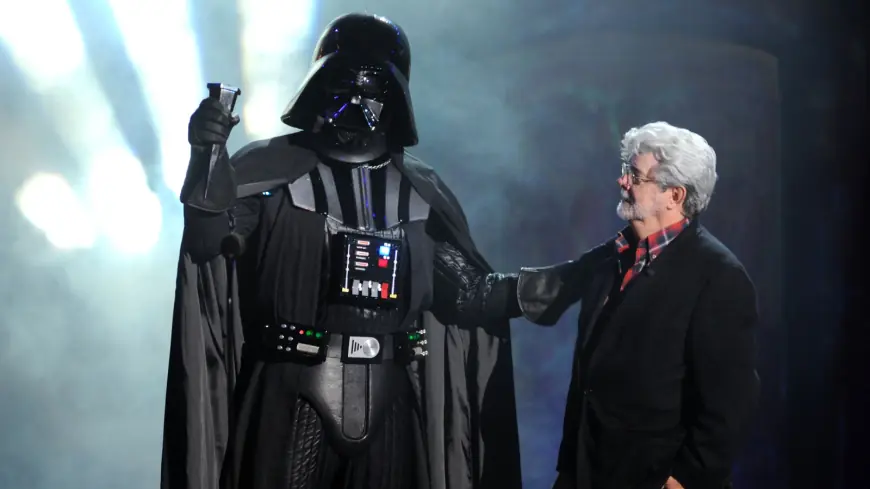
In a 1999 interview, George Lucas said that children are attracted to power because children themselves feel powerless. He framed Darth Vader as the ultimate embodiment of that power, noting that “children love power because children are the powerless. And so their fantasies all center on having power. And who's more powerful than Darth Vader, you know?” Lucas argued that Vader’s status as a dominant, corrupting force explains why the character registers so strongly with young audiences.
How the prequels illustrate that idea
The prequel films were presented as an origin story that casts Anakin as a profoundly powerless child — a slave — whose yearning for power evolves into a destructive pursuit of control. That arc, as described in coverage revisiting Lucas’s comments, positions Anakin’s rise and fall as a cautionary tale: early desires to free others shift into a quest for dominance and even control over life and death, a trajectory likened in one summary to a Frankenstein-like downfall. The framing emphasizes that being a great Jedi is not the same as being the strongest warrior, and that the dark side’s apparent strength rests on a lack of restraint.
Talk-show episode with Leslye Headland
A separate item highlighted a chaotic live episode of The George Lucas Talk Show in which Leslye Headland, creator of a recent franchise series, appeared as a guest. The episode combined fundraising for Wildlife Relief with informal conversation about filmmaking, anecdotes about working on franchise properties, singing, unusual on-air challenges, and a brief extra appearance by the character Watto. The event aimed to mix charity and fan-focused entertainment while shining a light on current franchise creators.
Why this pairing matters now
Seen together, the interview excerpts and the live talk-show appearance underline two persistent threads in franchise discourse: how foundational ideas from the creator continue to frame character appeal and how contemporary creators and fans engage with that legacy through events and fundraising. The 1999 comments offer a thematic lens for reading the prequels' depiction of Anakin’s vulnerability and lust for power, while the live episode illustrates ongoing, community-oriented interest in discussing those themes.
Forward look and conditional note
If attention to these themes remains steady, discussions about the saga’s moral framing and the appeal of characters like Darth Vader are likely to continue in both analytical pieces and fan-facing events. Unclear at this time is whether this renewed focus will prompt new creator commentary or organized retrospectives, but the pairing of thematic analysis and live engagement shows how the saga’s ideas persist across formats.