























Alireza Arafi named to leadership council as strikes hit Tehran

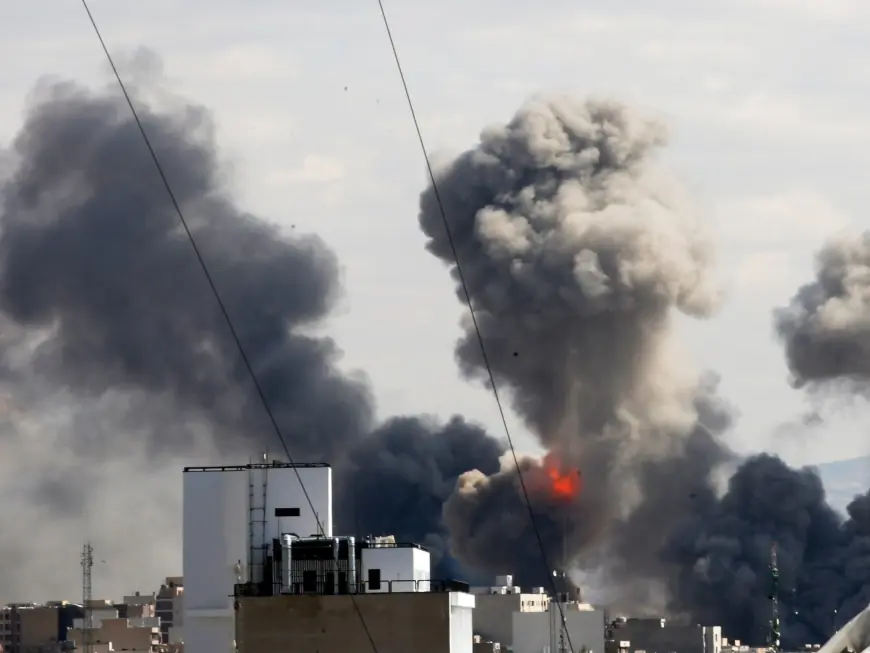
alireza arafi was announced on Sunday as the third member of a three-member council that will govern Iran after the death of Supreme Leader Ayatollah Ali Khamenei, even as huge U. S. and Israeli strikes continued to hit Tehran and other cities. The capital was rocked numerous times on Sunday after attacks struck multiple neighbourhoods, and internet connectivity remained almost entirely blocked for a second day.
Strikes rock Tehran repeatedly
Huge air strikes by the United States and Israel continued to hit Tehran and other cities, with the capital rocked numerous times on Sunday after a series of attacks hit multiple neighbourhoods. The Israeli army said military centres were among the targets. Iranian authorities have largely refrained from discussing missile impacts. Internet connectivity remained almost entirely blocked for a second day as projectiles were launched across the region.
Alireza Arafi named to leadership council
The death of Supreme Leader Ayatollah Ali Khamenei and top commanders in Tehran at the start of the war on Saturday set in motion Iran's constitutional succession process. By laws put into motion after the country’s 1979 Islamic Revolution, a clerical body called the Assembly of Experts is tasked with selecting the next supreme leader. Until that process is complete, a three-member council will govern.
Masoud Pezeshkian, the Iranian president, said a new leadership council "has begun its work" after the death of Khamenei. Iran's Foreign Minister Abbas Araghchi said the process should be complete within days. The council members who have vowed continuity include judiciary chief Gholam-Hossein Mohseni-Ejei and President Pezeshkian. In a first video address on Sunday, Pezeshkian called on pro-establishment supporters to congregate at mosques and major city streets despite the war. The third member was announced on Sunday to be Ayatollah Alireza Arafi, a clerical member of the powerful constitutional watchdog known as Council. The Expediency Council, an arbitration body, was tasked with selecting the jurisprudence expert for the new council.
IRGC and military leadership losses
The Islamic Revolutionary Guard Corps, founded after the 1979 revolution and since grown into a sizeable military and economic force, is expected to play a key role. Mohammad Pakpour, who was appointed as the commander-in-chief of the IRGC less than a year ago after his predecessor was assassinated during the 12-day war with Israel, was killed on Saturday. Abdolrahim Mousavi, chief of staff of Iran’s armed forces, Defence Council chief Ali Shamkhani, and police intelligence chief Gholam-Reza Rezaeian were also among those killed.
The IRGC vowed revenge and launched what it called "the heaviest offensive operations in the history of the armed forces of the Islamic Republic against occupied lands [a reference to Israel] and the bases of American terrorists". Army chief Amir Hatami pledged to continue defending the country, and the army claimed its fighter jets completed bombing runs of US bases across the region without offering footage.
Domestic security and public order
Police chief Ahmad-Reza Radan said his forces are prepared to fight for "public safety" as the US and Israel have openly called on the Iranian people to protest in the streets in the foreseeable future with the goal of overthrowing the establishment. Security chief Ali Larijani backed the constitutional process for deciding future leadership while making an outreach to countries battling incoming Iranian missiles and drones. In a post on X in Arabic, he said Tehran does not—unclear in the provided context.
Regional exchanges and casualties
Three U. S. service members have been killed in action and five others have been seriously wounded, the U. S. military said. The Israel Defense Forces said it carried out retaliatory attacks on Hezbollah targets after Hezbollah claimed responsibility for strikes on an Israeli missile defense site south of Haifa in Israel today. Lebanon's prime minister, Nawaf Salam, condemned rocket fire from the southern region of his country, saying it could endanger Lebanese people and give Israel an excuse to attack. "Regardless of who is behind it, the rocket fire from southern Lebanon is an irresponsible and suspicious act that endangers Lebanon's security and safety and gives Israel pretexts to continue its attacks on it, " Salam said on X.
IDF Lt. Col. Ella Waweya advised residents of a long list of southern Lebanese cities to evacuate, saying: "Hezbollah activities are forcing the Defense Army to act against it; the Israeli Defense Forces do not wish to harm you. For your safety, you must immediately evacuate your homes and move away from the villages by at least 1, 000 meters to open areas. "
A Royal Air Force base in Cyprus, RAF Akrotiri, was hit in a drone strike today, with no injuries reported. A spokesperson for the U. K. 's Defense Ministry confirmed the strike, saying the situation was still fluid and that U. K. forces were responding to the strike, which was said to have taken place about midnight Sunday Eastern European Standard Time. Cyprus is an island nation in the Eastern Mediterranean off Syria, where the U. K. recently bolstered its presence with radar, counter-drone systems, F-35 fighter jets and air defense technology. The build-up is part of an effort to support security and stability in the Middle East and defend its interests there.
Reactions among the diaspora
Los Angeles County is home to the biggest proportion of the estimated half-million people or so with Iranian heritage in the U. S., and Iranian flags and expressions of hope filled streets yesterday. The city of Beverly Hills, as well as the Los Angeles city communities of Westwood, Beverlywood, Pico-Robertson, Sherman Oaks and Encino, collectively compose "Tehrangeles, " where flags with red and green banners flew out of cars and hung from storefronts. Many if not most of the Iranian-born U. S. immigrants who settled on the west side of Los Angeles County are people of Jewish faith who fled after the country's 1979 Islamic Revolution endangered their existence there. "All the diaspora of Iranians are excited because we see freedom at hand, " a woman said as she demonstrated on the street in Westwood yesterday. Area resident Shailene Farabi visited Iran as a young child but hasn't returned; yesterday, she had hopeful words.
Closing: Iran's remaining top authorities have emphasised that the theocratic establishment has a clear path forward based on its own internal mechanisms, with a three-member council governing until the Assembly of Experts completes the selection of the next supreme leader.