






















Putin in the Crossfire of a Region Recast: What Khamenei’s Killing Changes for Power Balances

The assassination of Iran’s supreme leader has scrambled the status quo and created urgent strategic choices for capitals worldwide — including those that prefer to sit on the sidelines. putin appears as a keyword in international discussions, but the immediate changes are clear: a leadership vacuum at Iran’s apex, mass mourning declared by state authorities, and simultaneous scenes of celebration and grief across the country and diaspora. These moves will reshape regional alignments and diplomatic calculations in the days and weeks ahead.
Immediate consequences and stakes for external powers — putin and others face quick decisions
What shifts now is the operating environment: Iran declared forty days of mourning while pro-government events began as the second day of war dawned; at the same time, videos emerged of celebrations in some Iranian cities and in communities abroad. The real question now is how external powers respond to both the tactical success of the strike and the political fragmentation it exposes. If you’re wondering why this keeps coming up, it’s because decapitation of a top leadership amplifies uncertainty — succession plans, security realignments, and potential for further strikes all accelerate.
What happened on the strike day (embedded detail, not a minute-by-minute)
A concentrated air offensive by Israel and the US opened this weekend, culminating in a near-simultaneous set of strikes that killed the supreme leader and multiple senior figures. The operation was described in coverage as taking roughly 60 seconds and as the product of long-term intelligence work. The strike killed the 86-year-old leader along with seven members of the top Iranian security leadership who had gathered at several locations in Tehran, about a dozen members of his family and close entourage, and around forty other senior leaders. Satellite imagery showed significant damage to the leader’s compound; states first said he had been taken to a safe place and then announced plans for a televised speech that did not materialize.
How the intelligence and operational picture was described
The operation was characterized as decades in the making: Israeli services had accumulated long-term human intelligence while the last six months saw technological resources and manpower provided by the CIA and other US intelligence services. Israeli tracking of daily routines and the building of a detailed file on the leader and his circle was cited as central. Planners used information about a scheduled meeting of top officials in a leadership compound in central Tehran; that timing enabled a concentrated, near-simultaneous strike described as a tactical and operational surprise, contrasting with expectations that attacks would come under cover of darkness.
Divided public reactions inside Iran and the wider human toll
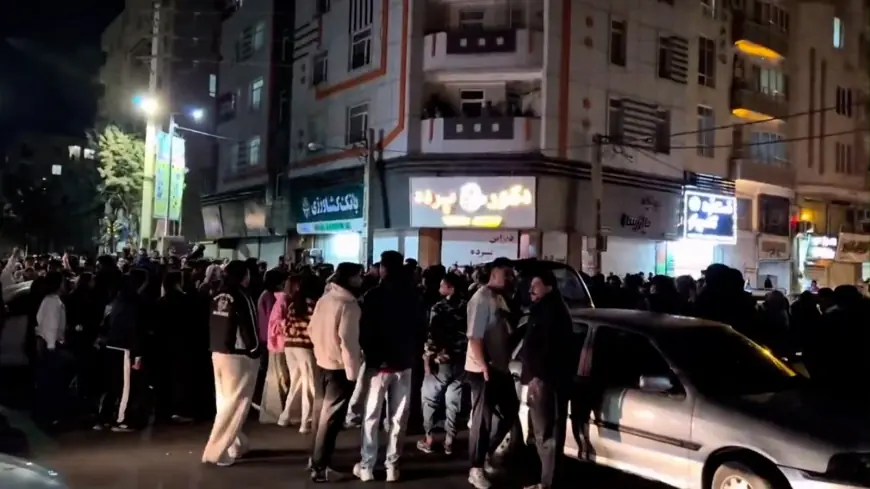
Deep societal divides surfaced immediately. Video clips showed both celebration and prayer in the streets. Some civilians were filmed cheering and honking; in at least one clip a man is heard saying he admires foreign leadership. Others went out to pray for the leader and for the regime. Commentators noted that long-simmering resentment had been intensified by the brutal killing of thousands of fellow dissenters seven weeks earlier. Families of dozens of children killed in a strike on a girls’ school were singled out as unlikely to welcome the operation.
Micro Q&A: short clarifications that matter
- Q: Was the leader’s death confirmed? A: Iranian state television later announced his passing; at first officials had said he was moved to safety and a planned speech did not occur.
- Q: Who claimed responsibility or involvement? A: The operation was described as an air offensive opened by Israel and the US; details about contributors included long-term Israeli intelligence work and recent technical and manpower input from the CIA and other US services.
- Q: Did this follow earlier clashes? A: Yes — minds were concentrated during the 12-day war last June when a first-night wave of attacks killed nine nuclear scientists and multiple security chiefs, and in subsequent days more senior scientists and at least 30 leading commanders were killed.
What’s easy to miss is how prepared Iran’s inner circle had been for such a shock: during the recent 12-day conflict the leader sheltered in a special bunker and was reported to have drawn up lists of security officials ready to step in to avoid a vacuum. That planning explains why state authorities moved quickly to manage succession signals.
Alongside these operational facts are commentary and caution: some analysts warned that eliminating top leaders can be strategically counterproductive, arguing leadership removal does not necessarily remove movements or networks and can open space for more radical elements. One commentator described a pattern of repeated assassinations that failed to solve underlying problems; another noted the surprise came from timing and method rather than purely from capability. These assessments suggest the coming days will test whether decapitation translates into decisive political change.
Writer’s aside: The bigger signal here is the speed with which long-term intelligence work can be translated into a single, high-impact strike — and the equally fast way societies can fracture in response. Expect intense diplomatic activity and competing narratives as states calibrate next steps.
Timeline highlights: Saturday morning the leader’s residence was clearly targeted; a brief period of conflicting reports followed through early evening when national and foreign leaders made public statements; several hours after a US presidential social-media announcement, state television in Iran confirmed the leader’s death; pro-government mourning and street reactions played out into the night and the next day. Further developments may evolve rapidly and details could change.