
























Centcom Rebukes IRGC Aircraft Claim as U.S.-Israeli Strikes Continue After Khamenei’s Death

U. S. -Israeli strikes on Iran persisted on Sunday following the killing of Supreme Leader Ayatollah Ali Khamenei on Saturday, with the U. S. Central Command — centcom — publicly disputing an Iranian claim and American officials warning of wider instability. The strikes have produced immediate casualties and international advisories that reflect rapidly mounting tensions.
Centcom rebuts Islamic Revolutionary Guard Corps aircraft claim
The Islamic Revolutionary Guard Corps claimed that a U. S. military aircraft had been struck, a claim that U. S. Central Command rejected in a social media post on Sunday. That public rebuttal marks a direct contest of battlefield assertions between the two militaries as operations continued over Iran’s territory.
Trump says U. S. forces sank nine Iranian naval ships
President Donald Trump posted on Truth Social that U. S. military forces had “sunk 9 Iranian Naval ships, some of them relatively large and important. ” The statement framed one dimension of U. S. military action in the unfolding confrontation, even as other accounts of specific engagements remain contested.
Casualties among U. S. service members
The strikes have resulted in the deaths of three U. S. service members and left five others seriously injured. The identities of the victims were not made available. Those casualties were reported in the same 48-hour window of intensified attacks that followed Khamenei’s death on Saturday.
Iran’s missile, drone strikes hit bases, the Saudi capital and Dubai
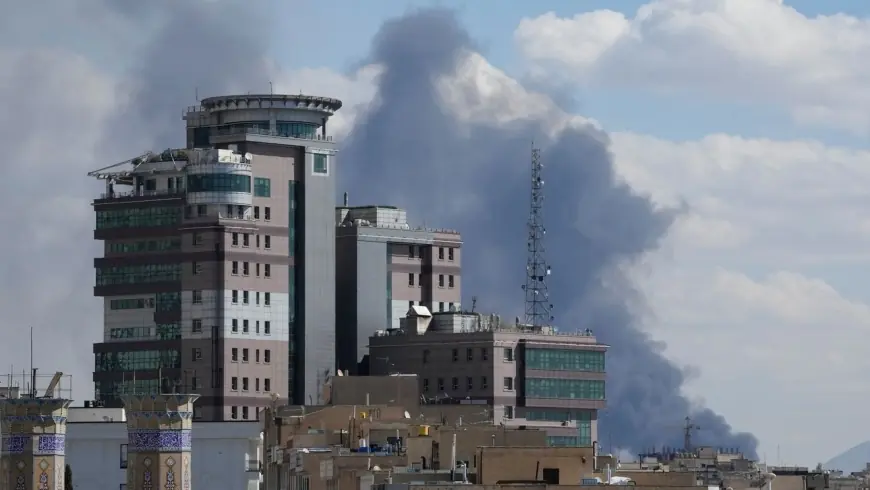
Iran has retaliated by firing missiles and launching drones at U. S. and Israeli military bases, and at locations in the Saudi capital and the global business hub of Dubai. Iran’s paramilitary Revolutionary Guard has warned it may carry out its “most intense offensive operation” ever, explicitly naming U. S. and Israeli bases as targets. The exchange of strikes has produced explosions in Tehran, and a plume of smoke rose after a strike in the city on Sunday, March 1, 2026.
Leadership move in Tehran and U. S. security warnings
In Tehran’s political response, Iran selected a 66-year-old cleric to join the leadership council that is governing the country until a new supreme leader is chosen. The leadership adjustment comes amid statements that the future of the Islamic Republic has been thrown into uncertainty and could fuel regional instability.
U. S. embassies across the Middle East instructed employees to continue sheltering in place on Sunday amid the strikes. American citizens in the region were advised to take similar precautions. The State Department issued a “worldwide caution” notice advising Americans abroad everywhere, with special emphasis on the Middle East. Separately, a chairman of the U. S. Intelligence Committee identified Iran’s “vast missile arsenal” as a continuing priority for U. S. policy and security planning.
Israeli rhetoric and the broader operational tempo
Israeli Defense Minister Israel Katz vowed a “non-stop air train” of strikes against Iran, signaling intent to sustain pressure as operations continue. What makes this notable is the combination of high-profile public claims, battlefield rebuttals and concrete casualties within a tightly compressed timeframe — a mix that has driven rapid diplomatic and security reactions from multiple governments.
The sequence is clear in cause and effect: the killing of Ayatollah Khamenei on Saturday precipitated intensified strikes on Sunday, which produced U. S. casualties and prompted public military assertions and denials, prompting embassy shelter-in-place orders and a State Department worldwide caution. With both Tehran’s leadership council now adjusted and promises of sustained Israeli strikes, the immediate risk is an escalating cycle of retaliation that officials say centers on Iran’s missile and naval capabilities.
Unclear in the provided context are additional battlefield details and the identities of the injured and killed. For now, the confirmed developments—multiple deaths and injuries among U. S. forces, public claims that nine Iranian naval ships were sunk, contested accounts of aircraft strikes, missile and drone attacks on bases and major Gulf cities, and emergency advisories for U. S. personnel—compose a picture of a region facing a rapid and dangerous escalation.