

























Wales Marks St David's Day 2026 With £1 Million in Government Funding and a Cardiff Music Takeover

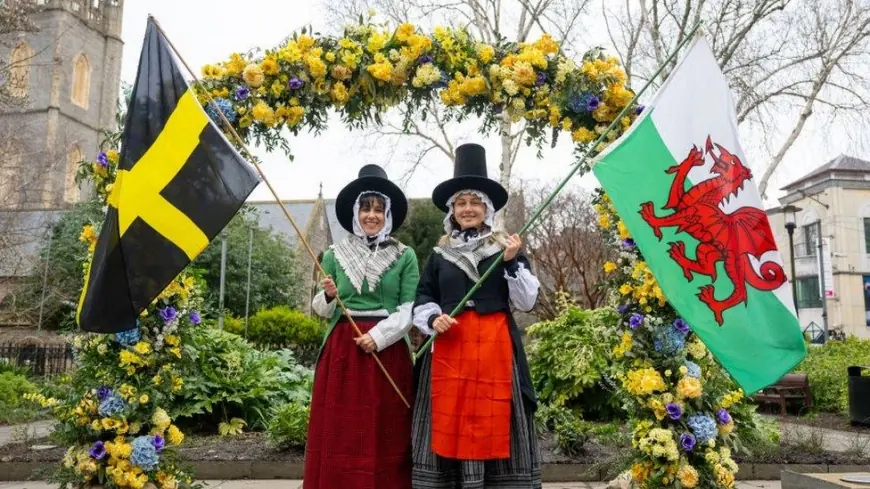
Wales is celebrating St David's Day — known in Welsh as Dydd Gŵyl Dewi Sant — on Sunday, March 1, 2026, with the most ambitious programme of events in recent memory. First Minister Eluned Morgan backed the occasion with a £1 million community fund, distributed across hundreds of organisations, and Cardiff transformed its city centre into a bilingual, music-first festival stretching across an entire weekend. Across Wales and beyond, the question on Welsh lips today is the one that has greeted the day for over nine centuries: Dydd Gŵyl Dewi Hapus — Happy St David's Day in Welsh.
Dewi Sant: The Patron Saint Behind the Day
St David — Dewi Sant in Welsh — was a sixth-century monk and bishop born on the southwest coast of Wales, in the area now occupied by the city that bears his name. He founded a monastic community at Glyn Rhosyn, the Vale of Roses, where St Davids Cathedral still stands today. His death on March 1, 589 AD gave the date its permanent significance in Welsh life. Pope Callixtus II canonised him in 1120, and the feast has been formally observed ever since, making it one of the longest continuously marked patron saint days in Britain.
The day carries symbols as old as the saint himself. The leek, David's personal emblem, was worn by Welsh soldiers in battle to distinguish themselves from enemy troops; St David reportedly urged its use as a sign of unity. The daffodil — Cenhinen Pedr in Welsh, meaning Peter's leek — gained popularity in the nineteenth century, partly because its Welsh name so closely echoes that of the leek, and now appears alongside it on lapels, in parades, and in school eisteddfodau across the country.
St David's Day in Welsh: How the Language Shapes the Celebration
The Welsh language sits at the centre of how the day is observed, not only in ceremony but in everyday greeting. To wish someone a happy St David's Day in Welsh, the phrase Dydd Gŵyl Dewi Hapus is used, while the saint himself is always Dewi Sant rather than Saint David in Welsh-language contexts. St Davids itself — without an apostrophe in official usage — is Tyddewi in Welsh, meaning David's House, a name that traces directly to the monastery he founded.
In 2026, the Welsh Government's £1 million fund directed money to community groups at three funding levels: local organisations received grants between £500 and £5,000, regional bodies up to £20,000, and Wales-wide organisations up to £40,000. The investment funded twmpathau, the traditional Welsh folk dance sessions, alongside food events, music performances, and community workshops in towns that rarely host large-scale national day programming.
Cardiff, Caernarfon, and a Day With No Single Stage
Cardiff's approach in 2026 was deliberately decentralised. Rather than anchoring celebrations to one headline event, the capital spread performances across independent venues, community spaces, and cultural hubs from February 27 through March 1. Cardiff Market opened after hours for live acts beneath its Victorian iron roof, food traders sharing the floor with craft stalls and musicians. A Neo-Soul Jam Session drew performers from across Wales for a collaborative evening that blended genres rather than performing the expected hymns and anthems.
Caernarfon followed its own tradition. The town's annual parade began at 1pm from Cei Llechi, preceded by a morning event at the Welsh Highland Railway station where local band Y Cyffro performed alongside face painting and Welsh cakes. At Caernarfon Castle, a leek-eating competition maintained one of the more idiosyncratic customs attached to the day. Meanwhile, the Wales Millennium Centre opened a new exhibition — Cynefin, the Welsh concept loosely translated as belonging to a place — running through March 8, featuring contemporary Welsh artists exploring identity, memory, and home.
Whether St David's Day eventually becomes a formal bank holiday in Wales remains a live political question, one that resurfaces without resolution each March 1. Today, at least, the celebration did not wait for official designation to fill the streets.