

























Alex Warren's 'Ordinary' Is Shifting the Market — From 2025 Radio King to a BRITs Orchestral Moment

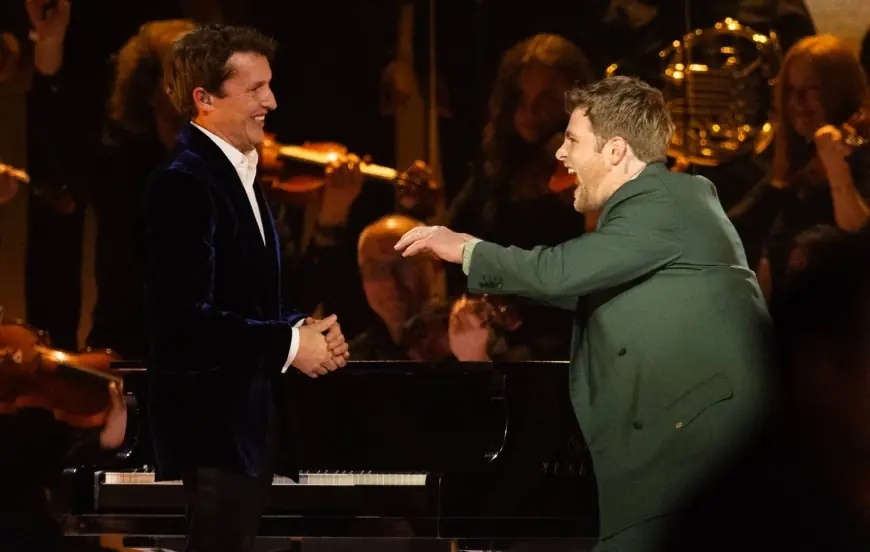
Why this matters now: alex warren’s single 'Ordinary' has already redefined commercial reach — most-played on British radio in 2025, the most-streamed song of the 2020s over the year (around 750million streams), and the longest-running UK Number One by a US artist this decade so far — and he brought that momentum onto the BRITs stage in a high-profile orchestral showcase. The performance and the song’s chart footprint together underline a wider shift in how radio, streaming and awards visibility intersect.
Alex Warren’s commercial footprint — radio, streaming and chart records
'Ordinary' was the most played song on British radio in 2025 and ended the year as the most-streamed song of the 2020s over the course of the year, clocking up around 750million streams. It also became the longest-running UK Number One by a US artist in this decade so far. The track was nominated for International Song of the Year but lost out to ROSÉ and Bruno Mars’ 'APT'.
How the BRITs performance fit into that momentum
At the 2026 BRIT Awards, held at Manchester’s Co-op Live Arena on Saturday night (February 28), alex warren performed an orchestral version of 'Ordinary'. He was joined on stage by James Blunt on piano and backed by a lush string section, delivering a stirring rendition later in the show. Ahead of the performance Warren said the UK was where 'Ordinary' first broke and changed his life the previous year, and he expressed gratitude for fan support while looking forward to performing on the BRITs stage for the first time.
Where the BRITs left the biggest headlines
Olivia Dean emerged as the evening’s biggest winner with four gongs, including Artist, Album and Song of the Year. The Song of the Year award went to Dean and Sam Fender’s 'Rein Me In'. The International Song of the Year was awarded to ROSÉ and Bruno Mars’ 'APT', which beat out several major hits including 'Ordinary'.
Other notable moments from the show included an all-star rendition of Ozzy Osbourne’s 'No More Tears' led by Robbie Williams; Osbourne was honoured with the Lifetime Achievement Award. Tim Burgess paid tribute to The Stone Roses’ Mani. Outstanding Contribution to Music winner Mark Ronson was joined for a career-spanning medley by Dua Lopa and Ghostface Killah. Wolf Alice’s Ellie Rowsell used her speech to call for further support for the UK’s grassroots music venues. Geese’s Max Bassin attacked ICE and called for a free Palestine during speeches. Rosalía was joined by surprise guest Björk for a performance of 'Berghain'.
- Here’s the part that matters: the BRITs staging gave an already dominant single a renewed public-facing moment — a radio and streaming leader translated into a live orchestral platform.
- Performance impact: a high-profile orchestral slot with James Blunt expanded the song’s presentation beyond single/playlist formats and underscored its crossover appeal.
- Stakeholders paying attention include radio programmers, festival bookers and awards voters who map commercial traction to prestige bookings.
- Next signals that would confirm a continuing shift include sustained radio rotation, recurrent streaming spikes after televised performance, and repeat festival or awards bookings.
What to make of the timing and legacy signals
There is a clear time layer to this story: 'Ordinary' dominated British radio and streaming in 2025 and then carried that status into the BRITs ceremony in early 2026. The orchestral performance with James Blunt felt like a deliberate moment to translate prior commercial success into a showpiece that could reinforce both critical and mainstream recognition.
What's easy to miss is how rare it is, in the same cycle, for a track to lead radio, dominate streaming counts (around 750million for the year) and still seek validation on the awards stage — the combination amplifies long-term momentum rather than replacing it.
The real question now is how this BRITs showcase affects bookings, recurrent radio playlists and catalog behavior for 'Ordinary' going forward; those shifts will show whether the performance was a one-off highlight or a new chapter in the song’s run.