























Minnesota push puts Bitcoin Atm kiosks at center of statewide ban debate

Lawmakers and law enforcement advanced a measure this week that would ban physical bitcoin atm kiosks across Minnesota, citing repeated scams that left victims with large losses and prompted calls for stricter action. House File 3642, sponsored by Rep. Erin Koegel, reached the House Commerce Finance and Policy Committee on Thursday as supporters argued the kiosks continue to facilitate fraud despite a 2024 regulatory framework.
HF3642 would repeal 2024 rules and ban physical kiosks
House File 3642, sponsored by Rep. Erin Koegel (DFL-Spring Lake Park), would prohibit the operation of virtual currency kiosks that accept cash or debit cards for instant crypto purchases and repeal the regulatory framework enacted in 2024. The earlier law required operators to post warnings that crypto is not legal tender and that transactions are irreversible, imposed a $2, 000 daily limit on new customers who had held accounts for less than 72 hours, and allowed refunds if fraud victims contacted the company and law enforcement within 14 days. Koegel said the bill would only affect physical kiosks and that people could still conduct cryptocurrency transactions online.
Det. Lynn Lawrence’s Woodbury case and local losses
Woodbury Police Det. Lynn Lawrence told the committee about a senior who had been targeted at a cryptocurrency kiosk at a gas station and who had been victimized for eight months. The woman completed at least 10 Bitcoin transactions in six months, had been giving 50% of her income per month to scammers, and required adult protection services to become involved. “She was afraid she was going to have to live out of her car because she had no money left, ” Lawrence said. Faribault Police Chief John Sherwin wrote to the committee that Faribault residents have reported losses of more than $500, 000 due to kiosks since 2022, a figure he called likely only 25% of incidents in the city because the crime is underreported; Rep. Keith Allen said that equates to “$2 million that’s left a rural community like mine. ”
How a bitcoin atm transaction can become a scam
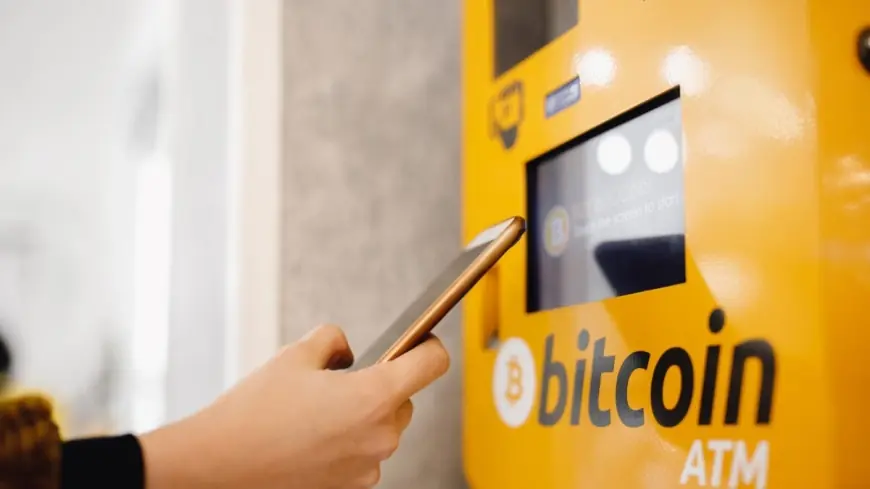
Kiosks, which resemble ATMs and are often found at gas stations, allow customers to use cash or a debit card to purchase cryptocurrency; in scams, the purchased cryptocurrency is sent into a digital wallet controlled by the scammer. Department of Commerce officials testified that scammers routinely bypass protections by coaching victims to use existing accounts or machines in neighboring states such as Wisconsin. The department recorded 70 complaints in the past year that totaled $540, 000 in losses, and officials warned the vast majority of incidents tend to go unreported. Sam Smith, the Department of Commerce’s government relations director, told lawmakers, “Previous efforts to increase consumer protections for crypto kiosks have failed. ”
Industry pushback and national legal fights
Industry representatives pushed back. Larry Lipka, general counsel at CoinFlip, said the company operates 50 kiosks in Minnesota and acknowledged a scam problem while opposing an outright ban: “The scammers are vigilant. They’re terrible and they’re stealing from Americans, ” he said, adding that it would be inappropriate to ban a legal product because fraud is happening. The state has roughly 350 licensed kiosks operated by eight to 10 companies, Sam Smith told the committee.
Elsewhere, Massachusetts Attorney General Andrea Joy Campbell sued Bitcoin Depot earlier this month, alleging the operator knowingly facilitated scams that caused more than $10 million in losses for state residents; internal company data cited in that case showed 13 to 16 percent of transactions were scam-related in early 2023 and that scam-related money volume rose to more than 50 percent through Massachusetts machines from August 2023 to January 2025. A 2021 internal review flagged that 90 percent of customers interacting with one due-diligence team were likely scam victims. it disagrees with the allegations, has cooperated with law enforcement, and now requires identity verification on every transaction. Maine reached a nearly $2 million settlement with Bitcoin Depot that required the firm to remove all its kiosks from the state. Kansas regulators opened an inquiry after a Centerville farm couple lost $20, 000 when a caller posing as Apple support instructed a woman to withdraw cash and deposit it into a machine in Johnson County. In West Virginia, the House Finance Committee advanced House Bill 5353 to license operators, set transaction limits, and mandate fraud protocols after residents reported $7. 6 million in losses the prior year; AARP West Virginia backed that bill and noted people 60 and older accounted for more than 85 percent of reported national losses in 2024.
Committee response and next steps
The commerce committee laid HF3642 over for future consideration while Co-Chair Rep. Tim O'Driscoll (R-Sartell) said members from both parties are teaming up to find bill language they can pass by the end of the session because of consumer protection concerns related to the kiosks. Rep. John Huot (DFL-Rosemount) compared a ban to restrictions on cigarette vending machines in public, while Rep. Ron Kresha (R-Little Falls) cautioned that past problems with cigarettes remain unresolved. The record includes the notation “Banning cryptocurrency kiosks 2/26/26. ”
FBI figures show unclear in the provided context.
The committee will continue work on HF3642; next confirmed steps are that lawmakers will refine language and consider the measure again before the end of the legislative session.