























Dubai bombing search spikes after explosions, interceptions, and debris fires across the city

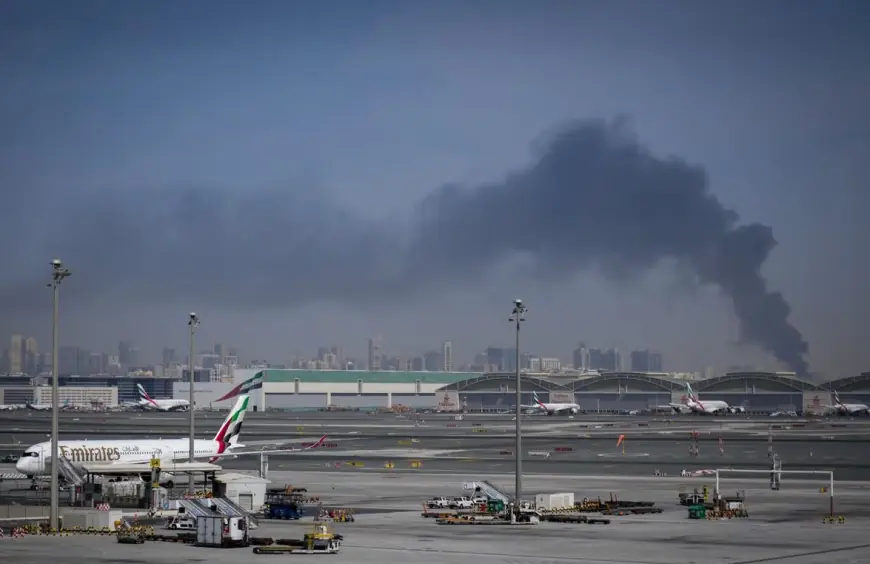
Explosions and smoke were reported in Dubai late Saturday, February 28, 2026 (ET), after air defenses engaged incoming missiles and drones and debris fell in several areas. The incidents triggered brief disruption at major transport and logistics sites and rattled tourist districts, amplifying online searches for “Dubai bombing” even as the events appeared tied to a wider regional escalation rather than a single ground-level blast.
Officials described injuries and limited damage in early updates, while emergency crews responded to multiple small fires and impact sites. Some details—such as which fires were caused by direct impacts versus interceptor debris—were not publicly confirmed at the time of initial statements.
What happened and where it was felt
Residents and visitors reported loud booms, flashes in the sky, and scattered debris impacts across parts of Dubai. Multiple locations were mentioned in public updates and eyewitness accounts, including areas around Dubai International Airport, sections of the coastline with high-profile hotels and residences, and industrial zones connected to port activity.
The pattern described—interceptions overhead followed by localized fires or debris damage—can create confusion in the moment, because the most visible ground effects may come from fragments rather than a direct strike.
Airport impacts and flight disruption
Dubai International Airport is a global hub, so even short pauses or partial restrictions can cascade quickly. After the incidents, many flights were delayed, canceled, or diverted, and some carriers adjusted routings to avoid airspace perceived as higher risk.
Even when an airport’s runways and terminals remain largely functional, operations may return in stages. Airlines also factor in crew duty limits, aircraft positioning, and downstream connections, so traveler disruption often lasts longer than the initial incident window.
What’s known about injuries and damage
Early official statements acknowledged injuries and characterized damage as limited in at least one key site, while response teams addressed fires and secured impacted areas. Visuals shared publicly showed smoke plumes and emergency activity in more than one location.
A full accounting typically takes time because investigators need to:
-
map debris fields and impact points,
-
determine whether damage came from incoming munitions or interception fragments,
-
assess secondary effects such as fires, broken infrastructure, and temporary power or communications interruptions.
Until those reviews are completed, some reports will remain provisional, and specific claims about exact strike points may be unclear at this time.
Why “Dubai bombing” is trending
Search spikes often follow dramatic visuals—explosions, smoke, evacuations—even when the underlying event is an aerial engagement rather than a conventional bombing on the ground. The phrase “Dubai bombing” also tends to get used as shorthand for any major blast in or near the city, especially during fast-moving situations.
Dubai’s profile adds to the intensity: it is a major crossroads for international travelers, finance, and shipping. That combination means any security incident can draw global attention and quickly generate misinformation alongside legitimate updates.
What it means for security and the economy
Dubai’s security planning has long emphasized protecting aviation, ports, and dense tourist zones. Interceptions over populated areas can still create ground hazards from debris, and repeated incidents can pressure authorities and operators to tighten protective measures and adjust procedures around critical infrastructure.
From an economic standpoint, the most immediate knock-on effects usually show up in:
-
airline schedules and passenger travel plans,
-
air cargo timing and routing,
-
port and logistics operations,
-
insurance and risk pricing tied to routes and facilities.
If the threat environment remains elevated, reroutes and precautions can add time and cost to travel and trade even without prolonged closures.
What to watch next
The next 24–72 hours will likely hinge on three practical indicators:
-
Airspace and airport operating status: Any renewed restrictions or prolonged airline avoidance will extend delays and cancellations beyond the initial incident period.
-
Clarity on the cause of damage: More precise site assessments can reduce uncertainty and curb rumors, especially where debris impacts are involved.
-
Regional security trajectory: If additional interceptions occur, operators may keep contingency plans in place longer, affecting flights, shipping schedules, and event logistics.
For travelers, the most reliable approach is to confirm flight status frequently, allow extra time for airport processes, and expect last-minute gate, routing, or departure-time changes while conditions stabilize.