























Pragmata Performance Benchmark Analysis Released

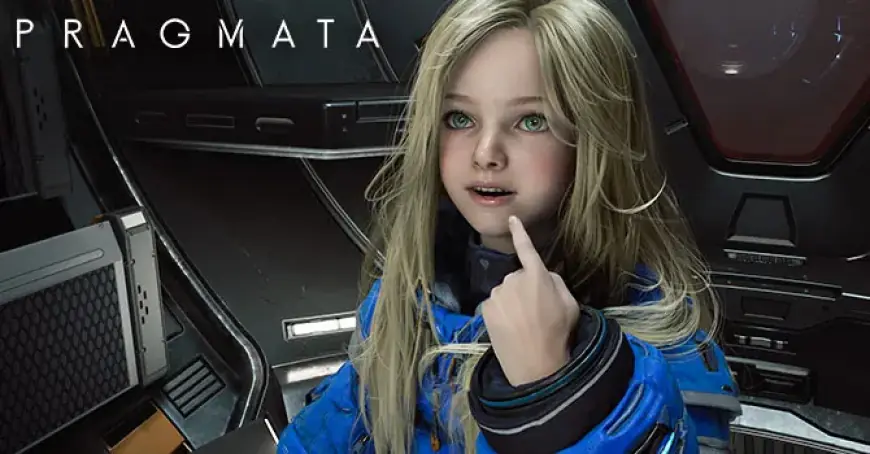
Capcom releases Pragmata on April 17, a new sci-fi action-adventure IP. The title was first revealed at a PlayStation event in June 2020 after over five years of development.
The project endured multiple delays before this launch. The narrative unfolds in the near future on a lunar research station.
Players follow astronaut Hugh Williams and his android companion Diana, who appears as a little blonde girl. A catastrophic moonquake separates Hugh from his crew, and Diana rescues him.
The station is governed by a rogue AI named IDUS and turns hostile. It was constructed using a special ore that enables 3D printing and can replicate objects if original data exists.
Gameplay
Pragmata blends third-person shooting with cooperative mechanics. Hugh handles firearms and jetpack-assisted movement while Diana can hack enemies and systems to expose weak points.
Diana’s hacking also opens new paths through the station. The duo must navigate AI-controlled machines to find their way back to Earth.
Technology and graphics
The game runs on Capcom’s RE Engine and uses DirectX 12. Players can enable ray tracing or full path tracing for advanced lighting and reflections.
Upscaling support includes NVIDIA DLSS and AMD FSR; Intel XeSS is not supported. Frame generation is available as a separate toggle with support for both NVIDIA and AMD hardware.
NVIDIA DLSS Ray Reconstruction activates automatically when path tracing is in use. NVIDIA Reflex Low Latency is offered as an independent option.
The RE Engine employs strand-based hair rendering for physics-based individual hair simulation. This system simulates hair on an individual strand basis.
Performance testing
Filmogaz.com has released a Pragmata performance benchmark analysis covering technical findings. The report evaluates performance across a wide range of contemporary graphics cards.
It compares image quality settings and analyzes VRAM usage to guide hardware decisions. The findings aim to clarify the requirements for an optimal experience.
Analysis scope
- Frame rates across modern GPUs.
- Impact of ray tracing and path tracing on performance.
- Effects of DLSS and FSR upscaling options.
- VRAM consumption at different quality settings.