

























Qatar Airways among carriers caught in regional shutdown as thousands of transit passengers face cascading delays

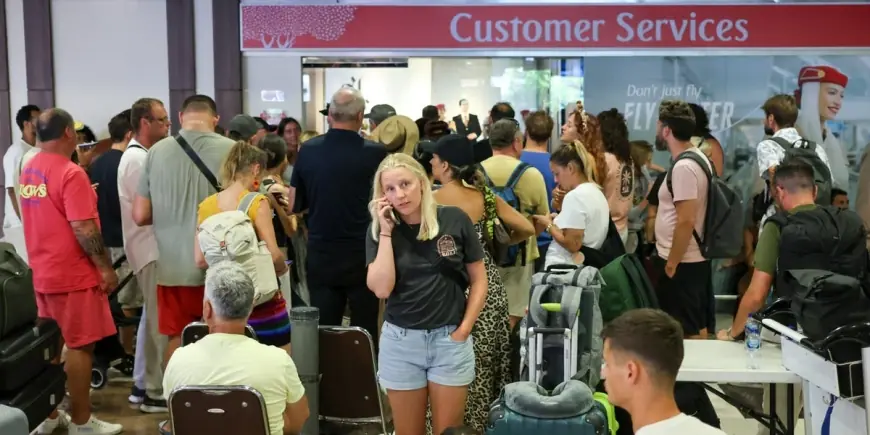
The immediate human impact is concentrated on transit travelers who use Gulf hubs, and that pressure is already radiating outward. qatar airways sits alongside other regional carriers whose normal flow of roughly 90, 000 transit passengers a day is now interrupted, leaving thousands stranded in airport terminals and disrupting long-haul routings worldwide.
Qatar Airways, Emirates and Etihad: who is feeling the disruption first
Here's the part that matters: the three big Middle Eastern carriers—Emirates, Qatar Airways, and Etihad Airways—issued status updates on X on Sunday as departure boards across the region flipped to red. Airports in Dubai, Doha, and Abu Dhabi act as global connecting megahubs; when they stop, the pipeline of transit passengers and onward connections collapses almost instantly.
Operational snapshot: closures, cancellations and the central choke points
Air strikes in Iran led to closed airspace and a wave of flight cancellations. The heart of the disruption is the Middle East: all flights in and out of Dubai International Airport — the world's busiest airport for international travelers — remain suspended as of Sunday until further notice, and passengers are being advised not to travel to the airport.
Departure boards turning to red was reported across affected terminals. Flight operations were still visible at the Beirut Rafic Hariri International Airport on Saturday, highlighting uneven operational status across the region as carriers and airports scrambled to reroute or cancel services.
- Combined transit volume for Emirates, Qatar Airways and Etihad Airways is about 90, 000 passengers per day (Cirium data).
- That transit figure excludes the additional thousands whose final destination is within the Middle East.
- Flights to the region from London, Bali, Bangladesh and the US have been canceled outright or diverted mid-journey.
- Passengers were warned to expect long waits at airports and on customer-service phone lines while airlines manage abrupt disruptions.
Network-level repercussions and temporary airspace rules
Lufthansa Group adjusted operations in response, suspending flights to Beirut, Tel Aviv, Amman, Erbil and Tehran until March 7 and announcing it will avoid the airspaces of Israel, Lebanon, Jordan, Iraq, Qatar and Iran until March 7. In addition, Lufthansa Group will suspend flights to and from Dubai and Abu Dhabi, Riyadh and Dammam until March 1. Separately, flights to the main Gulf megahubs remain canceled through at least March 2, leaving passengers outside the region unable to reach connecting services.
If you’re wondering why this keeps coming up across global itineraries: rerouting around closed airspace often forces cancellations or long diversions, and when multiple hub airports are affected at once, knock-on cancellations multiply rapidly.
Passenger experience and on-the-ground chaos
Many travelers described chaotic scenes after being displaced. One passenger who had been scheduled to fly back to the US on Saturday was stuck on his plane for five hours with no food before everyone was deplaned and moved into a crowded terminal. He stood in multiple lines, eventually received a hotel voucher and took a bus to lodging, but was still waiting for a room 90 minutes after arriving — it was after midnight in Dubai and nearly 20 hours after he first showed up for his 9 a. m. flight.
Airlines have been directing customers to social channels for updates and warning of long wait times on phone lines as they try to rebook and re-accommodate passengers. An Emirates spokesperson did not immediately respond to a request for comment.
What's easy to miss is how quickly a hub suspension turns into a global logistics headache; grounded aircraft, crew availability and hotel capacity all compound the problem once airport operations pause.
- Large daily transit flows through Gulf hubs are the immediate pressure point; disruption there cascades into long-haul networks.
- Passengers routed through Dubai, Doha or Abu Dhabi should expect delays and should avoid traveling to those airports until operations resume.
- Advance indicators of normalization will include official reopening notices for Dubai International and liftings of temporary airspace bans.
- Travelers currently displaced can expect prolonged waits for rebooking given high volumes and redirected aircraft.
The real test will be how quickly hub airports can restart coordinated operations; until that happens, the flow of transit passengers remains paused and the global ripple will continue.