























Dubai Airport and Burj Al Arab Damaged as Missiles, Protests and Humanitarian Warnings Rock the Region

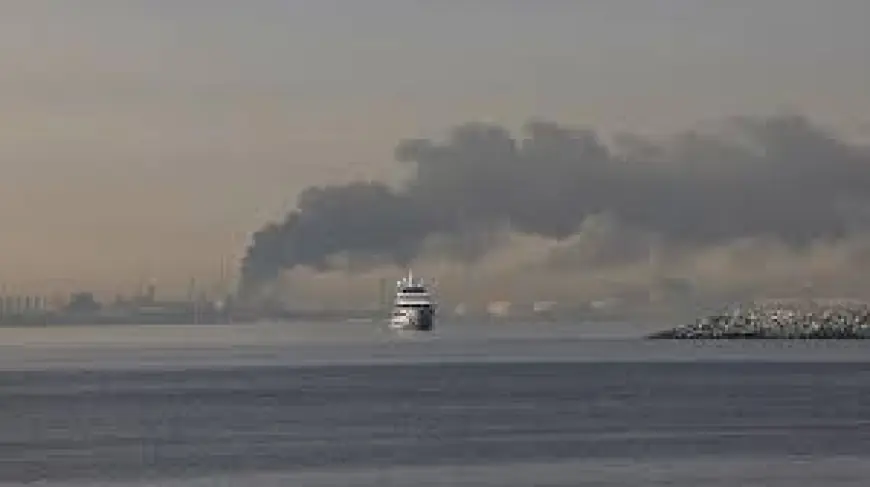
Dubai Airport is listed among high-profile civilian sites damaged as regional missile activity and widespread unrest ripple across the Middle East. The convergence of intercepted missiles in Qatar, escalating anti-government protests in Iran and urgent UN warnings about Gaza aid has created an acute humanitarian and security flashpoint.
Doha fireball and fleeing crowds
Video circulated showing people running down a street in Doha as a fireball erupted behind them, footage that captured the immediate civilian alarm. Qatar's defence ministry said it intercepted several missiles that appeared to be targeting al Udeid air base, the largest American military base in the region; the interceptions coincided with the blasts that sent crowds fleeing in the Qatari capital.
al Udeid air base and regional military impact
The defensive action around al Udeid forced rapid responses and heightened military alert across nearby facilities. The ministry’s statement that several missiles were intercepted points to a sustained threat profile; the apparent target, al Udeid, is identified as the largest American military base in the region, linking the interceptions to wider strategic calculations.
Dubai Airport and Burj Al Arab among damaged sites
Damage assessed at Dubai Airport and the iconic Burj Al Arab hotel forms part of the emerging tally of civilian infrastructure affected in the strikes, compounding the security consequences for international travel and tourism nodes. The timing matters because harm to major transport and hospitality assets immediately disrupts regional movement and economic activity while raising the diplomatic stakes for neighboring states dependent on those hubs.
Gaza ceasefire, aid deliveries and UN warnings
More aid has been allowed into Gaza since a ceasefire began three months ago, yet the United Nations warns those shipments remain nowhere near sufficient. The UN humanitarian chief has issued a stark projection that about 14, 000 babies will die in 48 hours if lifesaving supplies do not reach them. Tom Fletcher described scenes of despair on a recent trip to the coastal enclave and said more aid trucks were entering Gaza but that it was a "huge job" to get vital supplies to those in need. The United Nations Development Programme reports that over 80% of all buildings in the territory are destroyed or damaged, underscoring the scale of the recovery task.
Iran protests, Tehran mortuary footage and neighborhood observations
Anti-government protests in Iran have continued into their 13th consecutive day and 13th night, a movement that began on December 28 and has now grown into the largest seen in years. In video verified by Persian, protesters can be heard chanting anti-government slogans; the protests on Thursday were described as the most widespread since the movement began. Verify has been examining disturbing footage from a mortuary in Tehran showing scores of bodies; those images are being treated as material that could hold clues about what is happening inside Iran. Independent reporting from the country noted that John Sudworth heard the sounds of heavy machinery echoing around a neighbourhood, a detail that ties local sensory evidence to the broader unrest.
Kurdish-run prisons, Manger Square and other regional human stories
Kurdish-run prisons are holding about 8, 000 suspected IS fighters and around 34, 000 of their family members in camps, a concrete security and humanitarian burden in the region. In neighboring areas, everyday life and memory persist: hundreds gathered in Manger Square to enjoy festivities that included music, dancing and Santas bearing sweet treats, and a vehicle present at the scene had once transported the late Pope Francis on a visit to Bethlehem in 2014. Individual accounts of loss and anguish also continue to surface; Shadi Abu Sido said an Israeli prison officer had told him that his family had been killed, a personal testimony that highlights the human toll running through the broader crisis.
What makes this notable is the way disparate threads—a missile interception near a major U. S. base, damage to high-profile civilian infrastructure such as Dubai Airport and the Burj Al Arab, resurgent domestic unrest in Iran, and an acute humanitarian emergency in Gaza—are converging into a single moment of heightened regional risk. The immediate effects are clear: displaced civilians, interrupted aid flows, and a sharpened security posture that will shape responses in the coming days.