
























Beit Shemesh: Ben-Gvir Praises Strikes and Urges Citizens to Arm Themselves After Missile Barrage

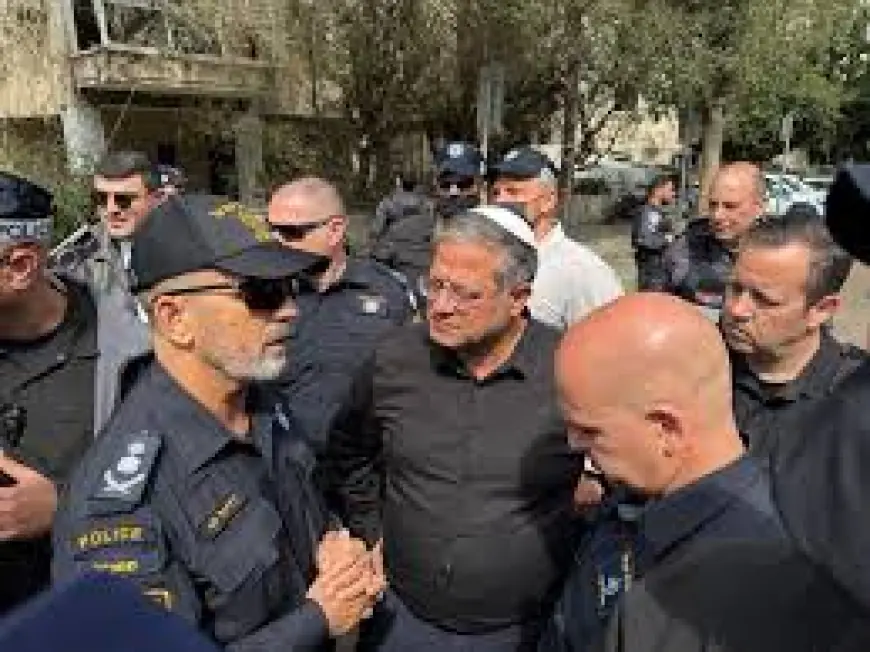
beit shemesh — Politicians from across Israel's political spectrum visited the site of an Iranian missile hit in central Israel on Sunday, after an Iranian barrage that followed joint Israel‑US strikes launched the previous day. The visit came amid visible destruction to a building and multiple cars and a report that one teen was injured by shrapnel.
Ben‑Gvir at Beit Shemesh impact site
National Security Minister Itamar Ben‑Gvir used the scene to frame the recent strikes as a historic success, saying Israel had “made history” in an operation to kill Iranian Supreme Leader Ayatollah Ali Khamenei and that “the head of the snake had been severed. ” He praised Prime Minister Benjamin Netanyahu’s coordination of the attacks and told those gathered that the campaign would continue.
At the same time, Ben‑Gvir took a more direct stance on civilian preparedness, urging residents to arm themselves: “I call on citizens to carry weapons; those who have weapons should carry them. ” He warned of an existential threat in stark terms, saying the adversary sought to destroy all Israelis and that Israel was eliminating that threat “one by one. ”
Operation Roaring Lion and opposition backing
Lawmakers and opposition leaders were also at the scene, offering unified public backing for Operation Roaring Lion, the joint Israel‑US campaign that preceded the Iranian barrage. Opposition leader Yair Lapid said Israel was “doing the right thing” and highlighted the scale of coordination with the Americans as unprecedented, while stressing that protective guidelines were saving lives.
Yair Golan, leader of The Democrats Party, noted the magnitude of the destruction—specifically citing damage to a building and to cars at the impact site—and praised the mobilization of the home front. “All are standing as one, out of mutual responsibility, understanding the urgency of the moment, ” he said.
Damage, injury and immediate consequences
The Iranian missile barrage, launched in response to the joint strikes, left a scene of severe material damage and at least one civilian casualty: a teenager struck by shrapnel. The physical damage—described as severe to a building and several vehicles—prompted the cross‑party visits on Sunday and public appeals for unity and preparedness.
Cause and effect were clear in officials’ statements: joint Israel‑US strikes on Saturday prompted an Iranian barrage the following day, which in turn produced both the material damage and the political response on Sunday. That response combined public expressions of support for the operation with calls for increased civilian vigilance and readiness.
What makes this notable is the rapid sequence: a major strike, a retaliatory barrage within roughly 24 hours, and immediate high‑profile political visits to the impact site. The timing matters because it underscores both the speed of escalation and the government’s effort to present a united front while communicating protective measures to the public.
Officials framed the episode as both a military milestone and a test of domestic resilience. Ben‑Gvir’s comments linked operational success to continued action, while opposition figures emphasized civic mobilization and the practical value of protective guidelines in reducing casualties.
Observers at the scene saw clear, measurable effects: one injured teen, a destroyed building façade and several damaged cars, and a broad political turnout that included senior ministers and opposition leaders who publicly endorsed the ongoing operation and coordination with the United States.
In the hours after the barrage, messaging focused on unity and preparedness, with calls for continued operations against the identified threat and for citizens to follow protection guidance while remaining vigilant.