

























Discover the Theme for This Year’s International Women’s History Month

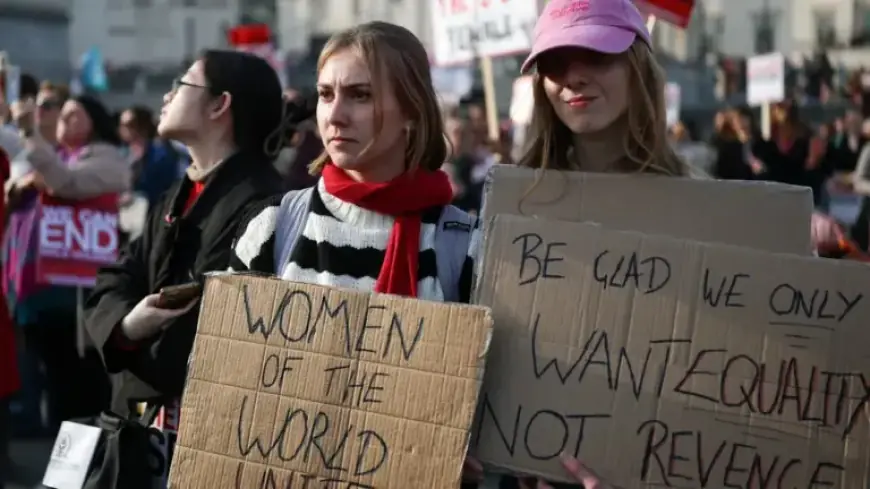
International Women’s History Month (IWHM) serves as a reminder of women’s pivotal contributions while promoting gender equality globally. Each year, the National Women’s History Alliance selects a theme that guides the focus for March. In 2026, the theme is “Leading the Change: Women Shaping a Sustainable Future.” This theme emphasizes the role of women in designing sustainable transformations to address the world’s pressing challenges.
Origins of Women’s History Month
Women’s History Month traces its roots back to 1978 in Sonoma County, California. It began as a week-long celebration coinciding with International Women’s Day on March 8, involving school presentations and parades that honored women’s achievements. The movement quickly gained traction, leading to a proclamation by President Jimmy Carter in 1980, designating the week of March 8 as National Women’s History Week.
In 1987, Congress expanded the observance to the entire month, establishing Women’s History Month as a time to reflect on and celebrate the contributions of women. Since then, the NWHA has curated annual themes to highlight gender-related issues.
Significance of International Women’s Day
International Women’s Day (IWD) occurs every year on March 8. The theme for 2026 is “Give to Gain,” which advocates for gender equality through acts of generosity. The day has historical significance, first observed in 1909 and internationally recognized in 1910. March 8 was officially designated as IWD in 1914, with the United Nations marking the day in 1975.
Although IWD is not a federal holiday in the U.S., it is celebrated across various communities and institutions as a call for action towards gender equality. The 2026 theme promotes a mindset of collaboration and generosity, encouraging support for women and recognizing the invisible labor many perform.
Current State of Gender Equality
March also serves as a time to assess our progress in gender equality. The Global Gender Gap Report 2025 highlights that the gender gap is currently 68.8% closed, a slight increase from the previous year. North America leads in regional rankings with a 75.8% closure of its gender gap, while the U.S. stands at a disappointing 42nd overall.
- 1st in educational attainment
- 58th in health and survival
Notably, the U.S. faces significant challenges in maternal health. The World Health Organization reported in 2023 that the U.S. is among just seven countries experiencing a rise in maternal mortality rates since 2000.
A study by The Commonwealth Fund in 2025 demonstrated large interstate disparities in maternal health outcomes, underscoring the urgent need for ongoing advocacy and reform in health care.
Conclusion
International Women’s History Month urges us to honor past achievements while recognizing the work still needed for gender equality. As we reflect during March, let us also commit to the actions that will shape a sustainable future for all.