

























Planets Aligning Tonight: A Practical Guide for Backyard Stargazers and Ohio Viewers

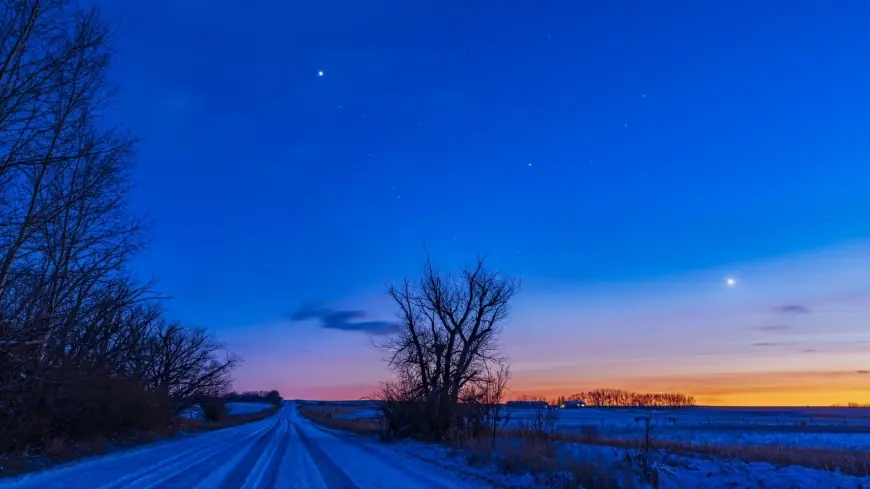
If you plan to step outside for a celestial show, here’s who feels the impact first: backyard stargazers, photographers and casual skywatchers — especially those checking local weather and picking a horizon-friendly spot. This is the moment many will try to catch the planets aligning tonight and on Feb. 28, and your viewing success will hinge on preparation, equipment and a little luck with the weather.
What backyard observers should do now — Planets Aligning Tonight
Here’s the part that matters: stake out a raised location with a clear view of the horizon well before sunset, and load a smartphone stargazing app that uses augmented reality to pin the planets in your local sky. The ability to spot all six (Jupiter, Saturn, Venus, Neptune, Uranus and Mercury) will depend on preparation, the gear you bring and conditions where you are — Ohio weather and local viewing spots will matter for many observers.
How the planetary parade will appear and where to look
Most of the naked-eye action will sit low in the western sky. Key positional notes to keep in mind:
- Mercury will be about 10 degrees above the late winter skyline, with Venus close to its left.
- Saturn will glow less than 10 degrees to the upper left of Venus, with a distant cousin lurking nearby, but more on that later.
- Jupiter will be high in the eastern sky, with the waxing gibbous moon below it and masking the stars of the constellation Cancer with reflected light.
Mercury and Venus will follow the sun out of sight roughly an hour after sunset, briefly becoming more visible as the sky darkens and they move closer to the horizon. Uranus and Neptune require added magnification and patience.
Equipment tips, safety and the challenging planets
Neptune sits about two degrees to the right of Saturn and is too dim for the unaided eye. Under dark skies, a telescope with an aperture of 8 inches (200 millimeters) or more can reveal its tiny bluish disk, but its low position and proximity to solar glare make it difficult on the nights surrounding Feb. 28. Extreme caution is required: ensure the sun is firmly below the horizon before pointing any telescopic equipment in that direction. Uranus can be located by sweeping a scope across the patch of sky 5 degrees below the Pleiades open cluster, to the right of the "V" of Taurus, in the hours following sunset.
Practical viewing checklist and local planning
- Pick a raised site with an unobstructed western horizon well before sunset.
- Have a smartphone astronomy app ready to overlay planet positions for your exact location.
- Bring binoculars or a scope for Uranus and Neptune; expect Neptune to be challenging even with good gear.
- Monitor Ohio weather and choose a local spot known for clear horizons if you’re in that region.
It’s easy to overlook that the late-sunset glow will wash out dimmer worlds; timing your arrival and lowering the horizon interference can make a big difference.
Photographer and practical notes — how a pro approached the scene
A night-sky photographer named Josh Dury grappled with the sheer scope of the scene along with the glow of the setting sun and other challenges while capturing the parade. That experience underlines why preparation and site choice matter for anyone trying to record the event.
- Plan: arrive early, scout horizon obstructions and orient the app while it's still light.
- Stakeholders: photographers, amateur astronomers and families with casual interest will see different levels of success based on gear and location.
- Confirmation signals: clearer weather forecasts for your area and darker western horizons will increase the chance of spotting Mercury, Venus and Saturn together.
- Timing note: the parade peaks tonight and observers should pay particular attention to viewing conditions on and around Feb. 28.
If you’re wondering why this keeps coming up for amateur observers: the alignment places multiple planets low on the horizon in twilight, which is both visually striking and technically demanding. The real question now is whether local skies and careful preparation will let you see all six.
Micro timeline: stake out a clear horizon ahead of sunset; in the hours following sunset use apps and binoculars to locate Uranus and the Pleiades reference; roughly an hour after sunset Mercury and Venus will track toward the horizon and then disappear as darkness grows.
What’s easy to miss is the practical safety line about telescope use: do not point telescopes near the horizon until the sun is unquestionably below it. Observers should treat that guidance seriously to avoid hazard.