





















Ayatollah Khomeini and ayatollah khomeini: the rise and fall of Ali Khamenei

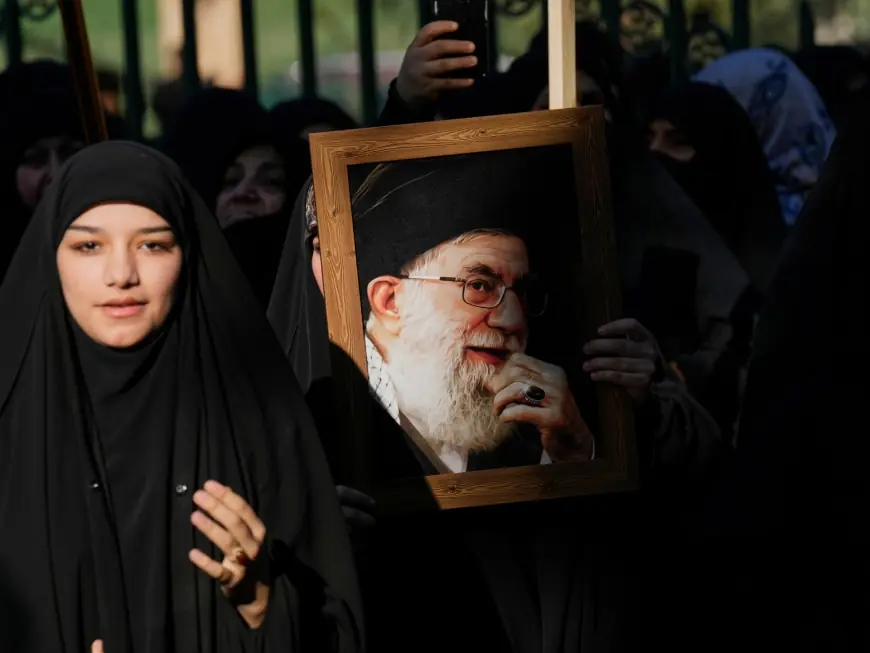
Iran’s supreme leader Ali Khamenei has been killed in a joint US‑Israeli air strike, a development that reshapes the country’s leadership and the revolutionary order anchored in the legacy of ayatollah khomeini. Iranian state media confirmed the death in the early hours on Sunday after US President Donald Trump said Khamenei had been killed in a strike that hit his compound on Saturday.
Khamenei’s death, confirmation and immediate claims
Iranian state media announced the supreme leader had been killed following a joint attack by Israel and the United States. US President Donald Trump had earlier said Khamenei had been killed in a joint US‑Israeli air strike that hit his compound on Saturday. Benjamin Netanyahu said on Saturday there were many signs that Khamenei "is no longer with us" while stopping short of an explicit confirmation; hours later, after Mr Trump’s claim, Iranian state outlets confirmed the death.
A semi‑official Iranian news agency published a statement that said: "It is announced to the Iranian people that His Eminence Grand Ayatollah Imam Sayyid Ali Khamenei, Leader of the Islamic Revolution, was martyred in the joint attack launched by America and the Zionist regime on the morning of Saturday, February 28. " Iranian state media said that Khamenei’s daughter, son‑in‑law and grandson were also killed. The agency quoted Mr Trump as saying that Khamenei and other Iranian officials "couldn’t escape US intelligence and the advanced tracking systems. " The outlet said the announcement came in the early hours on Sunday.
Damage to Khamenei’s compound and the military campaign
Satellite imagery showed Khamenei’s secure compound was heavily damaged in the initial barrage, indicating he was a target from the opening moments of the strikes. The joint operation followed a series of military confrontations: an Israeli air offensive in June last year exposed weaknesses in Iran’s air defences and in the coalition of Islamist militias Khamenei had relied on to deter Israel. Iran fired a barrage of missiles and drones at Israel that inflicted some damage but was far from enough to stop Israeli attacks.
That conflict concluded after Mr Trump dispatched US bombers to strike Iranian nuclear sites, a move described in the context as a grave setback to a nuclear programme that Iran’s supreme leader had cherished. The pattern of attacks left Khamenei with few good options, the contemporaneous coverage.
Regional fallout: assassinations and strikes before the finale
Days before Khamenei’s October 2024 public appearance, Israel had killed Hassan Nasrallah, the veteran secretary general of Hezbollah, with large bombs dropped on the movement’s headquarters in Beirut. The assassination was described as a personal blow to Khamenei, who had known Nasrallah for decades. Those strikes, and the broader US‑Israeli campaign that culminated in the attack on Khamenei’s compound, reflect a clear desire by Israel and the United States to eliminate him and to trigger the downfall of the Islamic Republic in its present form.
From Mashhad and Qom to the supreme leadership
Khamenei’s political trajectory began modestly: he was born the son of a minor cleric of modest means in the eastern shrine city of Mashhad and took his first steps as a radical in the early 1960s. As a young religious student in Qom, a centre of theology, he absorbed the traditions of Shia Islam and the new thinking of Ayatollah Ruhollah Khomeini. By the late 1960s he was running secret missions for Khomeini, who had been exiled, and organising networks of Islamist activism.
He rose through Iran’s ranks, serving as president through a bloody war with Iraq in the 1980s before taking the helm in 1989 following the death of Ayatollah Ruhollah Khomeini. Observers described him as careful, pragmatic, conservative and ruthless: a wartime leader who built the military and paramilitary architecture that later formed Iran’s defence and regional influence. He was also an aficionado of Western literature, citing Leo Tolstoy, Victor Hugo and John Steinbeck, and was influenced by anti‑colonial ideologies and anti‑western sentiment. He met thinkers who sought to meld Marxism and Islamism and read works that criticised ‘‘westoxification. ’'
Domestic tests: protests, crackdowns and the political balance
Khamenei’s rule was repeatedly tested. In 2009 protesters who challenged what they said was a rigged presidential election were met with a brutal crackdown. In 2022 there were large protests over women’s rights. Possibly the most serious challenge came in January when protests triggered by economic hardship morphed into nationwide upheaval, with many protesters directly calling for the overthrow of the Islamic republic; the authorities’ response led to one of the most violent confrontations since the 1979 revolution. Critics saw him as being too unclear in the provided context.
Under his vision the Islamic Revolutionary Guard Corps evolved from a paramilitary force into a powerful security, political and economic institution central to Iran’s influence across the region. He promoted a "resistance economy" to foster self‑reliance under Western sanctions, maintained scepticism of engagement with the West and repeatedly rejected critics who argued his focus on defence blocked much‑needed reforms. As analyst Vali Nasr, author of Iran’s Grand Strategy: A Political History, put it: many see Iran as a theocracy because of its religious language, but Khamenei was shaped by wartime leadership and a belief that Iran is vulnerable and must prioritise security.